For three years, Ashwinn Krishnaswamy had a rigid schedule. He logged his morning wake time, exercise, and how many alcoholic and caffeinated beverages he had each day.
Tracking these metrics initially helped Krishnaswamy, a 34-year-old content creator, develop better habits. But eventually, he noticed himself getting too obsessed with the numbers — skipping hangouts with friends to keep an early bedtime streak, for example.
Krishnaswamy realized, he said in an interview, “I’m kind of just optimizing stuff for optimization’s sake.” He started to wonder what it was all for.
“We need a 90 sleep score, 10,000 steps a day, a bed cooled to 68 degrees, six miles on Strava, all for us to be better at … sending emails, or talking on a podcast?” he said in a TikTok video, which has been viewed over 1.8 million times. Optimization culture, he said, “has gone too far and is spiritually killing us.”
There are now more ways to monitor your health than ever, with wearable trackers including smart watches, rings and even clothing. While some people have committed to biohacking and hyper-optimization, others, like Krishnaswamy, are saying: enough. The debate gained momentum when a clip surfaced of Steven Bartlett, host of the “Diary of a C.E.O.” podcast, saying that a couple of glasses of wine ruined days of his life. He cited the domino effect of worse sleep, eating habits and exercise, which he measured on his Whoop device.
If there is indeed a war on pleasure, the reformed optimizers are laying down the arms taken up by their sober, health-and-image obsessed former selves, and picking up an extra glass of wine and a Pilates class cancellation fee instead.
Neil Fullarton, an educator in Austin, Texas, got a Fitbit in 2015 to improve habits. “But it kind of snowballed,” he said.
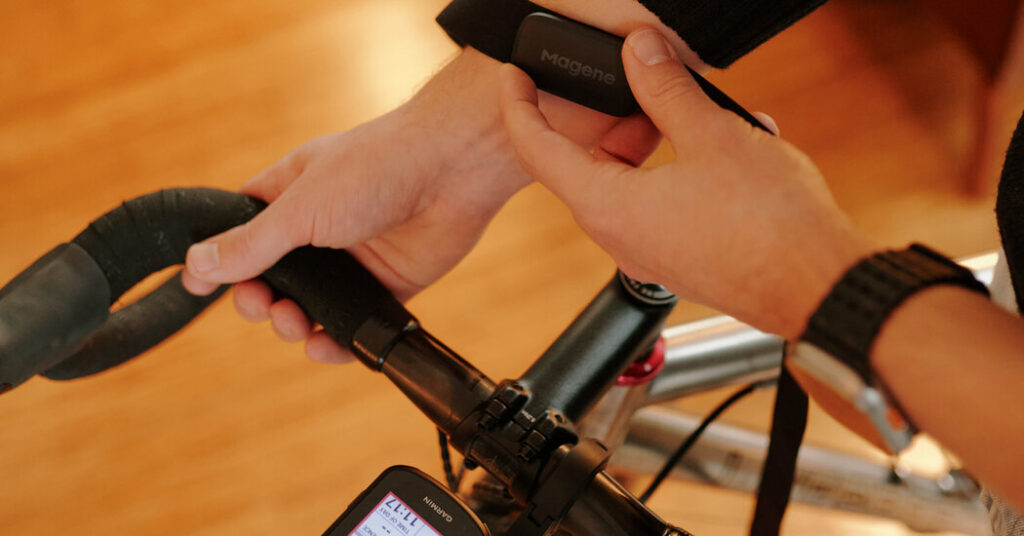
Like Krishnaswamy, he checked his sleep quality obsessively, recorded his food, drink and sun exposure, and closely tracked his heart rate and oxygen levels at the gym. He had an Apple Watch and a Whoop device, which he wore simultaneously, and a Fitbit for workouts.
Then, one day last year, he was about to meditate (something he tracked), when it dawned on him: All of this tracking was making him more stressed. “I was like, ‘Oh, this is sort of like the opposite point of meditation,’” he said.
“I’m sure there are lots of people who are measuring these things and using them to improve their quality of life,” Fullarton said, “but I wasn’t doing anything with all this information.”
Habit tracking does have its benefits. Research has found that those who track their behavior are more likely to reach their goals, and that streaks provide mini dopamine hits that help make the habit worth pursuing.
For some, optimization can tip over into something unhealthy. Edie Horstman, a 36-year-old nutrition consultant and health coach who lives in Denver, started tracking steps and protein intake when she was diagnosed with polyendocrine metabolic ovarian syndrome, formerly called P.C.O.S. She used a Fitbit to count her steps, knowing that walking could help her maintain a healthy blood-sugar level.
“My personality is: I go all in. I don’t just kind of like dip my toes in the water,” Horstman said. “So I’d be like, ‘Oh, I got 6,000 steps today. I wonder if I can get to 6,500 tomorrow.’ And eventually that number just kept climbing and climbing.” She eventually paced around her apartment to hit 10,000 a day.
“I became completely addicted,” she added. “I was basically checking my step count before I was truly checking in with myself, and in my opinion, that’s not wellness. It’s anxiety with a fitness label.”
The gamification of health metrics is more complicated for those experiencing anxiety or related disorders — which the C.D.C. said in 2024 was about one in five people. Adam C. Frank, a professor of clinical psychiatry at the University of Southern California, has studied how wearable devices affect those with obsessive-compulsive disorder. For people with O.C.D., it “can kind of trigger obsessions, and then compulsions,” he said.
There is also a part of the general population for whom fitness tracking at first “feels helpful, it feels informative,” he said, “and then it becomes like an end in itself, instead of supporting better physical or mental health.”
Horstman eventually put her device away in a drawer at her husband’s suggestion. “All of a sudden I was able to actually tap into my own body’s feedback, in terms of my energy and my mood.”
Since ditching their wearables, Fullarton, Horstman and Krishnaswamy say they’ve all managed to maintain healthy habits around exercise, sleep and eating.
“I feel like my mental health has improved because I’m no longer sort of obsessing over all this data,” Fullarton said.
“I’m not anti-tracker,” he added. “But I am anti-tracker for me.”
The post They Tracked Fitness, Food and Sleep Obsessively. Now They’re Tuning Out. appeared first on New York Times.