If you time-traveled back to the Ice Age, one of the many megafauna you’d probably want to avoid was the formidable cat known as the cave lion, a hulking beast of a feline that makes today’s lions look sweet and docile.
According to a new study published in Cell by researchers at the Centre for Palaeogenetics, we’re finally getting a clearer picture of what, exactly, this ancient creature was up to thousands of years ago, how it evolved, and we’ve developed a better sense of how it was mingling with its modern relatives.
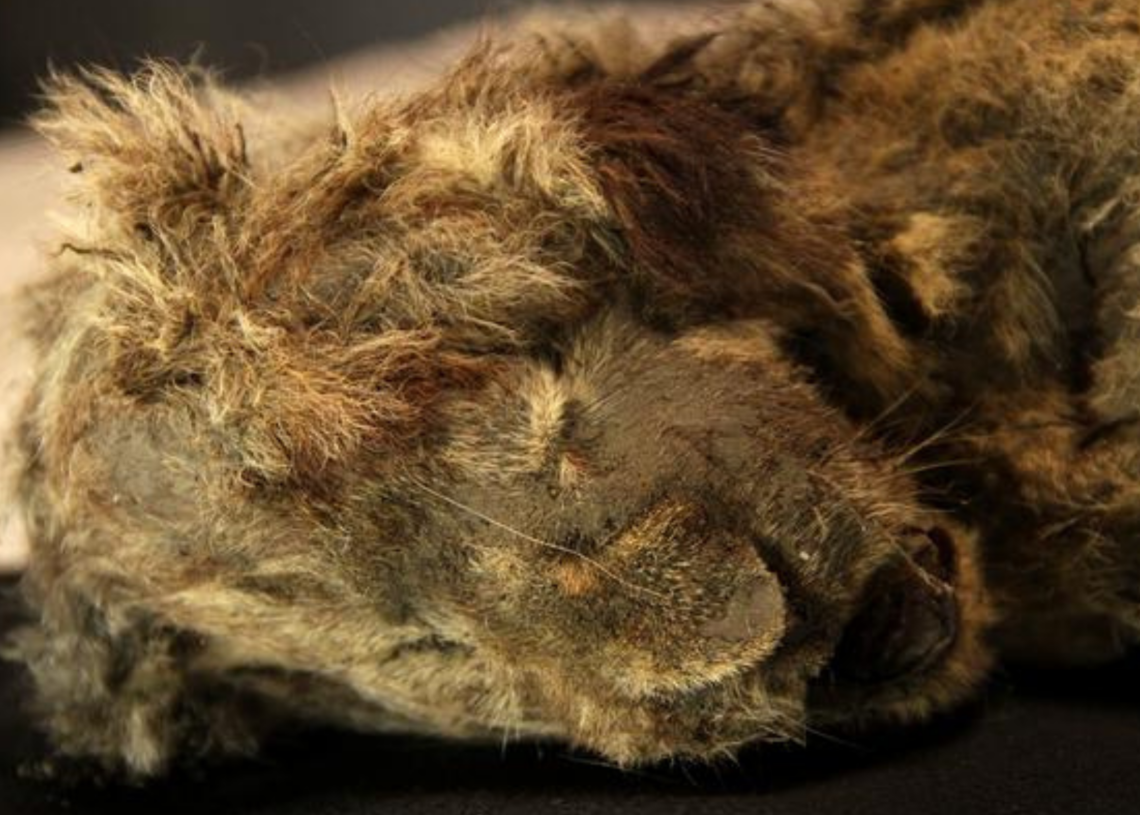
The team sequenced 12 genomes from Cave lion specimens found across Eurasia and northern North America, some stretching back 100,000 years. To get a sense of how much they’ve changed, these genomes were compared to 20 genomes from modern lion populations in Africa and southern Asia. The researchers extracted DNA from their bones, teeth, and soft tissue, mostly from two well-preserved cubs that were found in Siberian permafrost, including a 32,000-year-old female named Sparta.
Cave Lions Were Getting It on With Modern Lions for Millennia
Just by looking at them, you can tell that they were oversized lions, but genetically, they were much more than that. The data shows two lineages split about 1.5 million years ago, which is a lot earlier than previously believed. Over that stretch, cave lions developed some distinct genetic traits that fundamentally altered their brain function, their vision, and how they grew. All that was reinforced with fossil and cave art evidence that suggested that they looked and behaved differently from modern lions. For one thing, males probably didn’t have the majestic fluffy manes we associate with male lions today.
The genomes also revealed several instances of interbreeding between cave lions and modern lions, especially during the cold glacial periods when shacking up with a mate was a matter of basic survival. It was the ancient feline equivalent of cuffing season. Because of this seasonal pairing, as ice sheets expanded, cave lions moved south into Central and Southwest Asia, which overlapped with modern lion populations, resulting in a small but still measurable shared pool of DNA. Around five percent share DNA, to be exact, according to the researchers.
Of course, the modern lion population in Southwest Asia that carried the strongest traces of cave lion ancestry was hunted to extinction by the early 20th century. The cave lions themselves went extinct around 13,000 years ago, likely thanks to a rapidly changing climate that affected the populations of their prey, and expanding human populations hunting what was left. All we’ve got left is genetic evidence suggesting that this was a mighty large lion that may not be around physically, but is genetically lingering around in the DNA of its descendants.
The post Scientists Discovered Ice Age Cave Lions Never Fully Disappeared appeared first on VICE.