It should have been scandalous enough that there was a $283 million fraud.
But then the next shoe dropped: The company’s board of directors waited three months to tell investors about it. Not only that, the fraudster was allowed to stay on as chief executive during that time. The company had forced her to resign and disclosed the mess only after getting wind of a criminal investigation.
Not long ago, CaaStle looked like a high-flying start-up. It started as an online clothing rental company geared toward plus-size women, and later began selling its platform to other fashion retailers. The chief executive, Christine Hunsicker, had the vision. Her co-founder, Jaswinder Pal Singh, had the software chops.
Together they wooed prominent investors, including Bill Ackman and Henry Kravis. CaaStle raised more than $600 million, and at its height in 2018 it was valued at $1.25 billion.
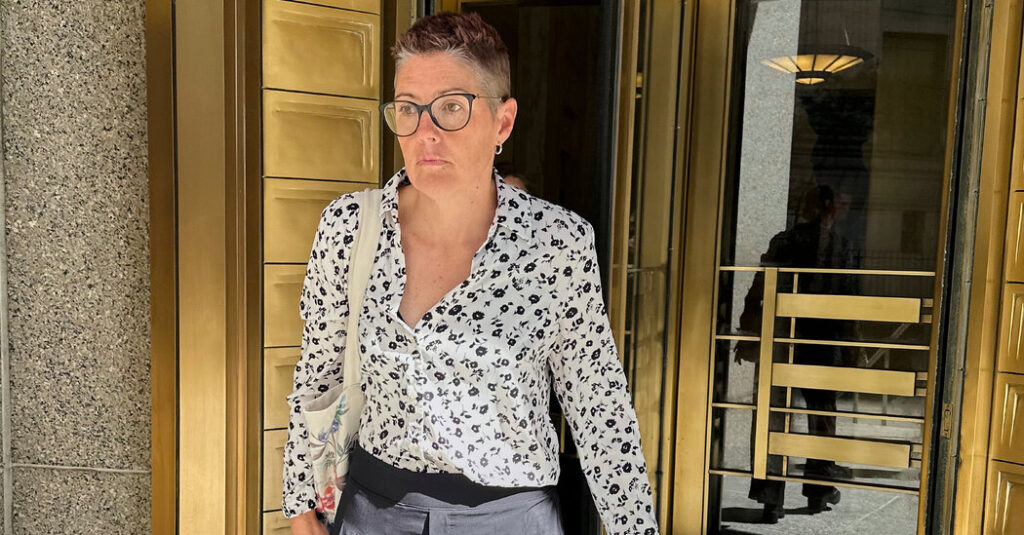
In spring 2025, CaaStle disclosed that Ms. Hunsicker had been wildly overstating its financial results. CaaStle soon went bankrupt. This March, Ms. Hunsicker pleaded guilty to securities fraud.
Investors, alongside CaaStle’s bankruptcy trustee, are scrambling to recover whatever money they can. They claim in multiple lawsuits that CaaStle’s board — which for much of its history had only three directors, one of whom was Ms. Hunsicker — failed to notice obvious warning signs of her fraud, and then botched its response.
The lawsuits shine a light on the actions of Mr. Singh, a longtime professor at Princeton’s prestigious computer science department. In October 2024, as investors started asking questions about the company’s finances, Mr. Singh sold $6 million of CaaStle stock back to the company, according to a complaint filed in March by the bankruptcy trustee, George Miller. Mr. Miller is seeking to claw that back on behalf of CaaStle’s creditors.
After Ms. Hunsicker confessed to her misconduct in December 2024, Mr. Singh played a key part in keeping it from investors and letting her stay on as chief executive, according to the lawsuits. One suit claims that Mr. Singh was romantically involved with Ms. Hunsicker two decades ago, and that because of their close relationship he had “a strong personal interest in protecting” her.
Mr. Singh hasn’t been charged with a crime and there is no evidence that he had prior knowledge of or participated in the fraud.
He was a “co-founder and major shareholder who rejoined the board after several years away from the company in hopes of stabilizing the company, contributing months of uncompensated effort and voluntarily providing capital to pay employees and help preserve stakeholder value for everyone,” Matthew Hiltzik, a spokesman for Mr. Singh, said in a statement. “The board, with the advice of legal counsel, responsibly exercised its business judgment regarding available options and communications with shareholders.” Mr. Hiltzik did not respond to questions about the $6 million stock sale or the accusations of a romantic affair.
Ms. Hunsicker has admitted to defrauding CaaStle’s investors out of $283 million. She declined to comment through her lawyer, Michael Levy. Mr. Levy is expected to argue at her sentencing hearing this summer that she deserves a lighter sentence because of several factors, including a brain injury from 2017, according to a person close to Ms. Hunsicker, who spoke on condition of anonymity because the case is still pending.
Ms. Hunsicker started providing falsified financial documents to investors in 2019, according to her plea agreement, but CaaStle’s board didn’t find out that anything was amiss until 2024. That November, someone managing Mr. Kravis’s investment raised alarms with John Hennessy, a director who is also Alphabet’s board chair and is known as “the godfather of Silicon Valley.”
A week later, Mr. Hennessy declared that not only was he no longer on CaaStle’s board, but he had actually resigned three years earlier — a claim undercut by the fact that he had been “openly participating in board activities through 2024,” Mr. Miller said in his complaint.
“Mr. Hennessy has had a long and distinguished career. The fact of the matter is that Mr. Hennessy did not engage in or condone any wrongdoing and was himself a victim,” Caz Hashemi, Mr. Hennessy’s lawyer, said in a statement. “Mr. Hennessy will address the claims against him in the pending case at the appropriate time.”
Without Mr. Hennessy, CaaStle’s board had only one voting member aside from Ms. Hunsicker, a Tokyo-based asset manager named Scott Callon.
In December 2024, Ms. Hunsicker delivered a bombshell, admitting on a video call with Mr. Callon and Mr. Singh that she had been doctoring financial documents.
In the days that followed, Mr. Callon asked for Ms. Hunsicker’s resignation, Mr. Miller said. She did not step down as chief executive. According to the complaint, she did agree to leave the company’s board — but only if Mr. Singh, who at that moment had no official role in the company, took her place.
Unable to outvote her, Mr. Callon complied. “As the other board member, I had no options to remove Christine from these roles unilaterally,” he said in a statement.
Like Netflix but for Clothes
Two decades earlier, Ms. Hunsicker and Mr. Singh shared in a start-up triumph. Ms. Hunsicker, a Princeton graduate, was president and chief operating officer of Right Media, an advertising metrics firm. Mr. Singh, who had spent years at Princeton studying how to make large-scale computing systems more efficient, was a technology adviser to the company.
In 2007, Yahoo acquired Right Media, netting Ms. Hunsicker a hefty payout. In 2011, Ms. Hunsicker and Mr. Singh teamed up again, this time to create a clothing start-up.
Gwynnie Bee, as the company was first called, had a business model similar to that of Netflix for DVDs, according to a promotional slide deck from the time. Customers would pay a fixed fee, say $79 per month, to rent three garments at a time, with the option to buy the ones they liked.
Like Rent the Runway, Gwynnie Bee’s goal was to offer consumers a way to experience a piece of clothing before buying it. Ms. Hunsicker also positioned it as a technology company collecting vast amounts of data that it could use to solve logistical problems in merchandising, buying and inventory management.
Despite their ties to Right Media, Ms. Hunsicker and Mr. Singh were still viewed as inexperienced in the start-up world. To attract investors, they leaned on their gilded résumés and their community ties. When a founder lacks easy access to money from big venture funds, “you use your unconventional networks — your school, your ethnicity — to raise funds,” observed Alok Sama, SoftBank’s former president.
Mr. Sama passed on investing but Mr. Singh found other takers, tapping connections among affluent South Asians in the Hamptons where he owned a house, along with his circle from Princeton, to help raise money.
In 2014, Mr. Singh became a trustee at Manhattan’s prestigious Dalton School. The billionaire investor Bill Ackman, whose children had attended Dalton, learned of the company after meeting him at a school event. Not long after, he invested. (Mr. Ackman currently owns “substantially less than 1 percent of the company,” his spokesman said.) Mr. Singh told other investors that the company also received a big investment from the renowned venture capitalist Jim Breyer. A spokesman for Mr. Breyer declined to comment.
Ms. Hunsicker was an impassioned marketer and fund-raiser for the company. In 2016 she appeared as a judge on “Project Runway: Fashion Start-Up,” boosting her profile.
Soon, hedge funds, venture capitalists and private equity moguls like Mr. Kravis were seeking to invest.
‘There Were No Referrals’
Troubling signs were present from the start. Though Gwynnie Bee regaled investors with pictures of its warehouse in Ohio and drip-fed them happy customer comments, it failed to provide investors quarterly or yearly financial performance updates in its first years, according to several of them.
Toward the end of 2017, Ms. Hunsicker told friends that a heavy bathroom mirror had fallen on her at her home, causing a head injury that led to recurring headaches and lapses in concentration.
Worries grew within the firm about the business model, which relied on subscribers to refer new customers. “We were all talking about it — there were no referrals,” says Kaeya Majmundar, who joined Gwynnie Bee as Ms. Hunsicker’s apprentice in mid-2017. “Plus-size women didn’t want to refer other plus-size women because you are essentially calling other women fat.”
So in 2018 Gwynnie Bee made a major pivot, changing its name to CaaStle, with the first four letters standing for “clothing as a service.” Rather than catering to a narrow segment of the market and focusing on consumers, CaaStle’s goal was to serve as the technology and logistics platform for a wide range of fashion brands. Big names like Ann Taylor, Express and Vince signed on, prompting favorable headlines in the trade press.
Mr. Singh’s role in the company during the years that followed is unclear.
Corporate filings with the state of Delaware show he left CaaStle’s board in 2017. He later told investors that he had stepped back from the company that same year.
But at least four investors who told The New York Times that they had invested in Gwynnie Bee because of Mr. Singh’s technology acumen said they were never informed of his departure. Emails and marketing materials show that the company continued to make it seem as though he was still involved.
For example, in an August 2019 email to investors, CaaStle said that Mr. Singh was leading a “highly strategic and complex” effort to explore ways of maximizing retailer loyalty and rewards programs on the CaaStle platform.
An investor presentation listed Mr. Singh as part of CaaStle’s leadership team, describing him as a “co-founder.” And some of the emails CaaStle sent to investors continued to be signed “Best, Christine & JP.” Mr. Singh’s spokesman, Mr. Hiltzik, said that to “our understanding, these were occasional form emails that used an old template.”
Ms. Hunsicker offered a sunny outlook about CaaStle even in the face of the Covid pandemic, which seemed like an ominous moment, since people suddenly had far less need for a variety of outfits.
Steve Shapiro, a former Tiger Management analyst who invested in CaaStle, remembers thinking, “this has got to kill them.” But when he spoke to Ms. Hunsicker, she sounded positive, he said. “No, we’re doing OK really,” he recalled her saying. “This is not going to impact revenue as much as you think.”
Mr. Singh, too, was upbeat. “All good,” he texted one investor in late April 2020. “Retailers see this is where they make profit and money.” CaaStle was still signing deals, he wrote. Mr. Hiltzik did not respond to a question about the message.
A Missing Page, a Worried Email
In the fall of 2023, somebody — described only as “Investor A” in the complaint filed in March by Mr. Miller, the bankruptcy trustee — reached out to CaaStle’s auditor, BDO, asking it to confirm the authenticity of a CaaStle audit.
A few days later, BDO terminated its relationship with the company. It turned out that Ms. Hunsicker had sent Investor A a fake audit bearing a forged BDO signature, according to Mr. Miller.
Ms. Hunsicker then moved to negotiate a settlement in which CaaStle would agree to repurchase Investor A’s holding for cash — if Investor A promised not to disclose the forged audit, Mr. Miller’s complaint states.
Investor A agreed to the settlement, according to Mr. Miller.
Ms. Hunsicker continued to proceed as if all was well with the business. In early 2024, she struck a deal that looked like a way for CaaStle to expand. A new company called P180, set up by the apparel executive Brendan Hoffman, announced it would buy stakes in fashion brands and boost their profitability by using CaaStle’s e-commerce platform and drawing on its subscriber base.
That fall, Ms. Hunsicker attracted investor scrutiny again, and this time it would lead to her undoing. It came from Jed Lenzner, whose firm Stonecroft Management handles Mr. Kravis’s personal investments.
Ms. Hunsicker had lunch with Mr. Lenzner and two of his associates at Stonecroft on Oct. 8. Around that time, CaaStle wired Mr. Singh $6 million to buy back some of his shares, according to Mr. Miller. A few days later, CaaStle bought back a further $1.75 million in shares from a trust established for the benefit of Mr. Singh’s wife, Mr. Miller said.
It is unclear what was said at the lunch, but three weeks later, Mr. Lenzner went to Ms. Hunsicker’s office to view CaaStle’s most recent financial audit in person. He detailed what happened next in a Nov. 27 email to Mr. Hennessy, cited in Mr. Miller’s lawsuit and obtained by The Times.
Mr. Lenzner wrote that he noticed Page 7 of the audit was missing, and “I received an unsatisfactory explanation from Christine as to why.” He added that he had separately learned that BDO didn’t have a record of issuing the audit and that CaaStle was no longer an active client.
Ms. Hunsicker offered to buy back Mr. Kravis’s shares, Mr. Lenzner wrote. Unlike Investor A, Stonecroft declined her offer, according to two people with direct knowledge who spoke on condition of anonymity because of pending litigation.
Mr. Hennessy forwarded Mr. Lenzner’s email to Mr. Callon, the other director, calling it “worrisome” and adding, “This is news to me” and “Not sure what JP knows.”
A week later, Stonecroft had a call with Mr. Hennessy and Mr. Callon where the missing page was discussed, Mr. Miller’s complaint said.
Three days after that, on Dec. 6, Mr. Hennessy sent a letter to CaaStle’s general counsel claiming that his board term had actually ended three years earlier. “To avoid any ambiguity, please consider this a confirmatory resignation,” effective April 12, 2021, Mr. Hennessy wrote. Mr. Miller’s complaint claims that Mr. Hennessy had attended board meetings — and held himself out to outsiders as a director of CaaStle — “through 2024.”
Ms. Hunsicker’s confessional call with Mr. Callon and Mr. Singh came on Dec. 8. During it, she told them she still believed there was a path to profitability if she had more time, according to Mr. Miller’s complaint.
That she stayed on as chief executive and agreed to leave the board only if Mr. Singh replaced her is unusual in itself. The move is likely to draw new scrutiny after an amended civil suit filed in April by P180 claimed that Ms. Hunsicker and Mr. Singh were romantically involved decades earlier, citing Ms. Hunsicker’s ex-husband.
P180 has suggested in legal filings that Mr. Singh’s personal relationship with her compromised his ability to fulfill his fiduciary duty to CaaStle. Both Ms. Hunsicker and Mr. Singh have disputed P180’s lawsuit — Mr. Singh’s lawyer, Richard Boone, in a statement called it a “desperate attempt” by P180 to avoid paying $11.2 million it owes to CaaStle’s bankruptcy estate, and said that Mr. Singh “never had any relationship with P180” — but neither has responded to the allegation of an affair specifically.
The new two-person board of Mr. Singh and Mr. Callon did prohibit Ms. Hunsicker from taking any actions on CaaStle’s behalf. Yet she continued to provide falsified financial statements to CaaStle investors and sold about $10 million of her personal shares to existing investors, according to the Securities and Exchange Commission, which later filed a lawsuit against her. Mr. Singh tried to cash out of an unspecified amount of CaaStle stock after Ms. Hunsicker’s confession, but was unable to, according to Mr. Miller’s complaint. It is unclear why.
In mid-March, CaaStle learned that a criminal investigation of the company was underway, finally prompting Ms. Hunsicker’s resignation.
Soon afterward, CaaStle’s board told investors. The board presented a new audit, obtained by The Times, that showed CaaStle was in an enormous hole: Though the company had reported net revenues of nearly $440 million to some investors in fiscal year 2023, the real number was only $15.7 million.
In a call to arrange $3 million in financing to avoid CaaStle’s liquidation, Mr. Singh portrayed himself as a savior returning to rescue the company.
“Our objective was to protect and maximize shareholder value,” Mr. Singh declared, according to a recording of the call obtained by The Times.
“There was no shareholder value because the whole thing was a fraud,” one investor, Jonathan Webb, shot back. “I just don’t understand how people wouldn’t mention to investors what was going on behind the scenes for three-plus months. It just doesn’t make sense.”
Susan C. Beachy contributed research.
The post She Confessed to Fraud. Her Board Let Her Stay in Charge. appeared first on New York Times.