Yes, Carley Fortune is her real name and because of it, she admitted in an interview, “I always thought I was born to have bad financial luck.”
The opposite turned out to be true.
Fortune, 42, is the author of five romance novels, all best sellers. “Every Year After,” an eight-episode Prime Video series based on her 2022 debut, “Every Summer After,” starts streaming on June 10, and her 2024 novel “This Summer Will Be Different” will soon become a Netflix series.
“Our Perfect Storm,” Fortune’s latest, follows in its predecessors’ footsteps — not only debuting at the top of the best-seller list but whisking readers to a bucolic corner of Canada.
This time we’re off to Tofino, Vancouver’s rainforest beach paradise, on the heels of a jilted bride and her tall, handsome bestie who insists the honeymoon will proceed as planned. Well, mostly.
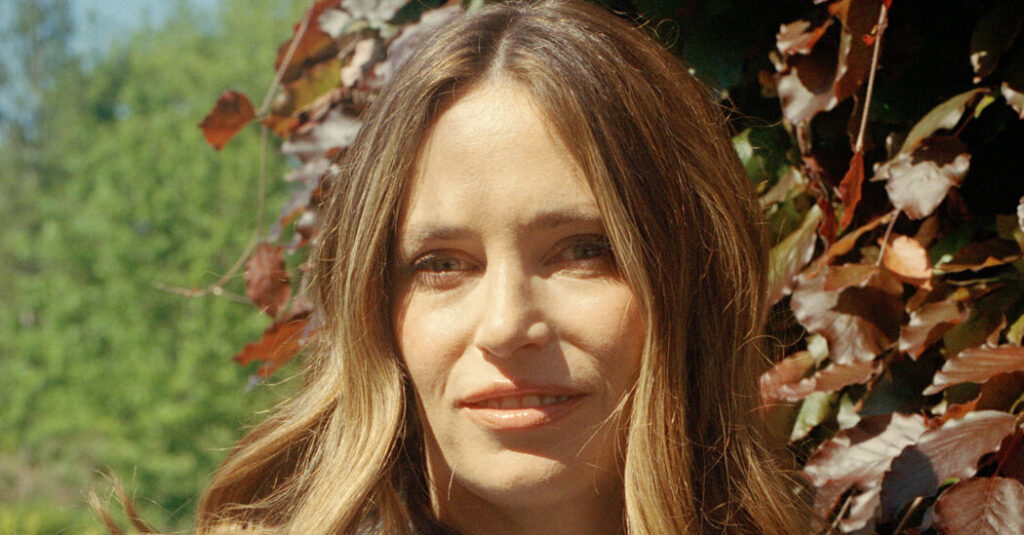
All this razzle dazzle seemed far away as Fortune chatted, fresh- faced with a smattering of freckles, on a video call from her 1950s bungalow in Toronto.
Behind her were copies of her books, stacked atop floating shelves she mounted herself. Beside her was a painting of a sunset that appeared on the cover of her second book, “Meet Me at the Lake,” inspired by a picture she snapped herself.
Fortune has an earnest, can-do vibe, as if there’s no checklist she can’t conquer and no lakeside summer love she’ll leave unexplored.
She didn’t hesitate to spin her computer around when I asked for more of a peek at her office, which was chockablock with clothing to be donated; barbells and a treadmill she said she rarely uses; and jewelry sorted into pouches for the Canadian leg of her book tour.
“It’s a disaster,” Fortune said of her work space.
And it was, refreshingly so.
Fortune was an editor at The Globe and Mail, Toronto Life and Chatelaine, a women’s magazine, before becoming the executive editor of Refinery29 Canada. While in this role — and hunkered down during the pandemic at a cottage near her childhood home in Barry’s Bay, Ontario — she had a frustrating work call that galvanized her to write a novel.
She described her epiphany during our conversation, which has been edited for length and clarity.
Tell me about the phone call that launched five best-selling novels.
I’d been advocating for a pay raise for a staff member for two and a half years and was continually told if we met X goal, then Y would happen. It never did. I was so upset, I slammed down the landline. I felt I’d given everything to my career. I was proud of the work, but what did it amount to? Mostly migraines, a lack of sleep and deep worry over my staff. I knew in that moment that I needed to do something for myself.
What was your first step?
I’d recently read my journals from when I was a teenager so I knew I wanted to write about how I grew up at the lake — on the water, one of only three permanent residences on a dirt road. After work one afternoon, I took my red Moleskine to the dock and started brainstorming. I calculated how many days were left in the year and how many words I’d need to write to get to 80,000 words by then. It was under 500 words per day. I thought about journalists I worked with who file more than that with original reporting, and I was like, I can do this.
What was it like to read your journals?
Very emotional. The loneliness of being a teenager, the yearning to be seen and loved by someone, and not just romantically, was so present. There were notes we’d pass in class, including one from a girl who wrote, “You look so beautiful today.” It made me cry because I never felt beautiful as a teenager.
You’re a stronger woman than I am, to go back there. So how did the writing go?
I was in this mind-set of teenagers, romance, the lake. I knew the book had to have a happy ending because I couldn’t stomach anything else in the pandemic. I’d wake up at 5 every morning and write before my son, then 3, woke up and before I started work. I wrote on weekends. I finished a draft in four months. I found my agent in the acknowledgments page of “Beach Read,” by Emily Henry, and then the book sold to Berkley in a four-way auction.
You make it sound so easy!
Actually I was deeply stressed during the auction, crunching all these numbers. How much would I need in order to leave my job? I was nine months pregnant. My husband was quarantining because he’d been exposed to Covid. Our son had just started kindergarten and was coming home crying every day. And we were moving houses.
Writing my second novel was difficult too. It felt like the first one was a fluke, and it took a number of years for my career change to feel safe and real. Plus I was struggling with a bunch of postpartum mental health issues.
I’m so sorry. Do you want to talk about that?
I’m happy to. I experienced postpartum O.C.D. after my first son was born and again when my second son was born, although the first time around I did not know what was happening. I was afraid of being with the baby. I was also afraid of telling anybody because I thought I’d be locked away. This went on for months until I finally told my husband and our family doctor. Just saying it out loud helped; so did sleep.
My husband and I do not come from families with money and I was afraid of financial ruin. So it took a lot of support from my husband and therapist to make that leap into full-time writing, which I did on my maternity leave.
What helped your first novel take off?
Bookstagram and BookTok. I remember watching, week over week, as the conversation shifted from “Has anybody read this book?” to “You have to read this book” to “This is the book of the summer” to “Is this book worth the hype?”
I tried to to claw the conversation back; I didn’t realize how out of my hands it was. My dad had read the book — the first he’d read since 1976 — and he said it wasn’t bad for a book. So I made this little card that said “Not bad for a book — Carley’s dad,” and posted that on Instagram as a way to be like, please lower your expectations.
A different set of expectations are looming now that the streaming series, which you executive produced, is about to come out. What’s that like?
In the earliest version of the script I read, maybe two and a half years ago, it was set in Barry’s Bend, Wis. That was an absolute no from me. It was important to me that the show be explicitly set in Canada, where all my books take place.
I am genuinely happy with how it turned out. I feel excited.
Watching the first few episodes made me feel as if I’ve been to Barry’s Bay. What’s it like in real life?
It’s on the north end of Kamaniskeg Lake, surrounded by granite rock faces and rolling hills and mixed forest. It’s a community of 1,200 people. It’s very quiet in the off season. In summer, the population triples.
And your parents used to own an inn and restaurant nearby?
Yes, it was called the Madawasca Valley Inn. They sold it during the pandemic. They have a home in town now, and my husband and I bought a cottage on a lake nearby. So we have our own family place on the water for everyone to go to now, which makes me teary every time I drive there.
Elisabeth Egan is a writer and editor at the Times Book Review. She has worked in the world of publishing for 30 years.
The post Her Chart-Topping Romance Novels Started With Her Teenage Diaries appeared first on New York Times.