In the run-up to the iPhone’s launch in 2007, Apple cofounder Steve Jobs made a fateful decision: Apple would not turn to its partner Intel to make chips for the device, on the grounds that the firm was “really slow…like a steamship,” as Jobs put it. Apple would rely on up-and-comer ARM instead.
Jobs’ decision helped set off a two-decade decline for an iconic Silicon Valley brand. The company was once so celebrated for its chipmaking innovations that hardware makers clamored to attach “Intel inside” stickers to their devices. But Intel went on to miss not only the mobile revolution, but the AI era, as competitors stole its market share.
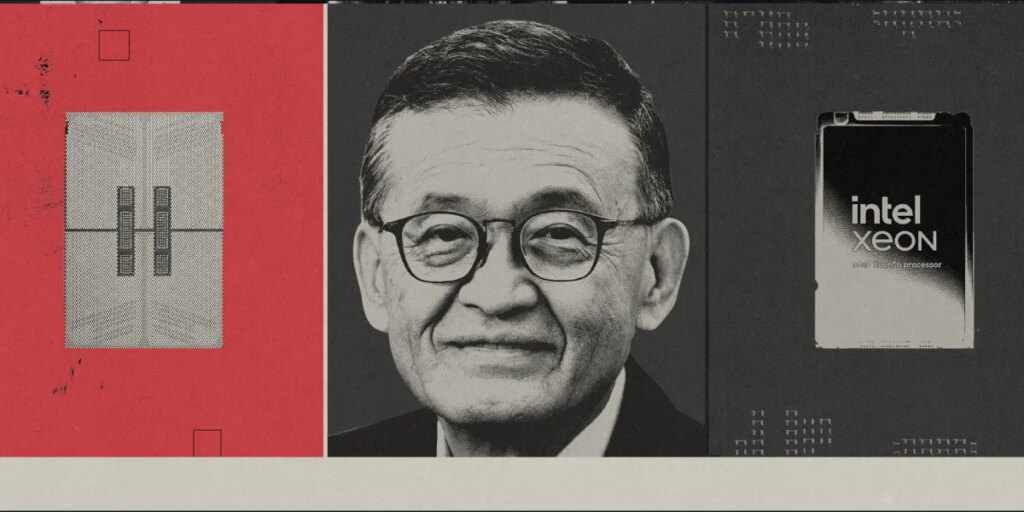
By early last year, it was unclear if Intel could remain a going concern. But then something remarkable happened. The company brought on CEO Lip-Bu Tan and, in barely a year, became one of the hottest stocks on the market. The story of Intel’s ongoing turnaround could become the rebound story of the decade—one featuring bold leadership, tough decisions, and no small amount of luck.
When Tan took the helm in March 2025, the longtime semiconductor veteran became Intel’s third CEO in six years, and the sixth since legendary cofounder Andy Grove relinquished the post in 1998. By Tan’s arrival, Intel had become defined less by its chips than by the $50 billion in debt it carried. “There was a large recognition that we needed to right the balance sheet,” says CFO David Zinsner, “but not a lot of clarity on how we were going to do that.”
In response, Intel set about selling off noncore parts of the business and raising capital from what Zinsner describes as Tan’s “incredible network.” Soon, Intel had tapped billion-dollar investments from Nvidia and SoftBank; it also grabbed headlines when Tan agreed to let the Trump administration convert a scheduled $8.9 billion grant into an equity stake for the federal government.
“The SoftBank endorsement was good; the U.S. government endorsement was great,” says Zinsner, citing a halo effect that raised Intel’s standing with creditors and investors and shored up its capital structure.
But money alone could not address Intel’s deeper problem of corporate complacency. To combat it, Tan sought to impart a spirit of candor. He cut Intel’s management structure from 12 layers to six and made a point of hearing firsthand about its performance from people at all levels of the company—putting an end to a pervasive practice where managers would filter only good news to the C-suite.
“If there’s a problem and you tell me about it early, it’s our problem, and we’ve got to fix it. If you have a problem, and you don’t tell me, it’s your problem,” Tan told everyone at Intel upon his arrival, Zinsner recalls.
For all the rapid progress it has made under Tan, Intel still needs to show that its chips can compete. “They got fat, dumb, and lazy, and got their ass handed to them,” says Bernstein analyst Stacy Rasgon. Nvidia and TSMC became the leaders of the AI era while Intel mostly watched from the sidelines.
Under Tan, however, Intel has been getting a bigger piece of the AI boom. Part of this has been a matter of luck, Rasgon explains: An insatiable demand for memory to support AI functions has led companies to find more uses for Intel’s traditional CPU chips. This has allowed Intel to sell huge amounts of existing inventory, helping to drive the surge in its share price.
The company’s real challenge is to prove it can still make the cutting-edge chips that once defined it. There are promising signs: Intel’s closely watched efforts to build chips using its next-generation 14A manufacturing process are on track, a technological transition that could help the company woo more big-spending customers. Intel’s design of chips for other companies, the other pillar of its business, got a big boost on recent reports that Apple may turn to the company again as a supplier.
While it’s too soon to say whether Intel will complete its comeback, it clearly has learned from past mistakes. According to Zinsner, Tan has largely departed from his predecessors’ tradition of frequently quoting Andy Grove. He has, however, adopted and repeated one of Grove’s most famous maxims: “Only the paranoid survive.”
This story ran in the June/July 2026 issue of Fortune as part of a feature called ‘Innovation Giants on the Rebound.’ For more Fortune 500 innovation stories, click here.
The post Intel’s new CEO cut management layers in half. The stock is up nearly 500% appeared first on Fortune.