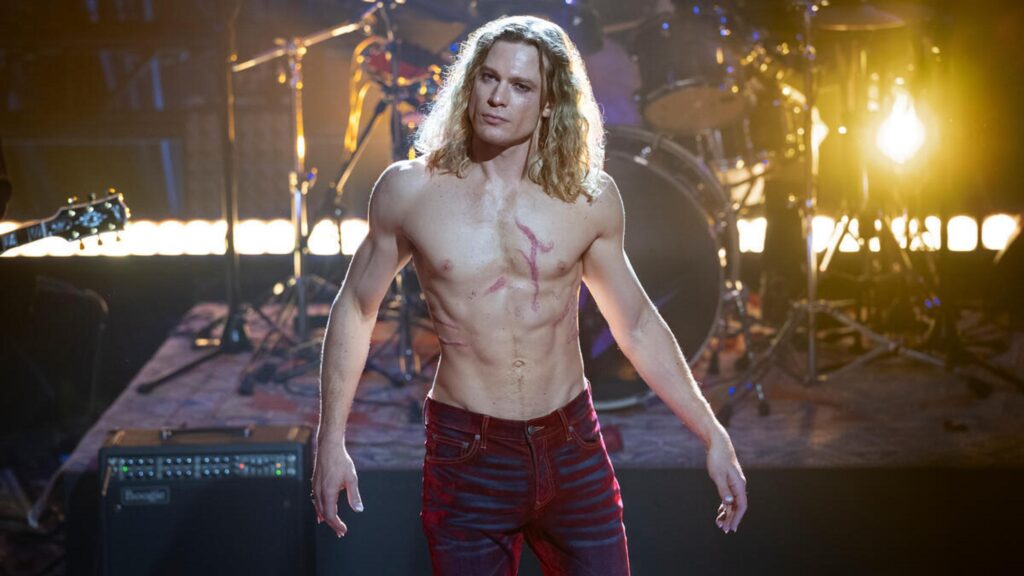
Imagine that an esteemed journalist published a book profiling a real-life vampire, and then that vampire’s twisted soulmate—also a vampire—started a rock band. If this were 1985, when Anne Rice’s novel The Vampire Lestat came out, you could expect such a revelation to upend human society. But in today’s United States, an aspiring tech dystopia where the news can be weirder than the conspiracy theories? You’d get hours of social media chaos, days of cable-news hysteria, and then, most likely, everyone who didn’t already believe in lizard people would write off the author as a scammer and the rocker as a fraud. Or, as Lestat de Lioncourt (Sam Reid), now fronting glam-garage revival act the Vampire Lestat, tells it: Americans “lifted their heads from their algorithmic hand masters, uttered a collective ‘huh,’ and swiped left.”
This florid voice narrates The Vampire Lestat, airing Sundays on AMC, an alternately rollicking and gutting work of apocalyptic camp that creator Rolin Jones has suggested is, at once, the third season of his beloved Rice adaptation Interview With the Vampire and a new show with the same characters and personnel. In Interview, the vampire Louis de Pointe du Lac (Jacob Anderson) told his epic, 145-year life story to the hard-boiled reporter Daniel Molloy (Eric Bogosian). That biography took the form of a dark romance between the self-lacerating Louis and his fiercely loving but brutal maker, Lestat, filtered through the former’s brooding subjectivity. Dozens of harrowing twists later, Daniel was turned into a vampire by Louis’ terrifyingly powerful, 500-year-old lover, Armand (Assad Zaman), and published Louis’ confessions to the ridicule of the human media and the outrage of the understandably press-shy immortal community.
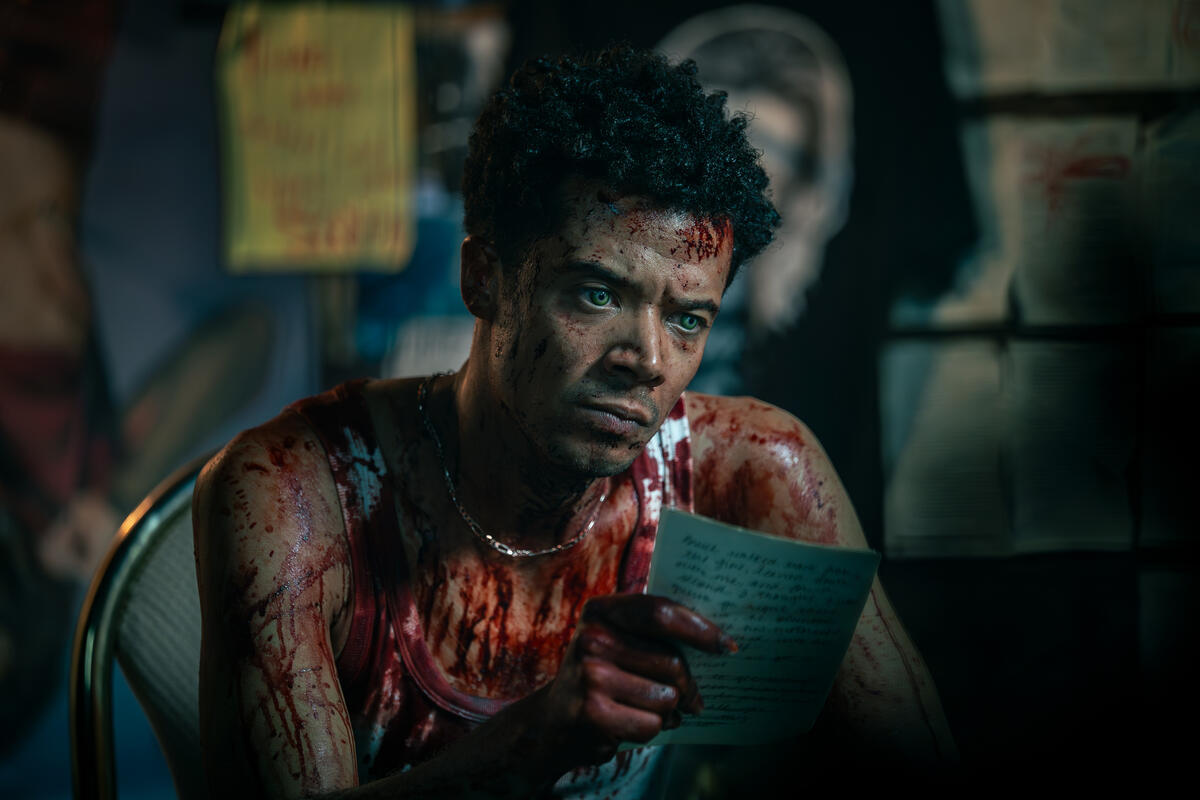
Lestat, for his part, did not appreciate his depiction in the book as “a mayonnaise villain with sociopathic tendencies.” He reclaims his narrative in a new season steeped in the End Times decadence of MAGA-era nihilism, whose opening chapters are as exuberantly arch and overwrought as the title character’s monologues,. In place of the sweeping emotionality that defined Louis’ perspective comes a Vampire Lestat North American tour diary that is part scuzzy rock doc, part druggy, neo-glam fantasy, and, as Lestat is stalked by vamps who’d prefer he didn’t draw so much attention to their existence, part supernatural thriller. A device that frames the season’s events as a flashback also teases a climax of global proportions and introduces doubt around the survival of the self-described “performative vampire” Reid so vividly portrays.
Jones uses his antihero’s blunt self-appraisals to avoid the pretentiousness endemic to stories about artists. Instead of dazzling us with his ostensible genius, Lestat complains his band is stuck in the “Alps of adequacy” and gets scathing reviews. Interview had a sense of humor about its high drama, but this season sometimes plays like a full-on comedy. A Czech lookalike gives the real Lestat alibis for the murders he commits on the road. There’s a running gag about vampires peeing blood at public urinals This marvelously fun shift in tone more than justifies the title change.
Yet as the season progresses, Lestat reunites with his hot undead mom (an icy Jennifer Ehle), and his origins as an aristocratic misfit in 18th century France come into focus, the new episodes feel increasingly in sync with Interview. The Louis-Lestat romance fans love to dissect is far from over. And Lestat becomes, like its predecessor, an empathetic portrait of an immortal monster with human psychology. A life that spans centuries means more catastrophic mistakes and more formative traumas and more time for pain and guilt to fester in the subconscious. To make the musical masterpiece of his dreams, Lestat will have to break on through his shell of witty cruelty and hope an authentic soul remains intact beneath it.
The post The Dazzling Vampire Lestat Resurrects Interview With the Vampire as Apocalyptic Camp appeared first on TIME.