
This is an edition of The Atlantic Daily, a newsletter that guides you through the biggest stories of the day, helps you discover new ideas, and recommends the best in culture. Sign up for it here.
Some books stay with us long after we first read them. Many endure because of their humor or imagination; others capture unnameable feelings that grow as we grow. Here are seven reads that The Atlantic’s writers and editors still return to.
A Tree Grows in Brooklyn, by Betty Smith
It was easy to love this book the first time I read it, when I was somewhere around the age of its protagonist, Francie Nolan, an 11-year-old growing up in Williamsburg in 1912. Actually, that’s not quite true. Until I picked it up, I’d harbored a strong suspicion that the book was one of those dutiful, moralistic classics that adults are always trying to get kids to read—important, sure, but probably boring. What I discovered instead was a nuanced, unsentimental portrait of a family and a neighborhood in flux, written in the kind of loving but unsparing voice that could belong only to someone who’d seen (and suffered) it all herself. (One of Smith’s wry asides, about the brutality of public school circa 1908: “Child psychology had not been heard of in Williamsburg in those days.”)
I didn’t revisit the novel until I moved to Brooklyn myself, nearly two decades later. Once again, its sharp observation and wry humor drew me in, and I started telling friends and family that they needed to read, or reread it, too. The book holds up so well because its pleasures are, as Anna Quindlen writes in a foreword, less about plot than “about what it means to be human”—in other words, it is the kind of story that’s impossible to outgrow.
— Amy Weiss-Meyer, senior editor
The Great Gatsby, by F. Scott Fitzgerald
Just because everyone knows that The Great Gatsby is a perfect book doesn’t make it any less so. Taut, incisive, and scrupulously observed, Fitzgerald’s novel moves like a bullet. Amid the procession of sad sacks and wash-ups who make up the “American dream” unit in high-school English classes, Jay Gatsby stands apart, a rakish dreamer in a luminous pink suit, fabulous and damned.
Nick Carraway, the novel’s narrator, is an ideal guide for a young reader because he embodies so many of the idiosyncrasies of youth: He launches the yarn with a claim that he reserves “all judgements,” but he proceeds to burn everyone with his watchful eyes. He is passive, insightful, self-conscious, and a bit sentimental, a keen observer of the dramas of others and a detached observer of his own. Yet Carraway’s strengths as a literary companion somehow compound with time and age—perhaps because he navigates Gatsby’s tragedy with the familiar temperament of a reader, wistful and observant, always on the outside looking in.
Fitzgerald is a lyricist, but this novel will still grab you by the lapels and not let go. In my 20s, while I was preparing to host a housewarming party for the first apartment I lived in on my own, I thought I’d listen to The Great Gatsby on tape for maybe an hour while I cooked and cleaned, only to find myself weeping lightly in my one chair when the book ended after 3 a.m.
— Emily Bobrow, senior editor
The Lion, the Witch, and the Wardrobe, by C. S. Lewis
In the weeks after I read this novel as a child, I’d check the back of closets just in case one held a portal to another world. I tried Turkish delight to see whether it was tasty enough to justify selling out your entire family, as the character Edmund chose to do. (It wasn’t.)
Now, as an adult, I love that Lewis’s novel, an allegory for the Christian story, is about restoration and redemption, even for the traitorous Edmund. Its fantastical world is even more delightful to me nowadays, maybe because magic is harder to come by once you know about Roth IRAs.
Lewis understood that this wasn’t going to be the kind of story that people outgrow. As he put it in the book’s dedication to his goddaughter (the inspiration for the character Lucy): “I wrote this story for you, but when I began it I had not realised that girls grow quicker than books. As a result you are already too old for fairy tales, and by the time it is printed and bound you will be older still. But some day you will be old enough to start reading fairy tales again.”
— Nancy Walecki, associate editor
Bone, by Jeff Smith
One year in elementary school, while wandering a Scholastic Book Fair—that budding bookworm’s delight—I found a graphic novel called Out From Boneville. The book’s cover featured a cute, simply drawn white figure, something like a combination of Casper the Friendly Ghost and Moomin. I bought it, not suspecting the journey that awaited me.
The Bone series, comprising nine books largely self-published by Smith, is high fantasy masquerading as kid lit. It’s also hilarious. Cousins Fone Bone, Phoney Bone, and Smiley Bone explore the mysterious Valley, encountering dragons, “rat creatures,” and the fierce Thorn and her Gran’ma Ben.
Out From Boneville is heavy on jokes and light on violence, but as I raced through the series, that balance flipped. By the finale, the Bones are caught in a war that’s politically complex, thrilling, and, for a kid, sometimes terrifying. (Smith has said that he meant for the comic to be a “kids’ book for adults.”) The story never loses its humor, though, which—combined with the masterful world-building and detailed pen-and-ink illustrations—makes Bone always worth revisiting.
— Dan Goff, copy editor
The Phantom Tollbooth, by Norton Juster
The Phantom Tollbooth is a strange sort of children’s book because its protagonist is a strange sort of child. Milo is a boy who doesn’t know what to do with himself; he doesn’t like to read or learn or play. He’s not exactly wise beyond his years; he’s bored beyond his years. His life is like a child’s caricature of adult ennui: rushing from one place to another, not caring much for either.
But all that changes when Milo drives his toy car through a mysterious tollbooth and into the Lands Beyond. Soon he meets the Whether Man (not the weatherman, mind you) and Tock the ticking Watchdog. He eats his words—words grow on trees, in the Lands Beyond—and goes on a journey to rescue Rhyme and Reason.
The world Milo explores is fantastical, but it draws its magic from a very ordinary source: language. Where else would a child learn that brougham, shandrydan, and charabanc are all words for carriage? The Phantom Tollbooth’s topography is idiom, its landscape built on puns; the Island of Conclusions can be reached only by jumping, and “killing time” is a serious offense.
When Milo makes it home, he’s learned that he has a world to explore right under his nose. It’s the kind of reminder that feels more meaningful with age.
— Elias Wachtel, assistant editor
The Crying of Lot 49, by Thomas Pynchon
The trouble with reading any Pynchon novel is the urge to put it down every few sentences to look something up: a reference to experimental physics, say, or a possibly apocryphal Jacobean revenge play. The trick is to just vibe with these things instead. His second novel, published in 1966, is the perfect one to teach you how to read Pynchon, whose sprawling books tend to range further than a V-2 rocket. I like returning to it on a several-hour flight.
The Crying of Lot 49 has a potboiler plot involving an ancient postal conspiracy (really), but I think of it more as a literary guitar solo (perhaps played by the Paranoids, the teenage rock band that appears in the novel). It’s antsy and hysterical, thick with its tilted California atmosphere, and full of rabbit holes and famously delicious character names, such as Oedipa Maas and Mike Fallopian.
If you assume that all of those Pynchon tics will bother you, give it a shot anyway, and then read it again: It’s under 200 pages.
— Jonathan L. Fischer, senior editor
The Amulet of Samarkand, by Jonathan Stroud
When I first met Bartimaeus, the cranky, thousands-of-years-old djinni who narrates The Amulet of Samarkand, I’d never encountered a narrator like him. Bartimaeus doesn’t want to be telling this story. He doesn’t want to be on Earth, or in London, at all. He detests the human magicians who summon him using pentacles and runes and force him to do their bidding. He considers himself far too accomplished (he served King Solomon!) and dignified (he rebuilt the walls of Uruk! And Prague!) to have been summoned by a mere preteen magician—one who’s sloppy enough to make the cardinal mistake of revealing his true name. And yet, he’s conscripted into the young apprentice’s service, at least until he can find a way to get his revenge, leading to a novel’s worth of cat-and-mouse scheming.
As a tween myself, I was bewitched by Bartimaeus’s sardonic, compelling voice. I didn’t know that footnotes—all written by the narrator—could be deployed to such comic effect, and I’d never considered the fun of an alternative history or realized how interesting parliamentary politics really could be. Since then, I’ve read many books that clearly influenced Stroud, but none have diminished Bartimaeus in my eyes or made reading this series any less fun.
— Emma Sarappo, senior associate editor
Here are three Sunday reads from The Atlantic:
- Derek Thompson: The great depopulation
- America is missing out on the ultimate mosquito weapon.
- Read these books by the time you graduate.
The Week Ahead
-
Land, a novel by Maggie O’Farrell about a father-son mapping expedition across Ireland that is derailed by a mysterious encounter in the woods (out Tuesday)
-
The Witness, a true-crime drama series about the 1992 murder of Rachel Nickell, told through the eyes of her toddler son, the only witness (out Thursday on Netflix)
- Signal One, a sci-fi mystery about a computer scientist recruited by a tech billionaire for a project that could redefine humanity (in theaters Friday)
Essay
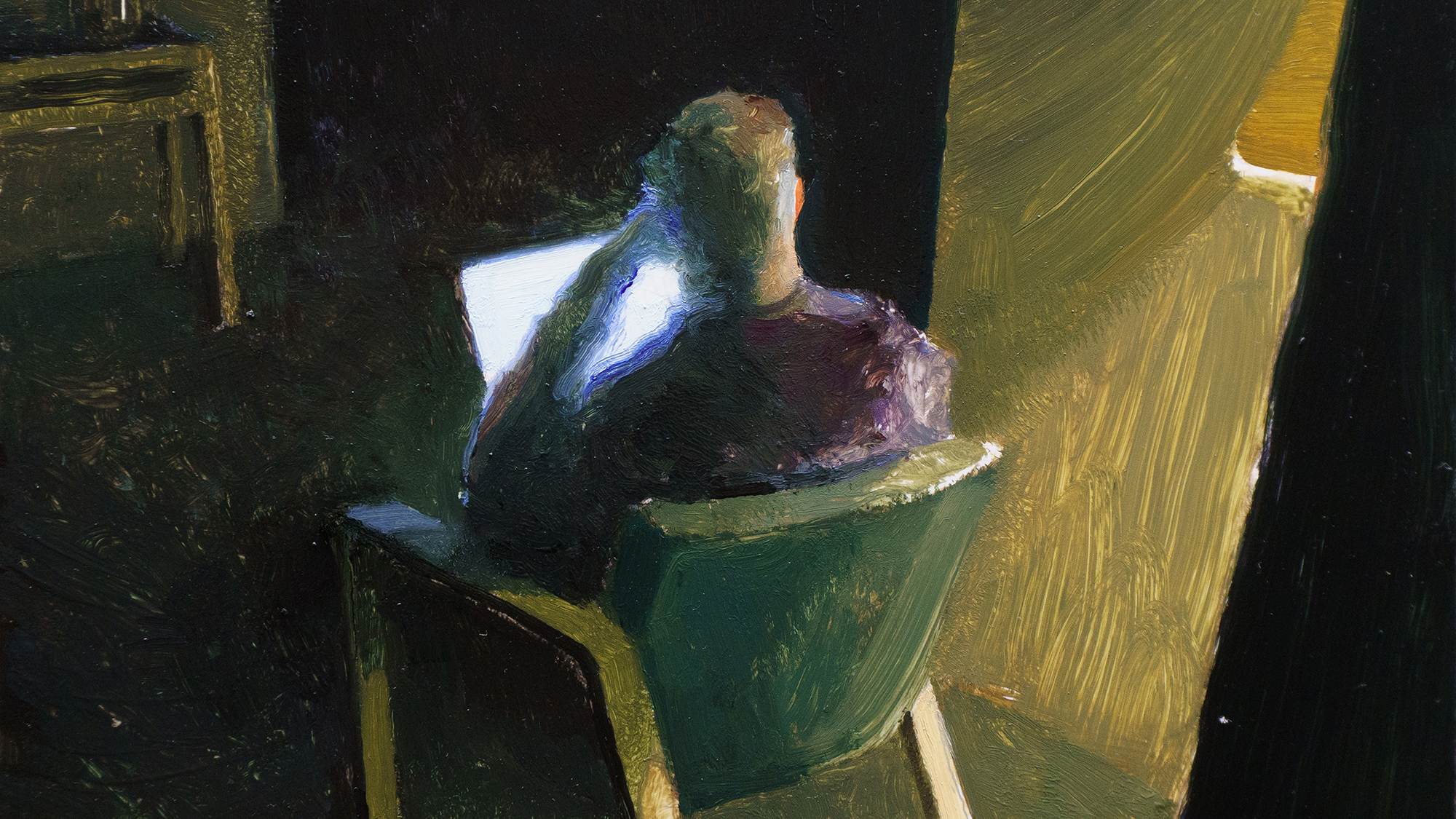
The Night My Marriage Fell Apart
By Chris Jones
I couldn’t sleep. I sat in the big leather chair in our den in the dark, my brain buzzing with jet lag and worry, listening to the sounds that our beautiful, crumbling house made in the night. It was the manse for a long-fallen church, and I’d been taking it apart and putting it back together piece by piece. The spine of our house was a 60-foot beam that ran the length of the basement ceiling, hand-carved from the trunk of an ancient Douglas fir. It was magnificent timber. For more than a hundred years, it had held the weight of however many families. Now it held the weight of mine, and it groaned like a wooden ship.
More in Culture
- The pope doubles down on the beautiful struggle.
- Russell Shaw: The phrase I texted my kids 133 times
- The latest toys for Millennial-parent guilt
- “He may be the greatest virtuoso that jazz has ever produced.”
- The new auteur of the hallucinated hellscape
Catch Up on The Atlantic
- Trump might already be a lame duck.
- A sweeping theory of everything is revolutionizing the Democratic Party.
- Paxton versus Talarico is already awful.
Photo Album

Take a look at images of Yellowstone National Park’s spectacular scenery and wildlife, captured by the photojournalist Mario Tama.
Explore all of our newsletters.
When you buy a book using a link in this newsletter, we receive a commission. Thank you for supporting The Atlantic.
The post Seven Books You’ll Never Outgrow appeared first on The Atlantic.