“You guys want to come over and watch this cool TikTok I found?”
This line, from a recent reprint of Sara Shepard’s young adult thriller “Pretty Little Liars,” drew criticism online this spring after a reader said it “ruined the whole book.”
In the original edition, from 2006, the same passage referred to the reality show “Fear Factor.” The updated version, from 2022, replaces it — and other early-2000s markers — with references to Instagram, Snapchat and artists like Billie Eilish and Doja Cat.
In publishing, the practice of updating cultural and technological references in older books is called modernization. It is most common in, but not exclusive to, middle-grade and Y.A. fiction, and is distinct from sensitivity editing, which targets language deemed offensive and became a subject of debate following revisions to Roald Dahl’s novels.
“It’s giving new life to the book,” said Kari Sutherland, an agent at KT Literary Agency and a former HarperCollins editor who worked on Shepard’s books. (She was not involved in the reprint.) Authors, editors and agents are generally open to updating cultural references, she said in an interview, “because what was very popular among teens in the early 2000s is no longer on their radar decades later.”
But the backlash to “Pretty Little Liars” suggests limits to that logic. Should readers expect their favorite books to change? And where, exactly, do publishers draw the line?
Why do publishers modernize books?
A dated reference can break the spell a book casts on readers, said Elana Roth Parker, an agent specializing in children’s and Y.A. fiction at Laura Dail Literary Agency. When a reference misses the mark, she explained, it can pull young readers out of the story.
“Kids don’t want to feel the adult behind the book,” Roth Parker said.
Modernization is an attempt to avoid that.
“If we want readers to fall in love with the same story we fell in love with as teenagers, the best way to do that is to reach them where they are,” Sutherland said.
With middle-grade fiction, the main concern is comprehension. “If a fourth grader comes across a phrase they don’t understand, it can stop them in their tracks,” said David Levithan, the editorial director at Scholastic. “You still want to challenge readers, but you don’t want to have unnecessary hurdles.”
Anthony Horowitz, author of the “Alex Rider” spy novels, said he had “absolutely no compunction whatsoever” about updating his books, the way he did here in “Stormbreaker,” the first book in the series:
2002: “Alex killed a couple of hours knocking a few balls around on his uncle’s snooker table — and then felt vaguely guilty when Jack caught him at it.”
2015: “Alex killed a couple of hours in the evening playing his Playstation — and then felt vaguely guilty when Jack caught him at it.”
For each new edition, Horowitz meets with his publisher to remove details he thinks date the books, like compact discs or cellphones with long antennae. He described these as “miniature hand grenades thrown in your path as you’re trying to make your way across the landscape of the story.”
How are books chosen?
The likeliest candidates are perennial best sellers or entries in popular, long-running series, which publishers often reissue with new covers around anniversaries or timed to adaptations. Interior edits sometimes follow, if publishers believe changes to cultural references may help a book reach new audiences.
Not everyone agrees on where to draw the line.
Levithan, who has edited Ann M. Martin’s “The Baby-Sitters Club” for more than 30 years, said the choice to update or preserve a book is “completely subjective,” decided on a case-by-case basis and made with the author’s approval. For him, the key consideration is whether a series is still actively finding new readers.
“That’s the yardstick,” Levithan said. “I think any time you go back into a text and change something, you have to do so really, really carefully.”
Is this new?
No. While publishers don’t advertise these changes, readers have long been documenting them online. Complaints about “Pretty Little Liars” circulated on Reddit and TikTok for years before gaining traction on X. Fans have also pointed out updates in books by K.A. Applegate, Leigh Bardugo and Elle Kennedy.
Roth Parker first encountered modernization in the 2000s while working as a book packager at Parachute Press, where she reviewed books in R.L. Stine’s “Fear Street” and “Goosebumps” series for outdated references and language. She doesn’t remember finding much.
In the 1990s, Judy Blume’s publisher in the United Kingdom proposed updating the menstrual hygiene products mentioned in “Are You There God? It’s Me, Margaret.” by swapping out Margaret’s sanitary belt for sticky pads.
“I jumped at the chance,” Blume wrote in an email to The Times. “My U.S. publisher agreed it was a good idea.” (Blume also updated the technology in her “Fudge” series: “What kid today has ever heard of a mimeograph?”)
Some readers lament the loss of the belt, but Blume stands by the change. “I’ve never been sorry about that,” she said. “It didn’t change the story or the characters.”
How does it work?
When reissuing Meg Cabot’s “The Princess Diaries” series at HarperCollins, Sutherland combed through the novels for cultural references. When a reference felt particularly dated, like the mention of a celebrity who had since left the limelight, the publishing team ran a suggested substitution by the author.
“I don’t recall any disputes,” Sutherland said. “But if there had been, we would have deferred to the author. It’s their character and their voice.”
At Scholastic, repackaging efforts for “The Baby-Sitters Club” are guided by one principle: keeping the books “time-agnostic.”
“It’s a phrase we use all the time,” Levithan said. The goal, he added, is “to find language that feels clear to today’s reader without suddenly putting iPhones into 1986.”
In the updated editions, a character “watches a movie” instead of putting a tape into a VCR, or “finds a phone number” instead of looking it up in a phone book, as in this example from “Baby-Sitters’ Winter Vacation”:
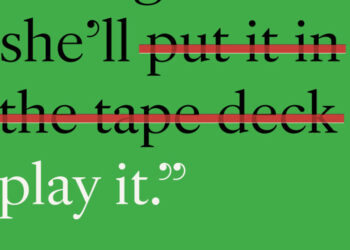
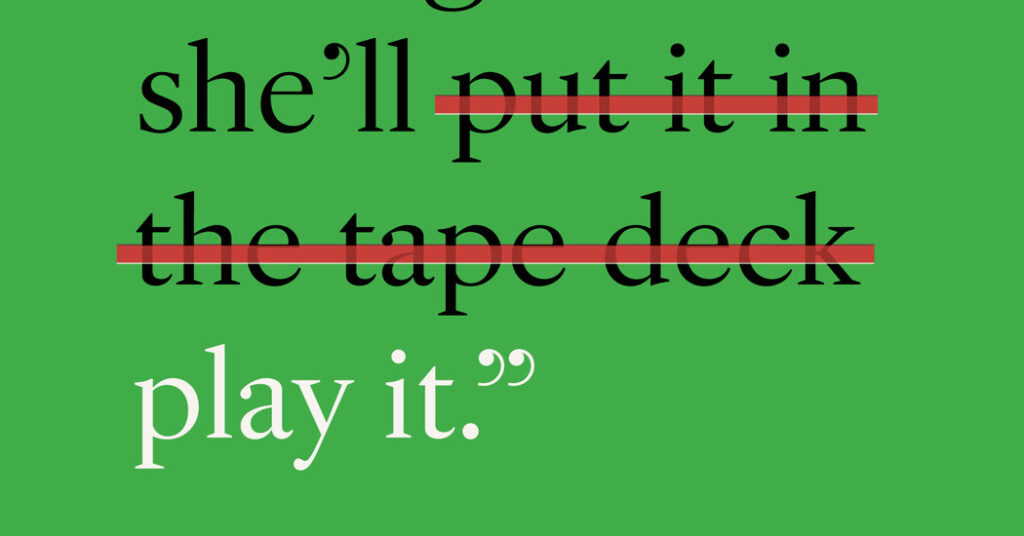
1989: “If you need music for your number, just hand her your tape before you go onstage and she’ll put it in the tape deck.”
2023: “If you need music for your number, just tell her your song before you go onstage and she’ll play it.”
For Levithan, this approach is central to how the books continue to resonate with readers.
“A whole new generation picked them up because they didn’t see them as a nostalgia buy, like something that belonged to their parents,” he said. “They saw them as something speaking directly to them.”
Is everyone on board?
Not quite. Leah Phillips, a children’s and Y.A. literature researcher at Plymouth Marjon University, sees the push to modernize as “inherently not trusting younger readers.”
“It’s saying, ‘We don’t think you can handle this,’” she said, adding that eighth graders routinely study Shakespeare. “We teach them to read it. Surely, they can apply those same skills beyond the classroom.”
“There’s no single, universal idea of what kids want,” said Jennifer Buehler, a Y.A. literature scholar at Saint Louis University. “You can’t assume all kids will be turned off when they sense the adult behind the book.”
Even within publishing, some remain ambivalent. Roth Parker, for instance, likes to introduce her own children to older novels even when she knows they won’t understand the references.
“Sometimes it’s nice to talk about what kid life was like then,” she said. “There’s something cool about keeping things true to the time they come from.”
While Phillips concedes that the changes might seem “neutral in some respects,” she worries about stripping texts of their cultural and historical specificity. “They’re erasing the novelty,” she said, “which, in the artificial intelligence boom, is something I think we desperately need to hold onto.”
How is this shaping current fiction?
With middle-grade and Y.A. fiction under pressure to stay relevant, agents and editors will often advise authors to limit contemporary cultural references in their work in order to prevent books from appearing dated later on.
For that reason, Levithan has steered authors away from mentions of Taylor Swift and Travis Kelce in their work.
“I wish them all the best,” he said. “Please do not get me wrong. But if they broke up, it would instantly date the book. There’d be no way around it — every reader would be like, ‘Oh boy, the author got that wrong.’”
Roth Parker has noticed a new tendency, among her clients who usually write fiction set in the modern day, to set stories slightly earlier, sometimes by as many as 20 years, to avoid having to reckon with rapidly evolving technology.
“I wouldn’t even put ChatGPT in a book — I don’t know if that will exist in two years the way it exists now,” she said. “We’re all just doing the dance of trying to keep things evergreen.”
The post Why Is TikTok in This Book from 2006? appeared first on New York Times.