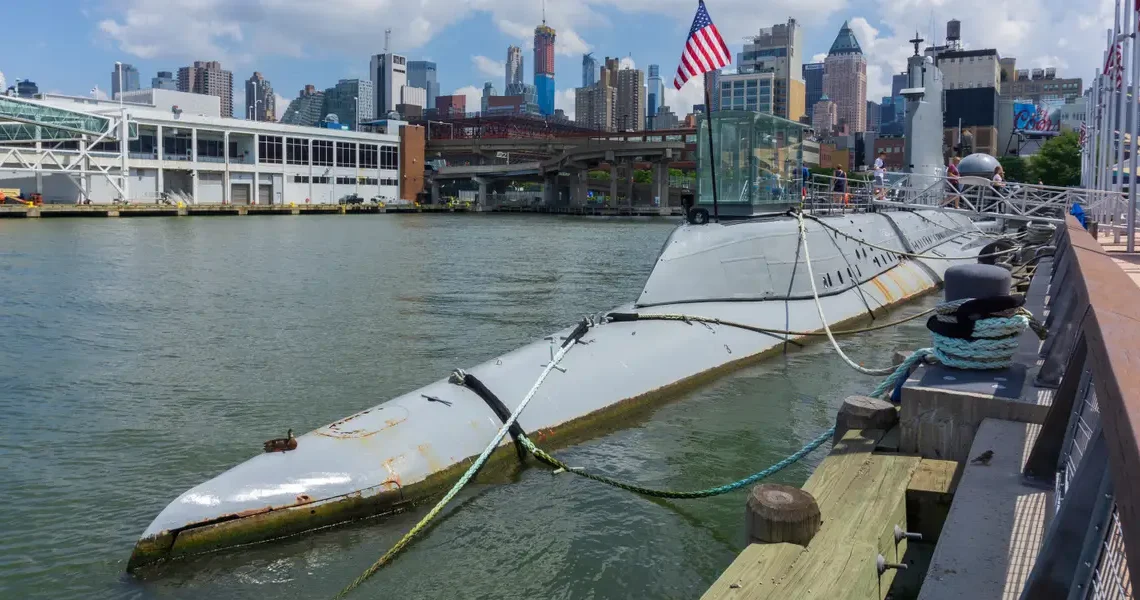
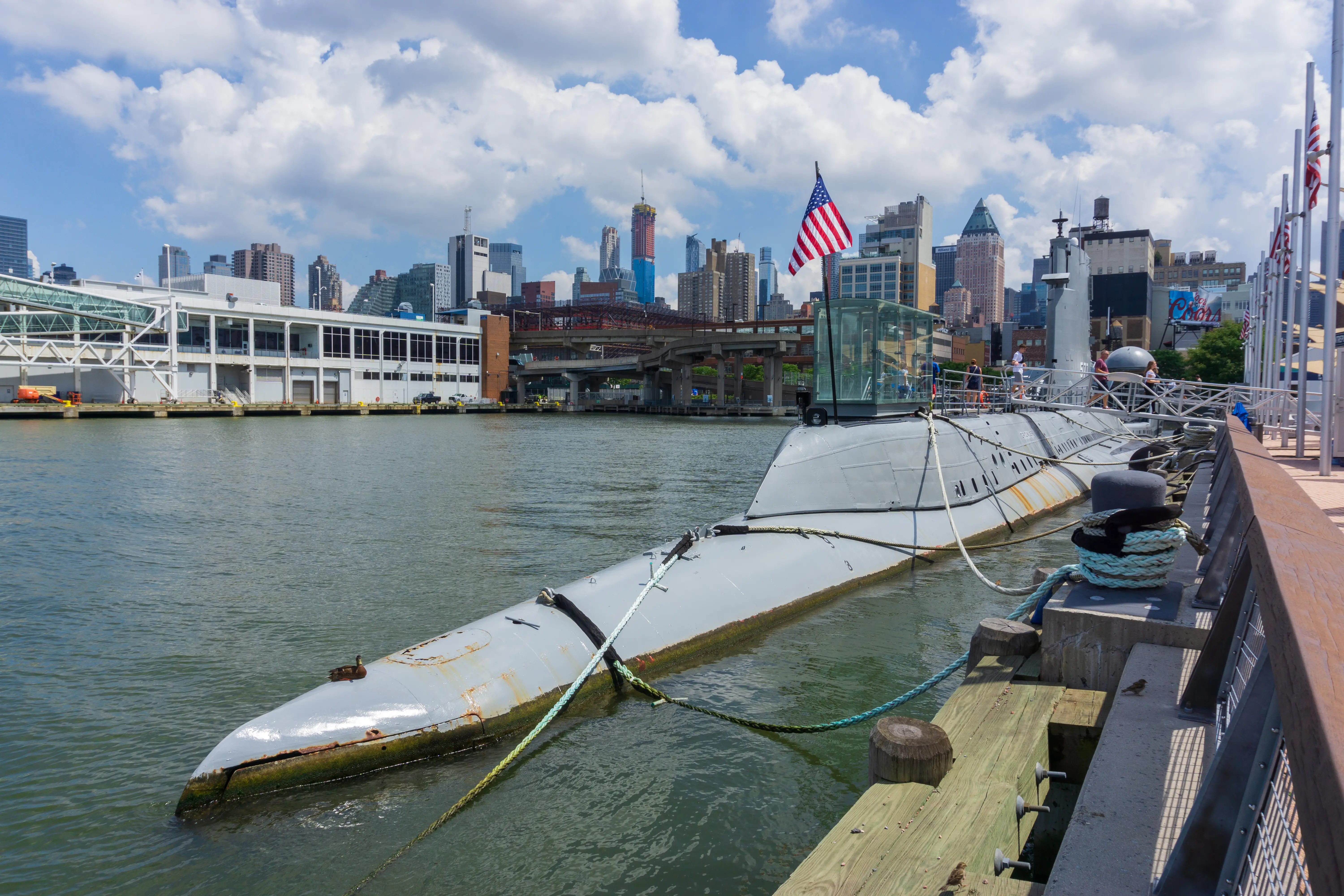
The USS Growler was once a top-secret US Navy submarine that patrolled the ocean’s depths during the Cold War. Armed with nuclear missiles and operated by a crew of 90 men, Growler’s firepower acted as a deterrent to keep other nations from using their nuclear weapons in a strategy known as mutually assured destruction.
Today, Growler is on display at the Intrepid Museum in New York City housed on the USS Intrepid, a 900-foot-long World War II-era aircraft carrier. Growler floats alongside the ship in the Hudson River.
Visitors don’t just get to look at Growler; they can actually climb inside and walk through its narrow confines on a self-guided tour.
Submarines remain a crucial component of the US Navy’s deterrent strategy. In March 2026, a US Navy submarine torpedoed an Iranian warship in the Indian Ocean as part of Operation Epic Fury. The Navy also occasionally publicizes the locations of nuclear-armed submarines to send a message to adversaries. In September 2024, for example, the USS Georgia, a guided-missile submarine, was sent to the Middle East in a show of support for Israel and a show of force to Iran.
Submarines are a costly endeavor. The US Navy’s Virginia-class submarine program is projected to run $17 billion over budget through 2030 amid delays, House Rep. Ken Calvert, chairman of the House defense appropriations subcommittee, said in 2024. The Navy has said delays are due to supply-chain issues and “lingering COVID-19 impacts.”
I visited the Intrepid Museum to tour the USS Growler in May 2024. Here’s what I saw aboard the only nuclear-missile submarine that’s open to the public.
The Intrepid Museum in New York City displays historic vessels used in sea, air, and space exploration as well as military operations.
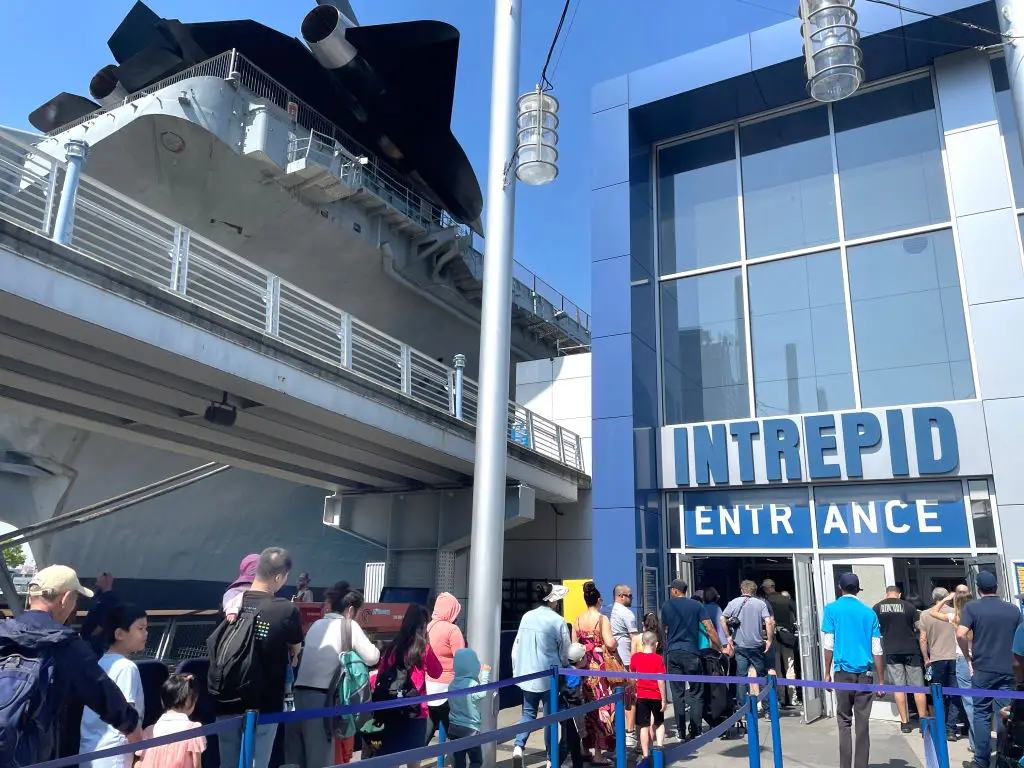
While a nuclear-powered submarine, the USS Nautilus, is open to the public in Groton, Connecticut, the Intrepid Museum is the only place in the US where members of the public can go inside a submarine that carried nuclear missiles.
Tickets cost $38 per adult and $28 per child over 4 years old and can be purchased on the Intrepid Museum’s website. Veterans and military service members receive free admission.
One of the museum’s top attractions is a self-guided tour of the USS Growler submarine.
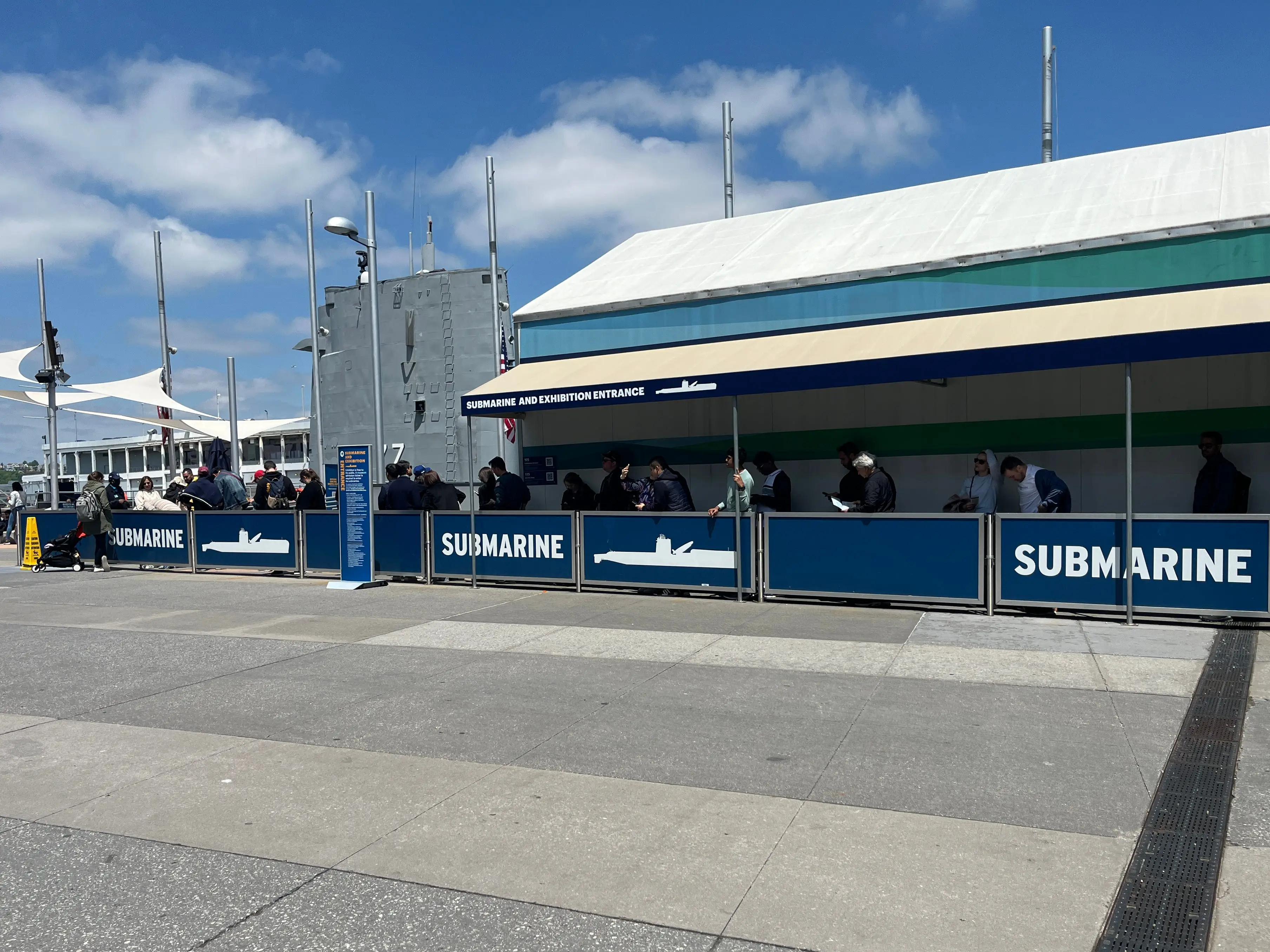
Every time I’ve visited the Intrepid Museum, there has been a line to enter the submarine due to the attraction’s popularity and small, enclosed spaces.
The line moved quickly when I visited in May 2024 — I only waited for about 15 minutes.
The USS Growler patrolled the seas on top-secret missions off the coast of Russia during the Cold War.
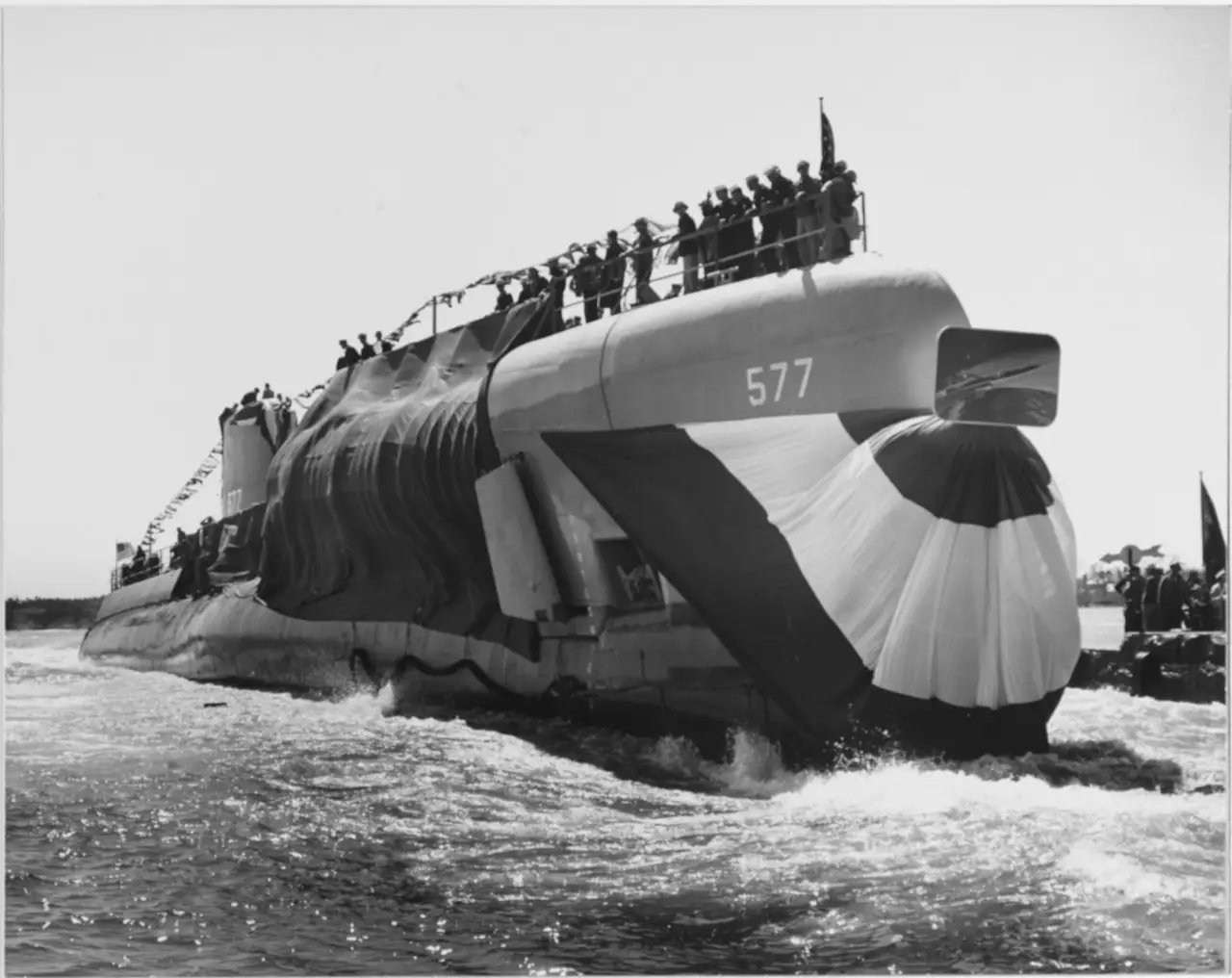
Commissioned in 1958, the USS Growler carried Regulus II sea-to-surface missiles armed with nuclear warheads. The looming threat of the submarine’s firepower acted as a deterrent to prevent other countries from using their nuclear arsenals.
The submarine now floats in the Hudson River with its top deck visible from the dock of the museum.
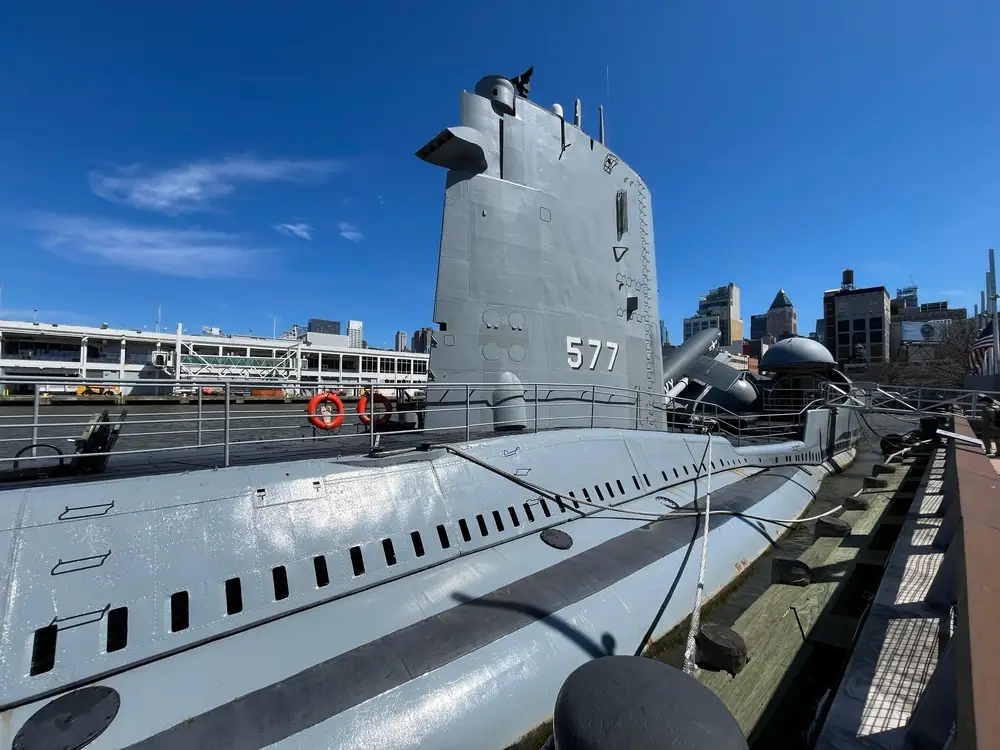
Growler was decommissioned in 1964 and awarded to the Intrepid Museum in 1988. The Intrepid Museum spent over $1 million repairing the submarine in 2008 when holes were discovered in its hull during a museum-wide renovation, The New York Times reported.
Exhibits provided a brief history of the USS Growler and the nuclear missiles it carried before entering the submarine.
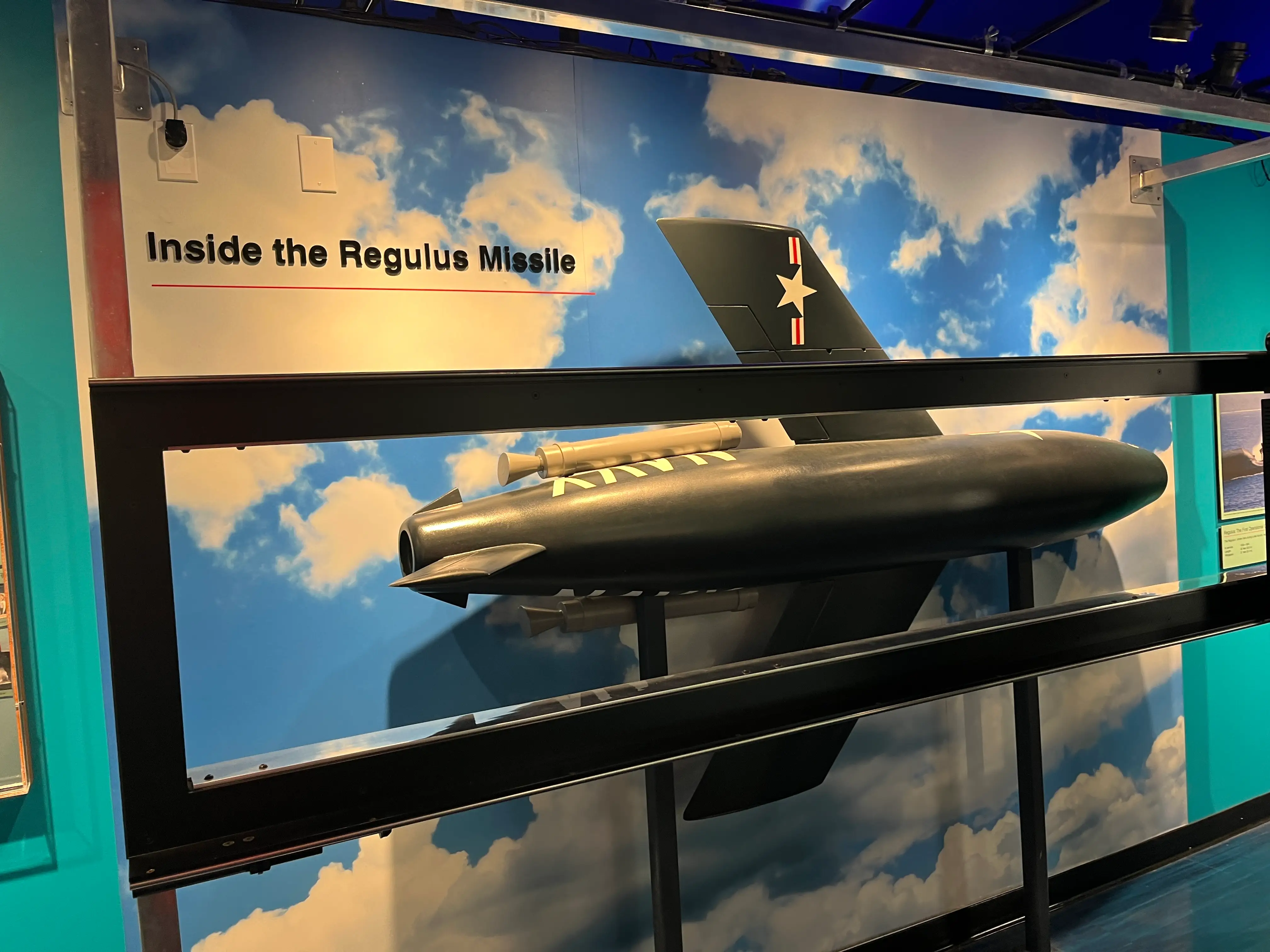
The first Regulus missiles had a range of 500 miles. Regulus II missiles could travel twice that distance.
There was also a sample doorway to make sure guests could walk through the submarine.
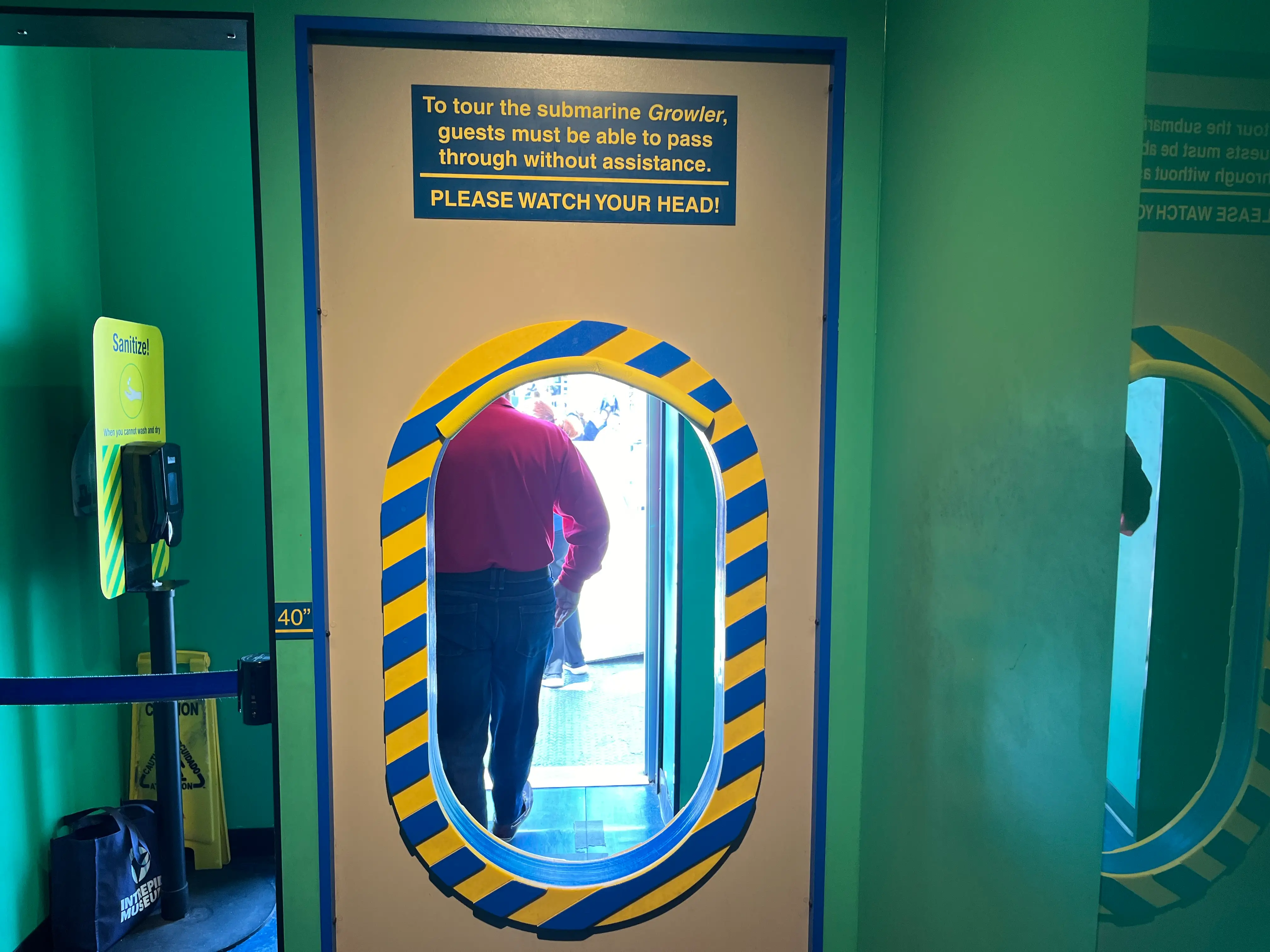
To visit Growler, guests had to be at least 40 inches tall and had to be able to pass through this doorway without assistance.
The first stop inside the submarine was one of the USS Growler’s two missile hangars.
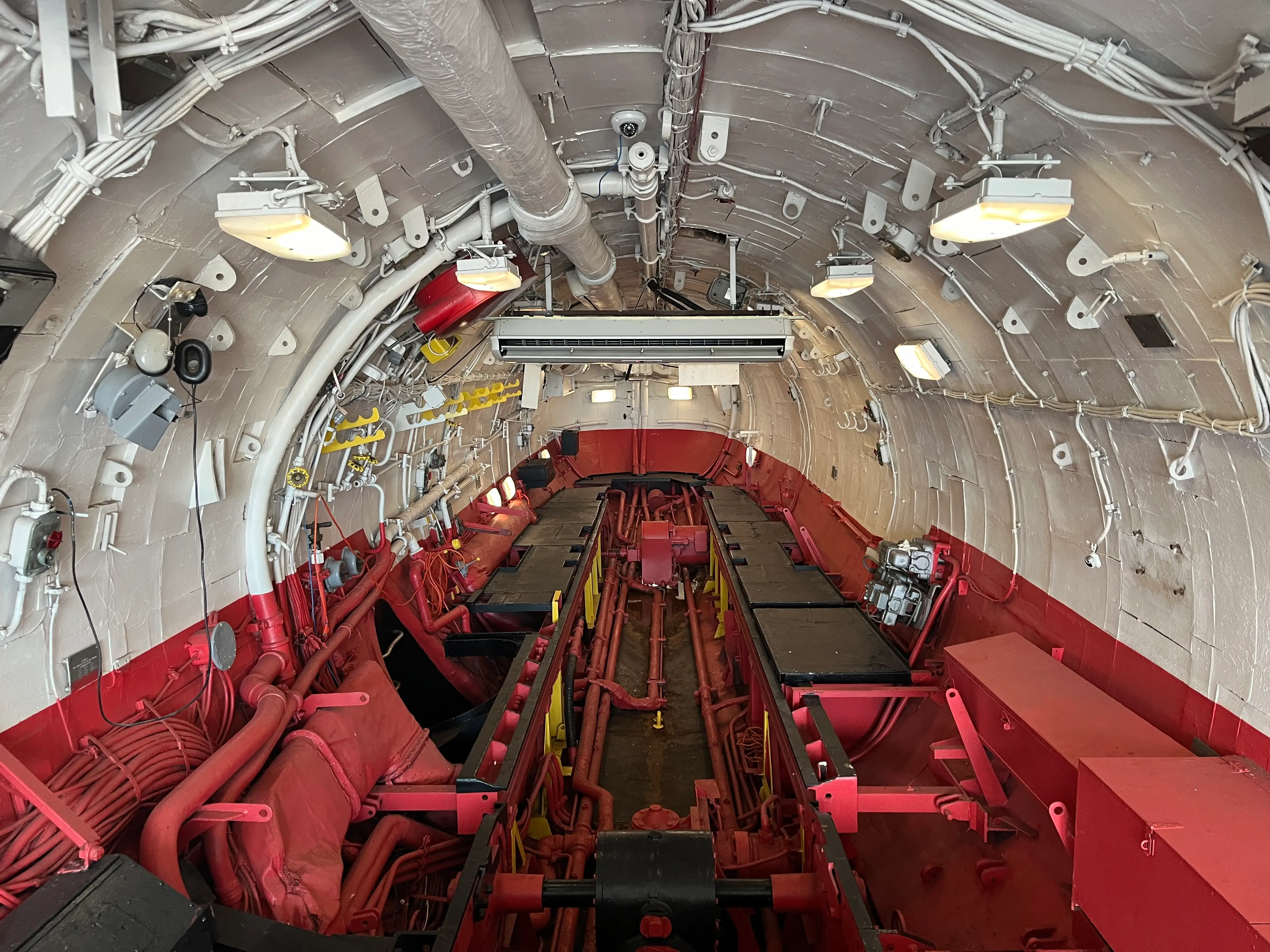
Each hangar could hold two Regulus I missiles, which each measured 33 feet long, according to the National Air and Space Museum.
In the navigation compartment, crew members plotted courses and tracked Growler’s position.
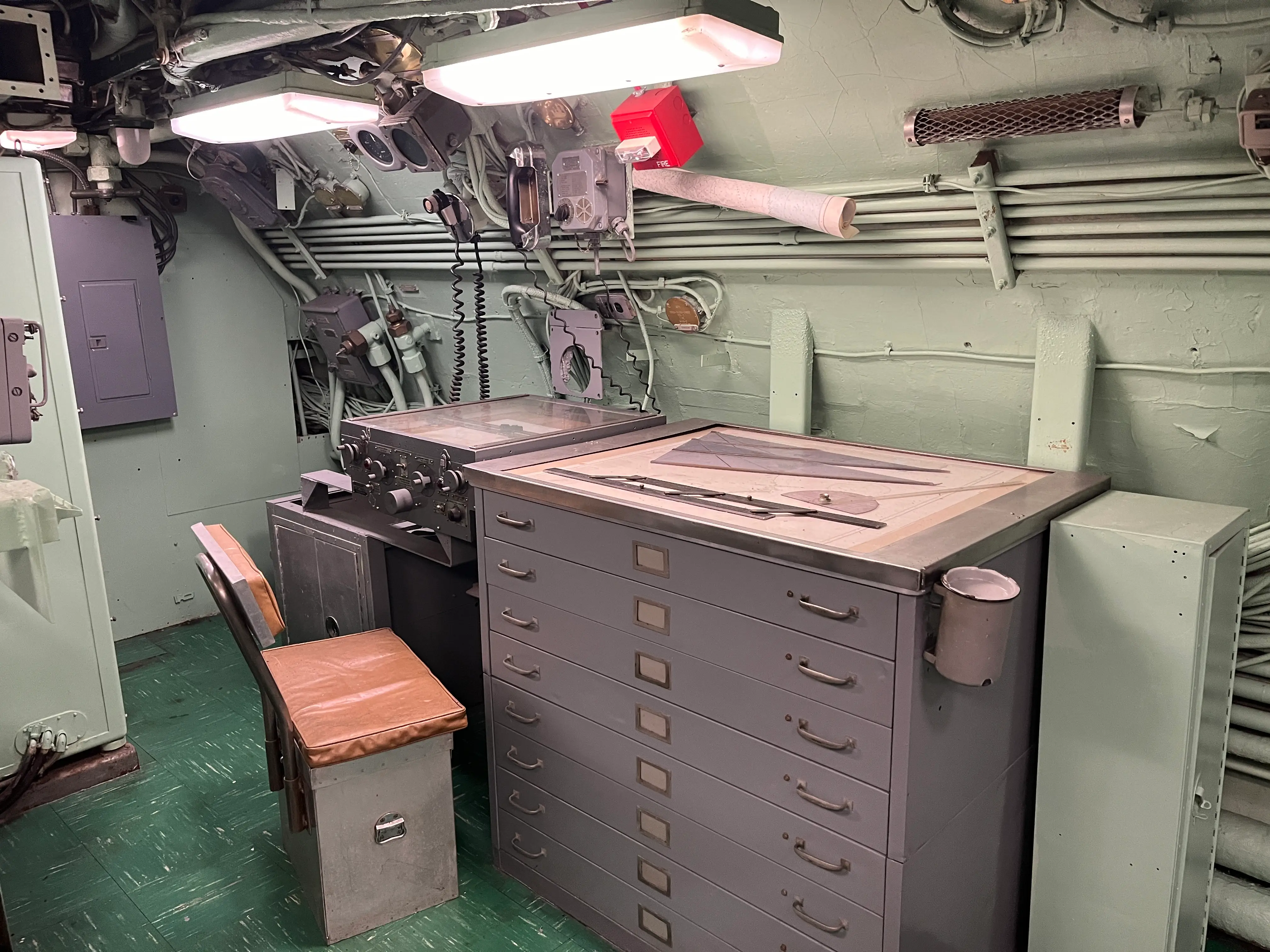
Growler used a binnacle — a stand that holds a ship’s compass — and SINS — the Ship’s Inertial Navigation System — to navigate through the seas.
The missile checkout and guidance center was once a top-secret area.
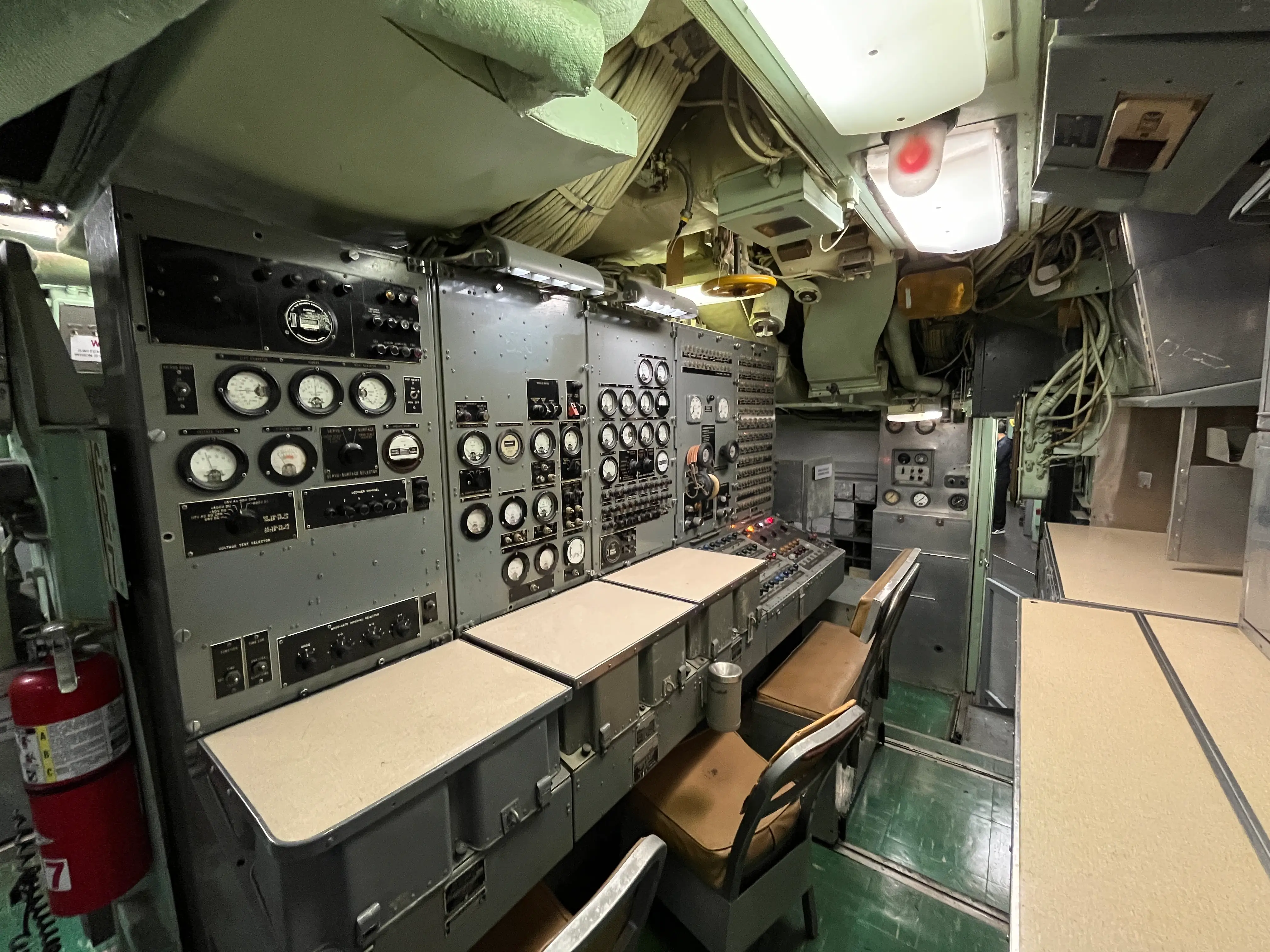
Crew members assigned to the missile checkout and guidance center were in charge of maintaining, firing, and guiding the trajectory of the Regulus missiles. Launching a Regulus missile took about 15 minutes.
Officers on Growler lived in staterooms that held two to three people.
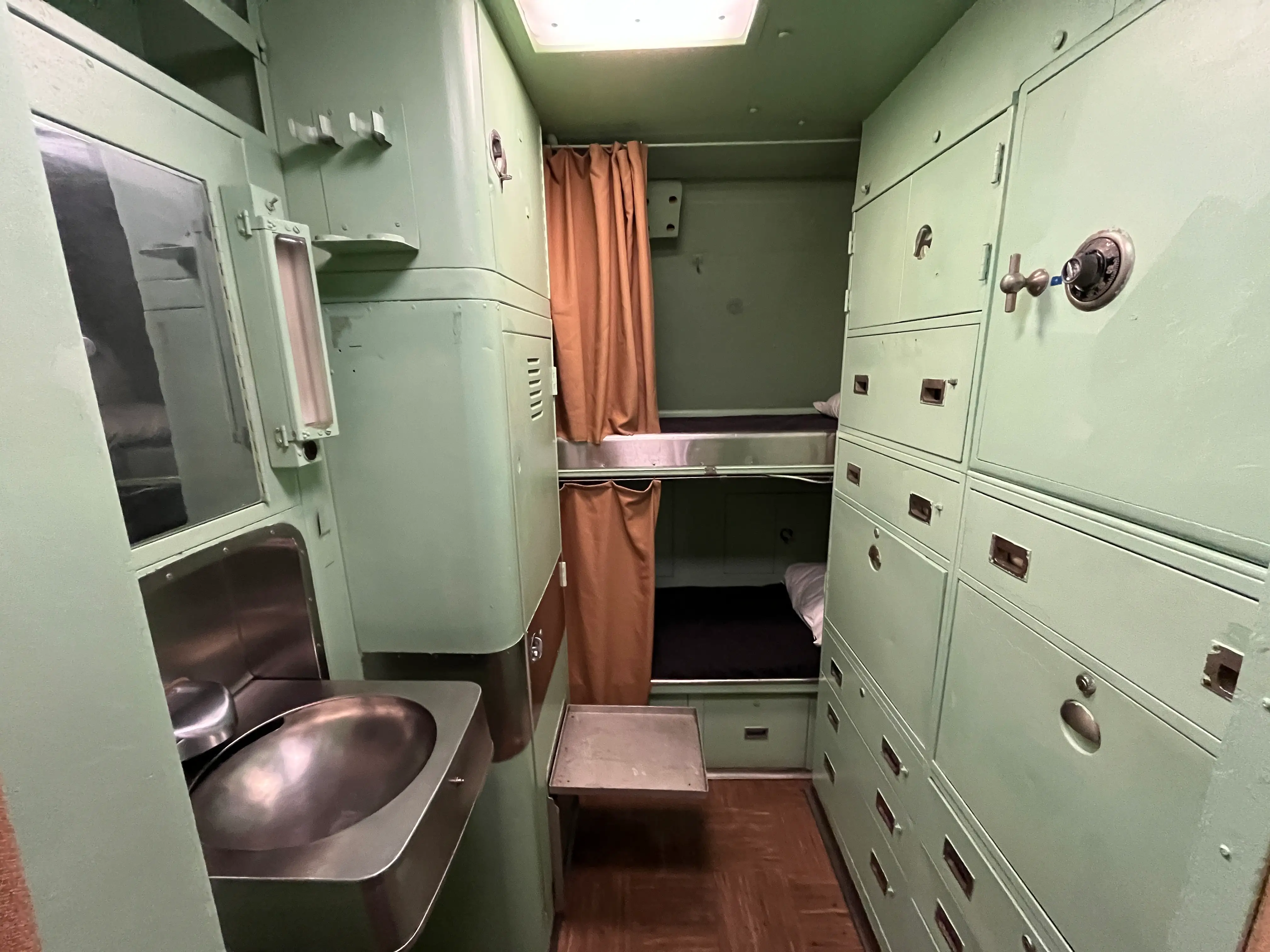
Officers acted as leaders and commanders of the crew, overseeing the day-to-day operations of the submarine.
Their staterooms featured folding sinks and desks with chairs that included storage drawers to maximize the tight quarters.
Officers had access to their own shower.
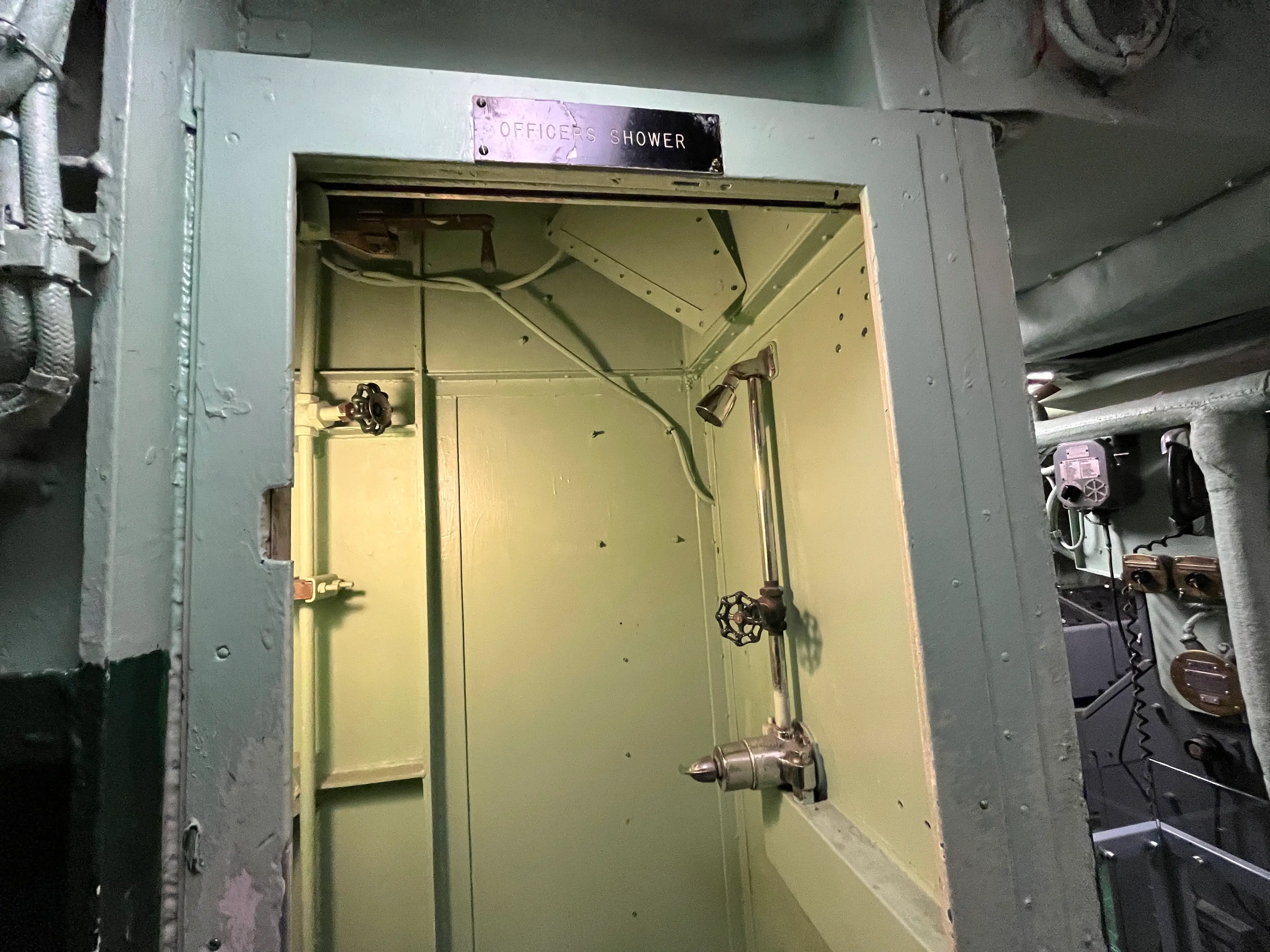
Crew members shared a separate washroom.
Officers used the wardroom to eat, socialize, and hold meetings.
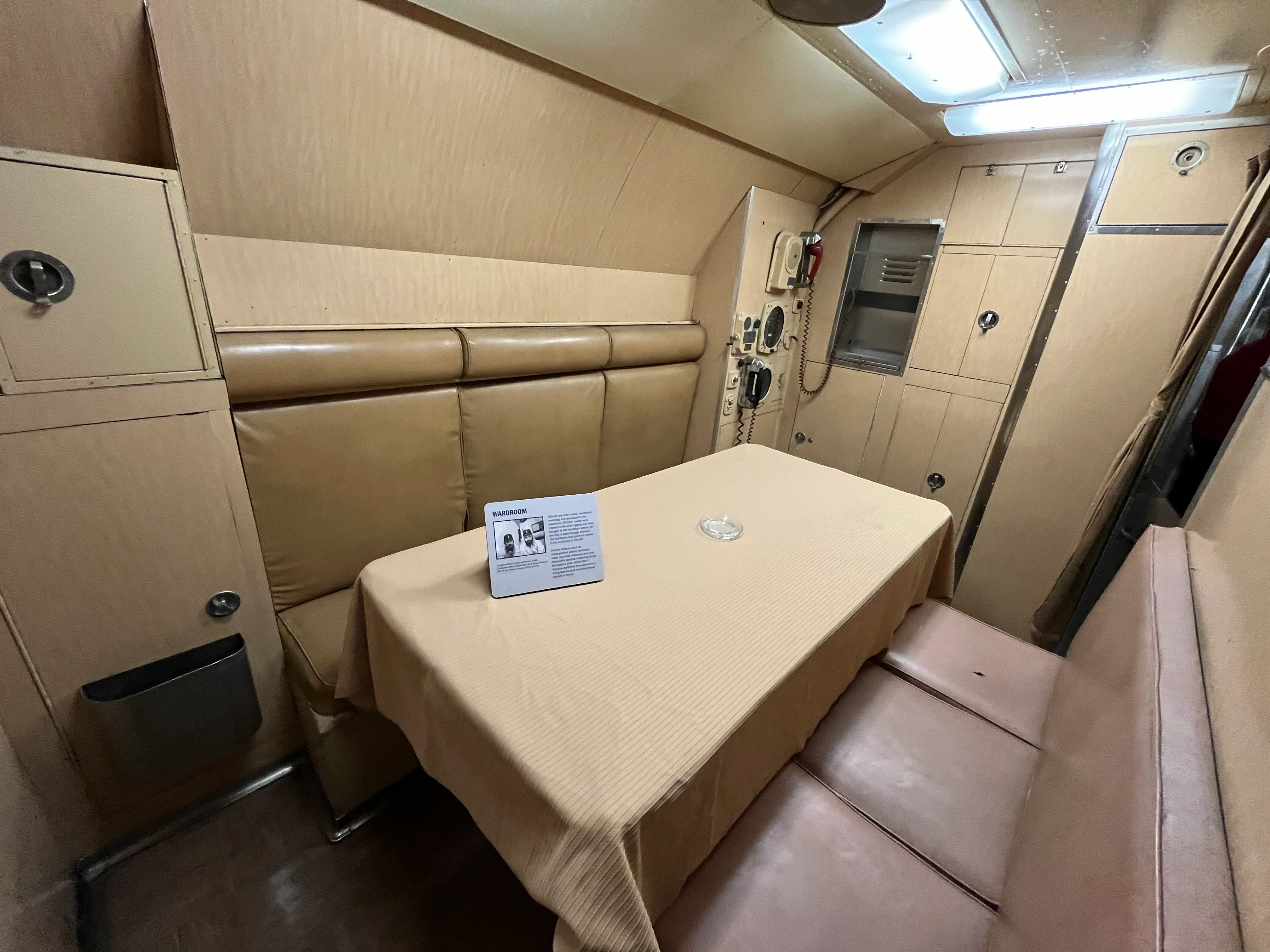
The wardroom was furnished with laminate walls and vinyl seating booths, popular interior design trends post-World War II.
Officers’ meals were cooked in the galley and served from the wardroom pantry.
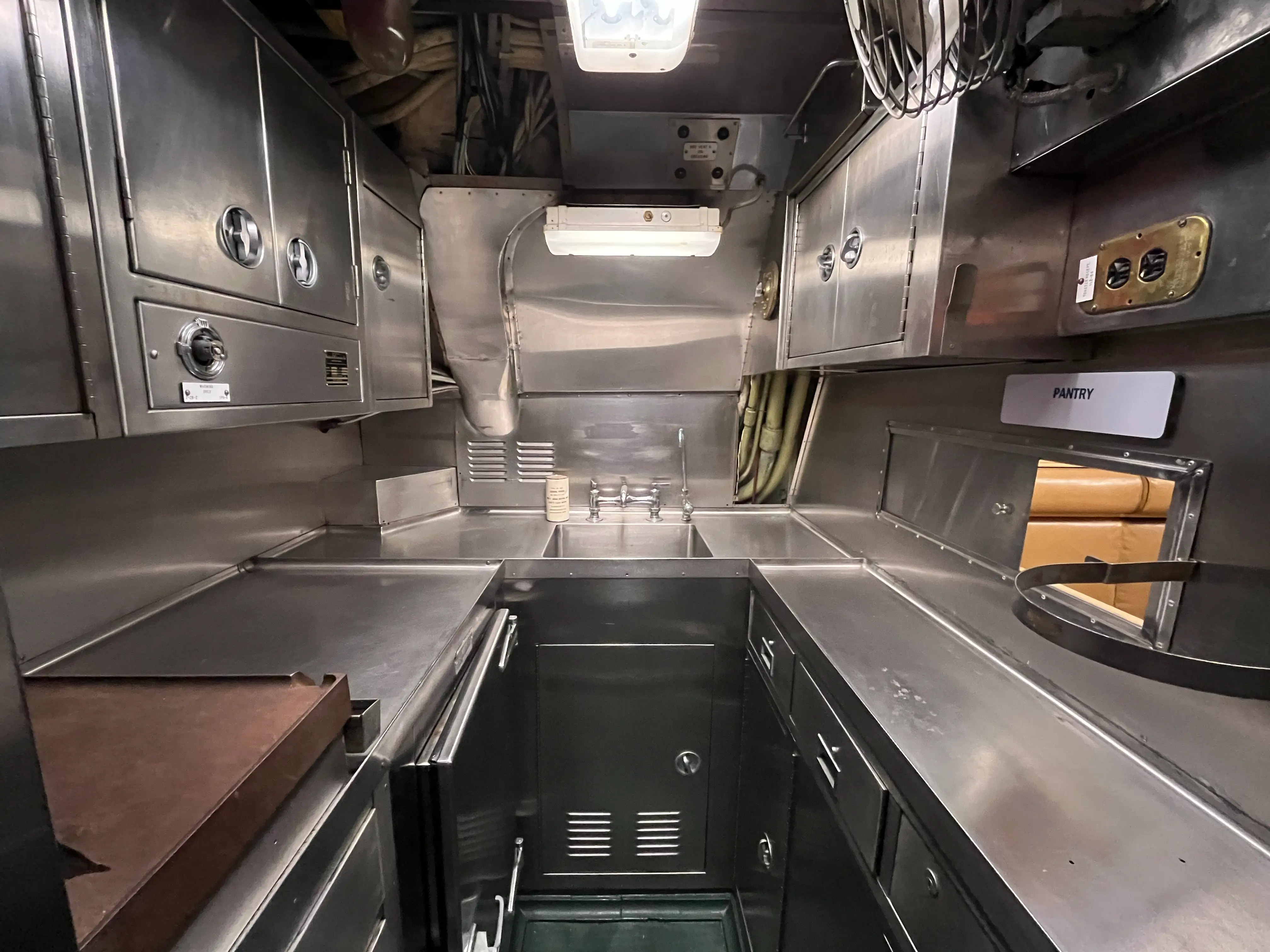
Growler carried all of the food and supplies it would need to sustain itself during patrols that lasted over two months.
A storekeeper kept track of non-food supplies such as light bulbs, pens, and toilet paper.
Growler’s commanding officer enjoyed the only private room on the entire submarine as its highest-ranked leader.
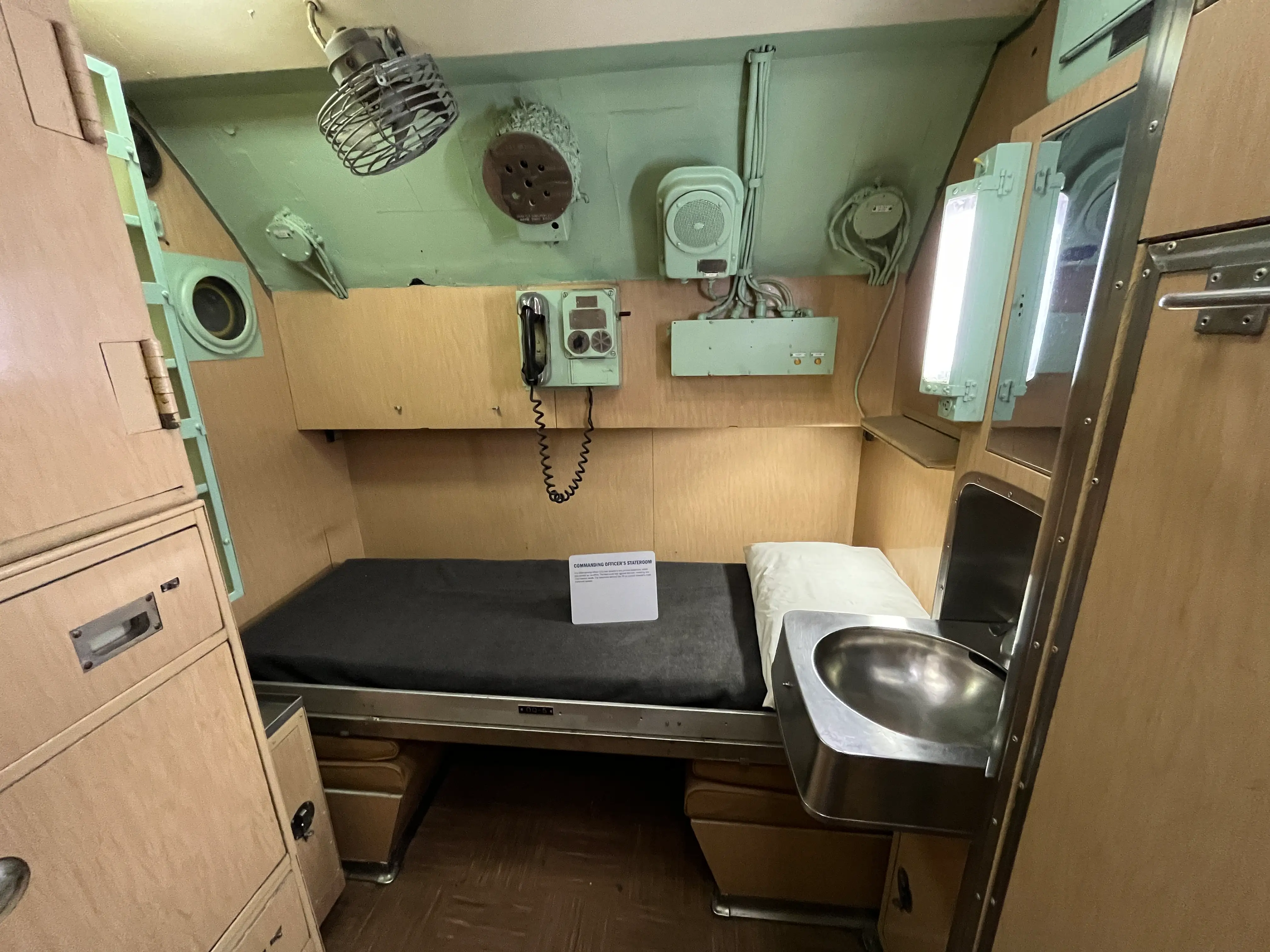
The room featured a telephone and a bed that folded up into seating.
The chief petty officers’ quarters were nicknamed the “goat locker.”
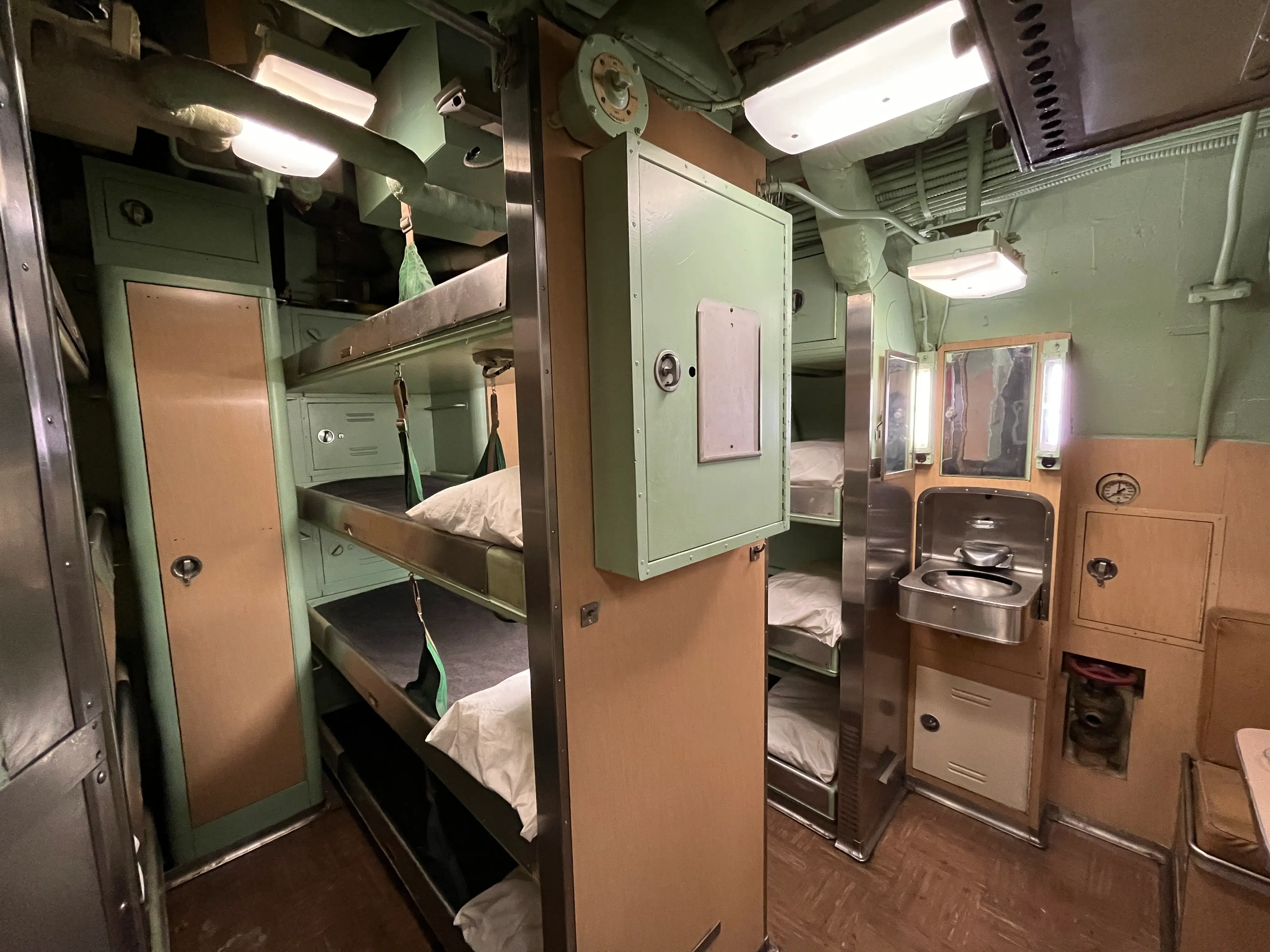
Chief petty officers helped train new submariners and acted as leaders and liaisons between officers and crew members.
The nickname “goat locker” dates back to 1893, when the rank of chief petty officer was established. Chief petty officers were put in charge of the goats that were kept on ships to produce milk, and the animals’ pens were located in their quarters, according to the Naval History and Heritage Command.
Yeomen handled clerical and administrative work aboard Growler’s tiny office.
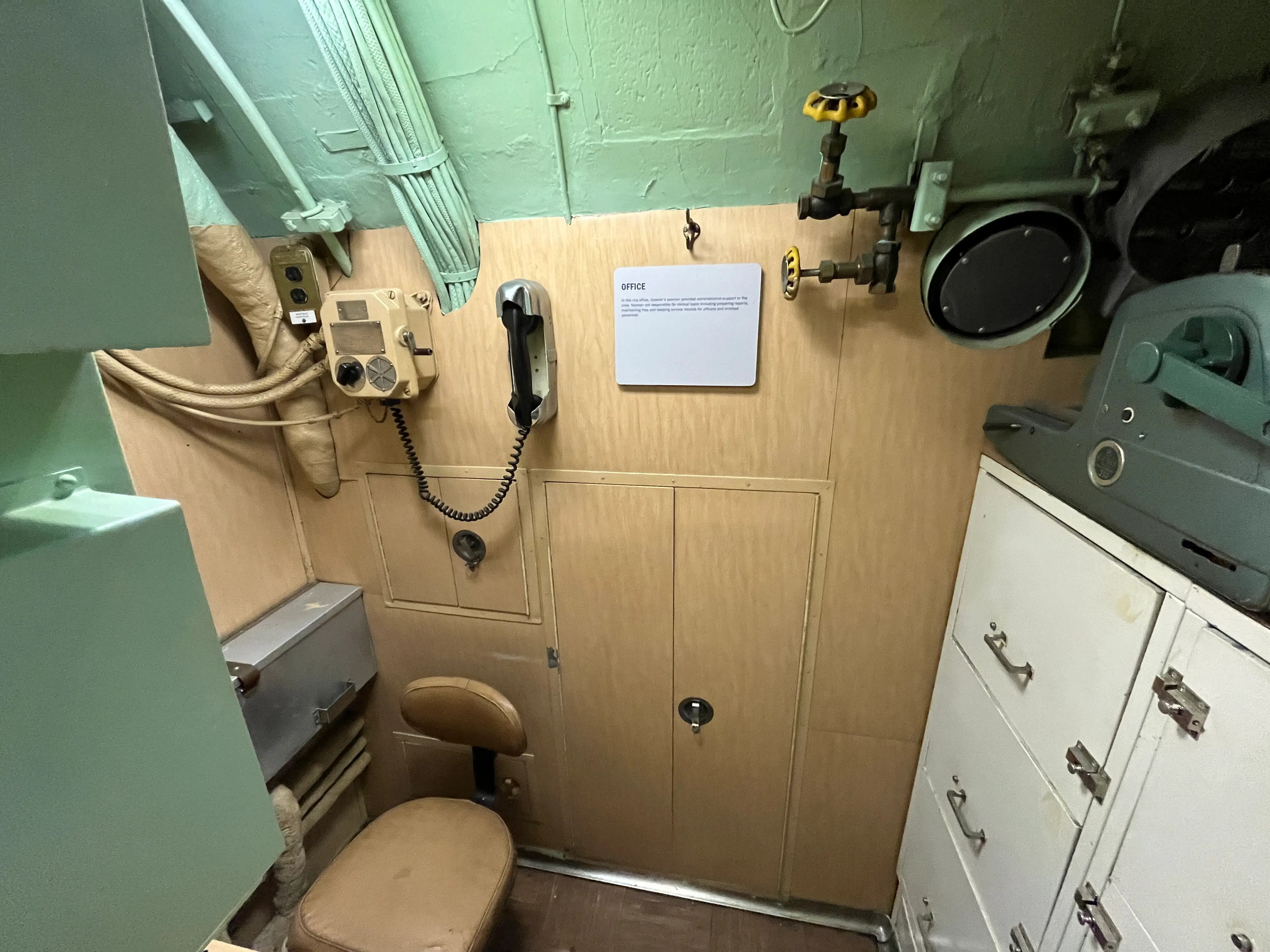
Yeomen wrote reports, sorted files, and maintained crew members’ service records.
A ladder in the bridge trunk led to the bridge of the submarine.
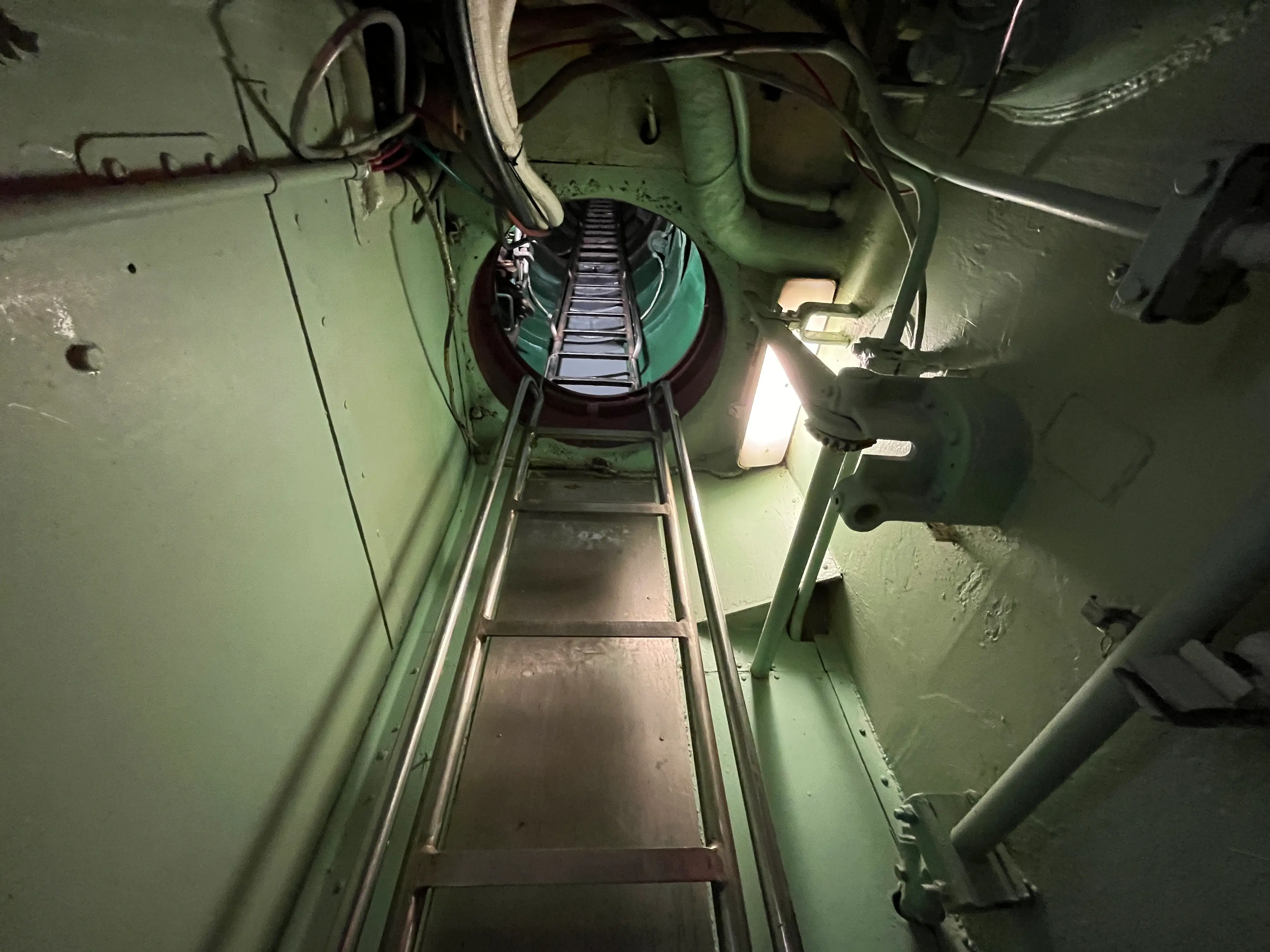
When Growler traveled on the surface of the water, the bridge provided a vantage point for crew members to surveil the surrounding ocean.
Seeing how far down I was in the submarine was striking. I couldn’t imagine what it must have been like to serve on a two-month-long patrol with no fresh air or sunlight.
The control room and attack center contained a dizzying number of buttons, dials, and other instruments.
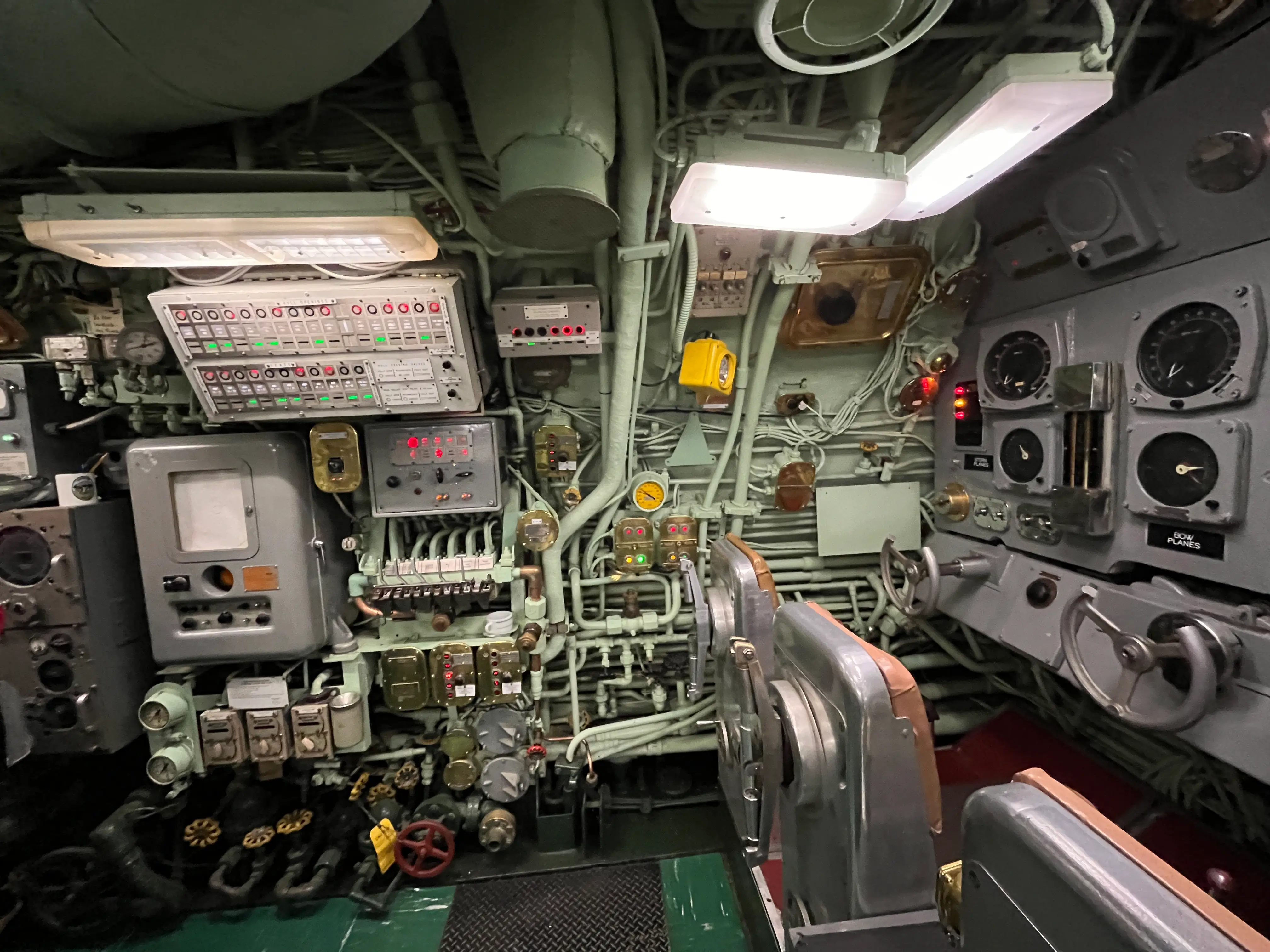
Crew members monitored Growler’s function with data gathered in the control room and attack center.
Here, the commanding officer would give orders to the crew.
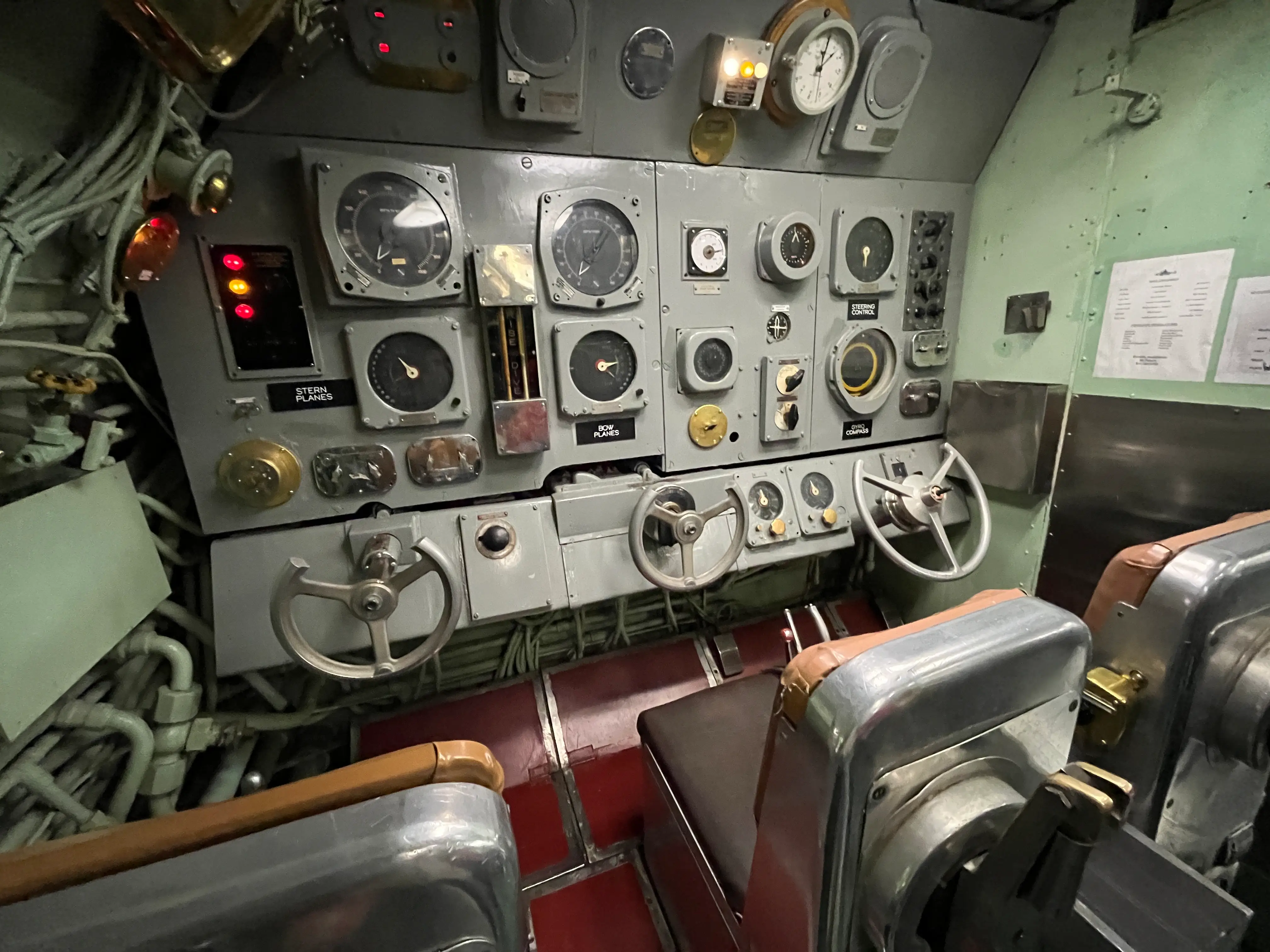
The crew members who sat in the chairs directed Growler’s movements with three steering wheels that controlled different angles and movements.
The room also featured two periscopes: one for observation and one for attacks.
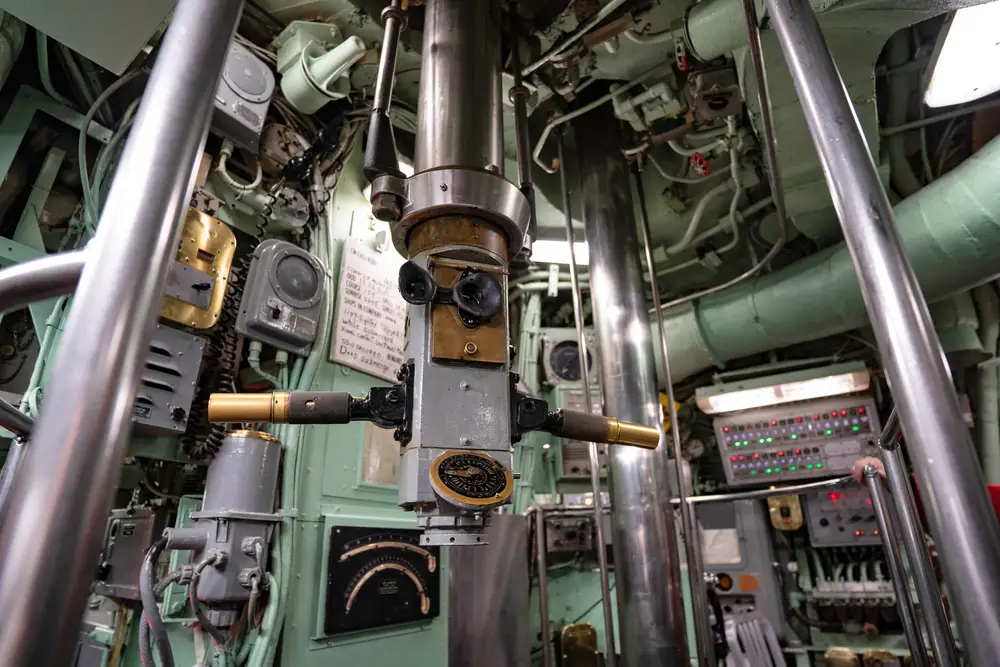
The periscope used for observation featured a wider view, while the attack periscope had higher magnification capabilities.
A call signal station could signal different areas of the submarine such as the wardroom, the office, and the control room.
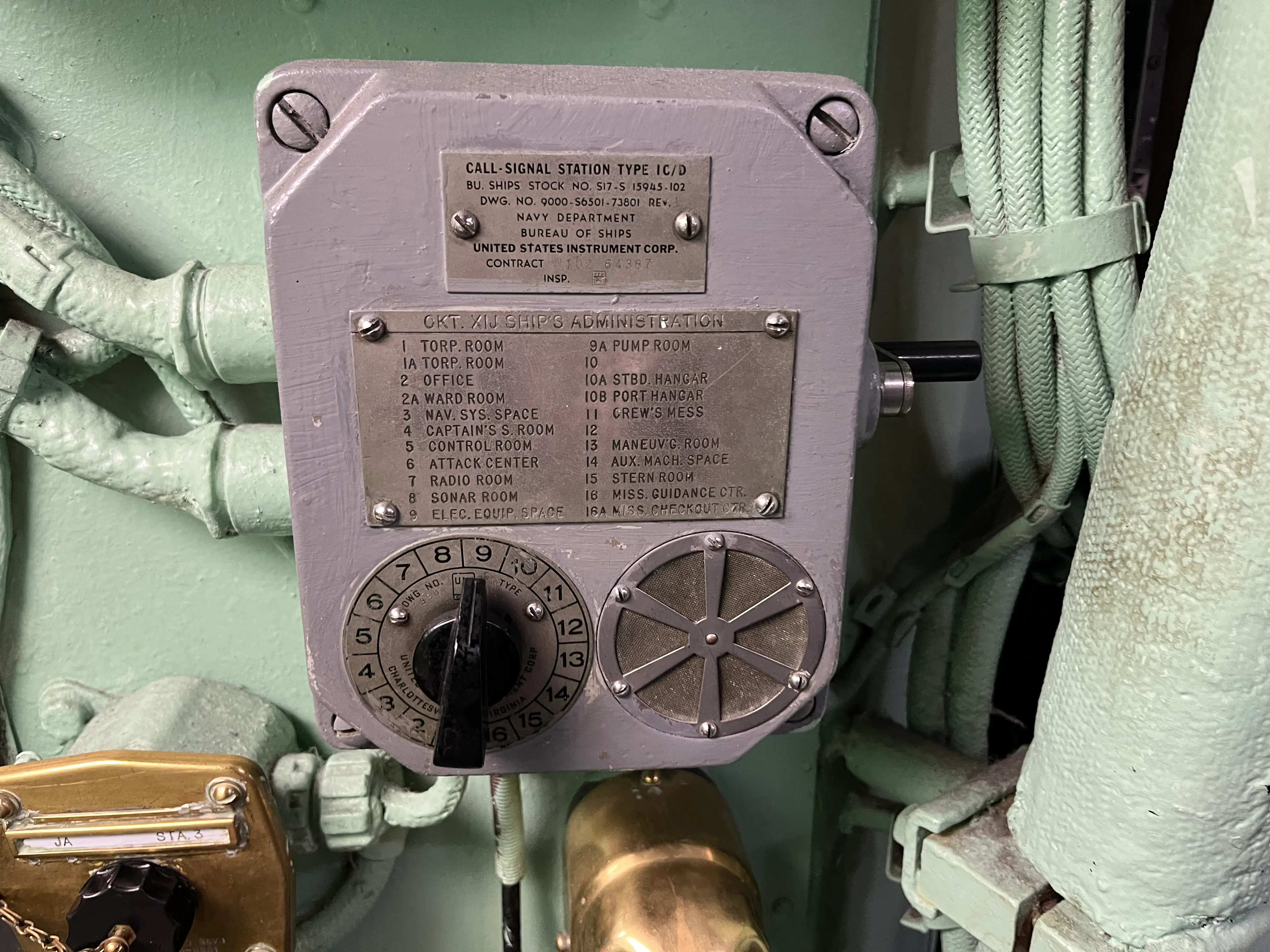
Each room had a corresponding number that crew members could dial.
The sonar room also aided Growler’s navigation.
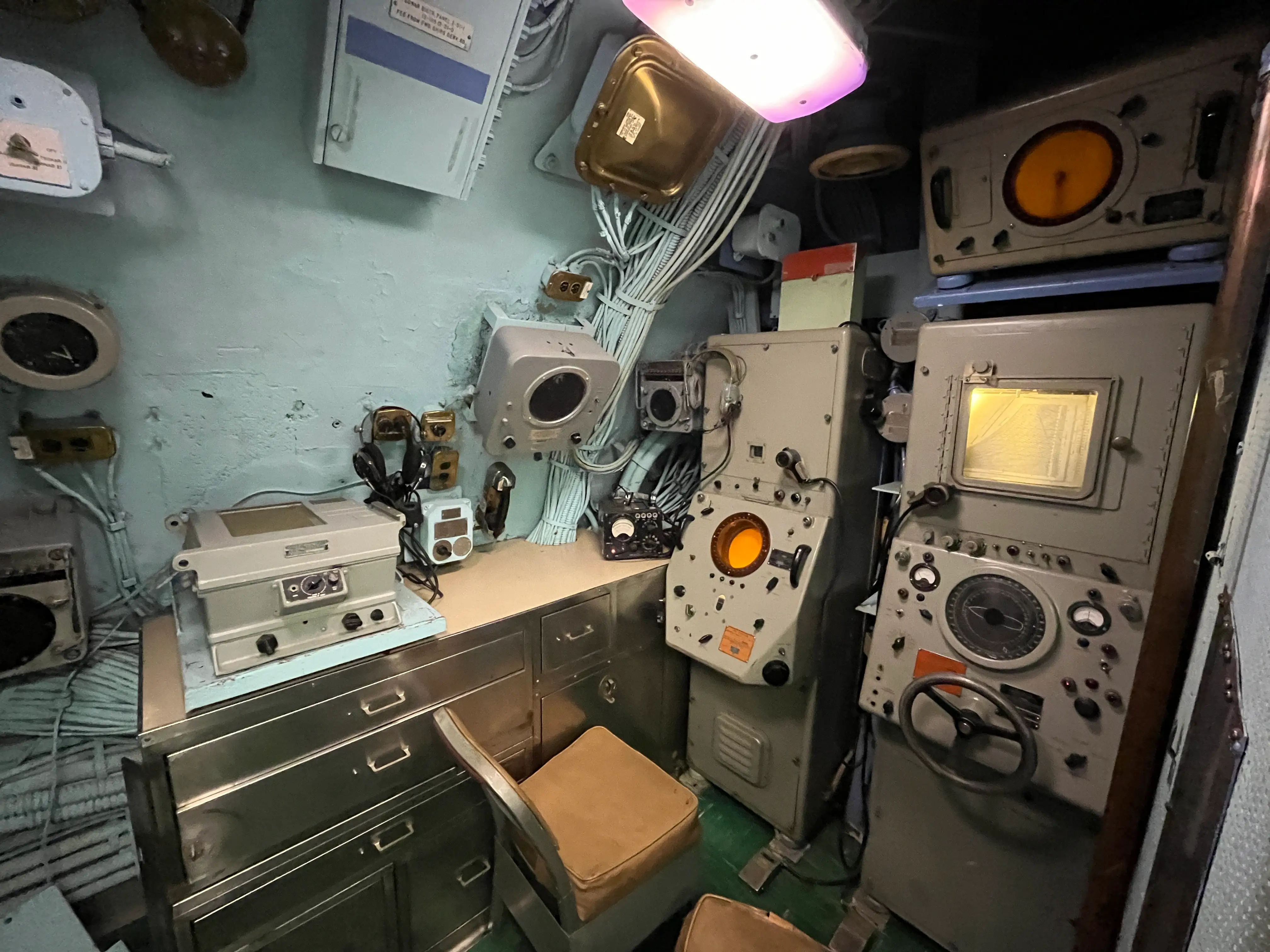
Sonar stands for sound navigation and ranging. Growler used passive sonar, a system of underwater microphones that listen to the ocean and detect sound waves, to track other vessels and navigate its own positions.
Passive sonar is a more discreet alternative to active sonar, which sends a pulse of energy through the water to detect objects.
Crew members communicated with other ships in the radio room.
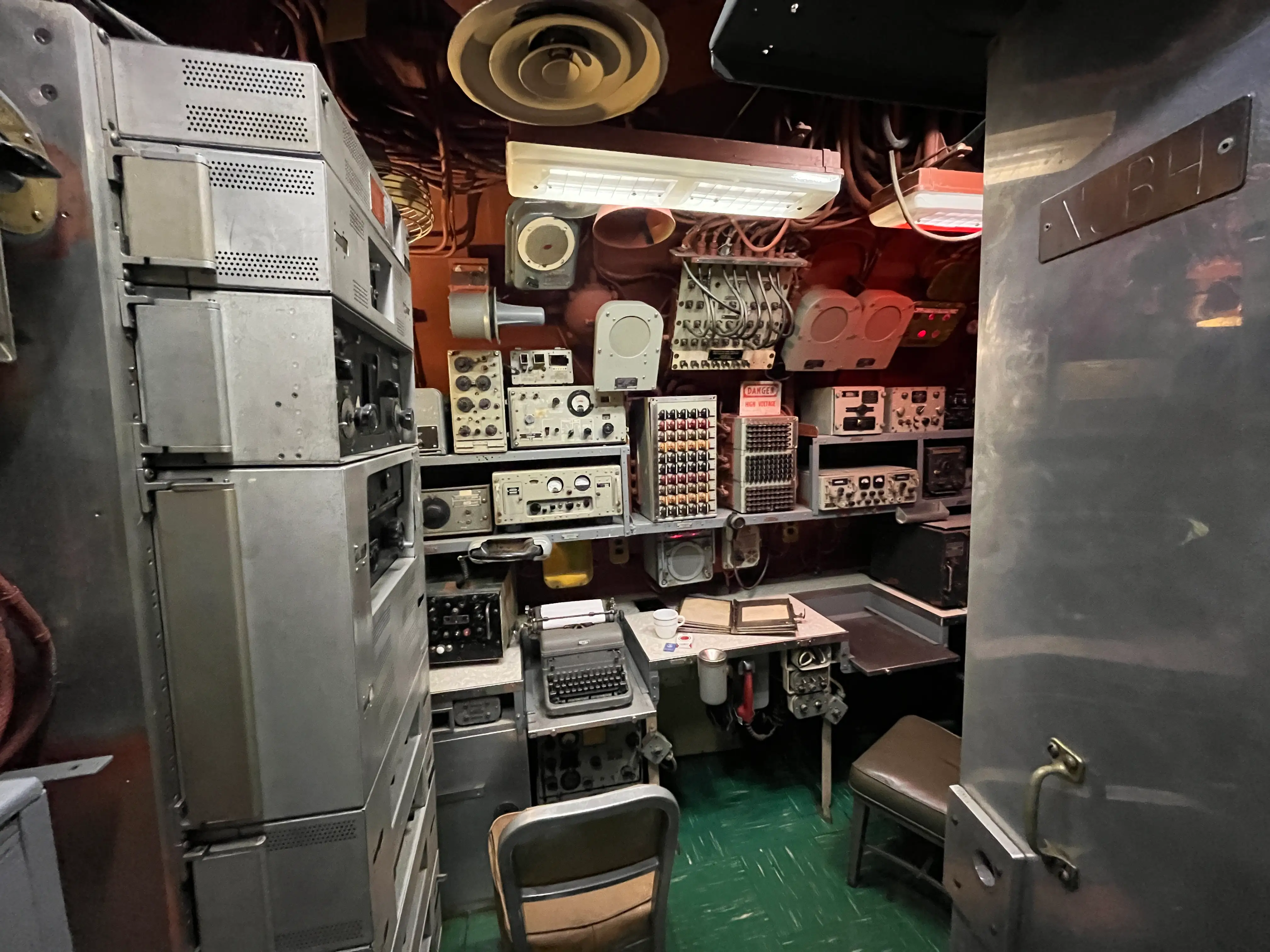
Growler could only send messages at periscope depth. Lower down in the ocean, it could receive low-frequency signals, but couldn’t send any outgoing messages.
Meals were prepared in the galley.
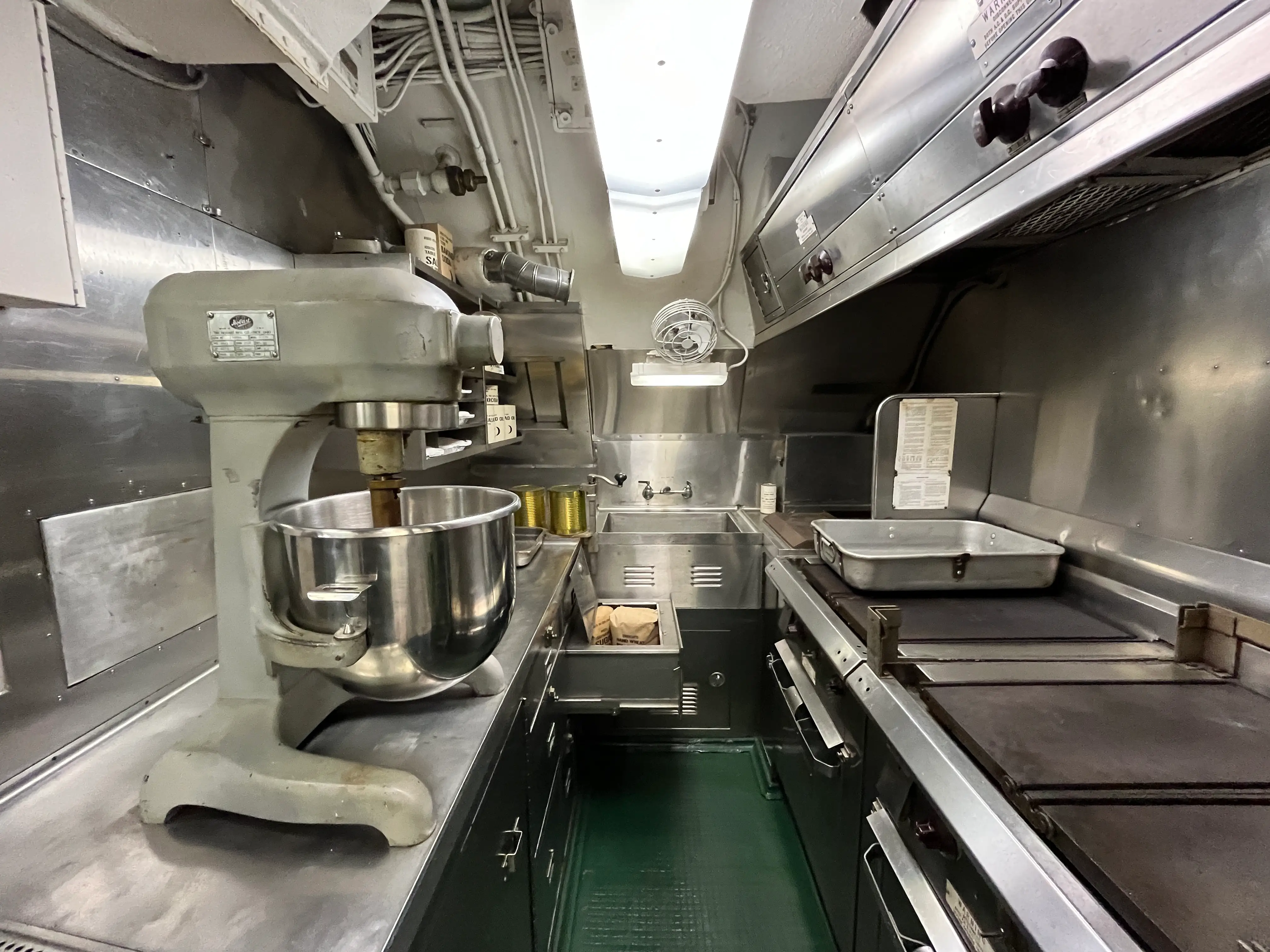
A meal schedule from 1962 listed dishes such as fried chicken, clam chowder, hamburgers, and meatloaf with gravy.
In the scullery, Growler crew members washed dishes and compacted trash.
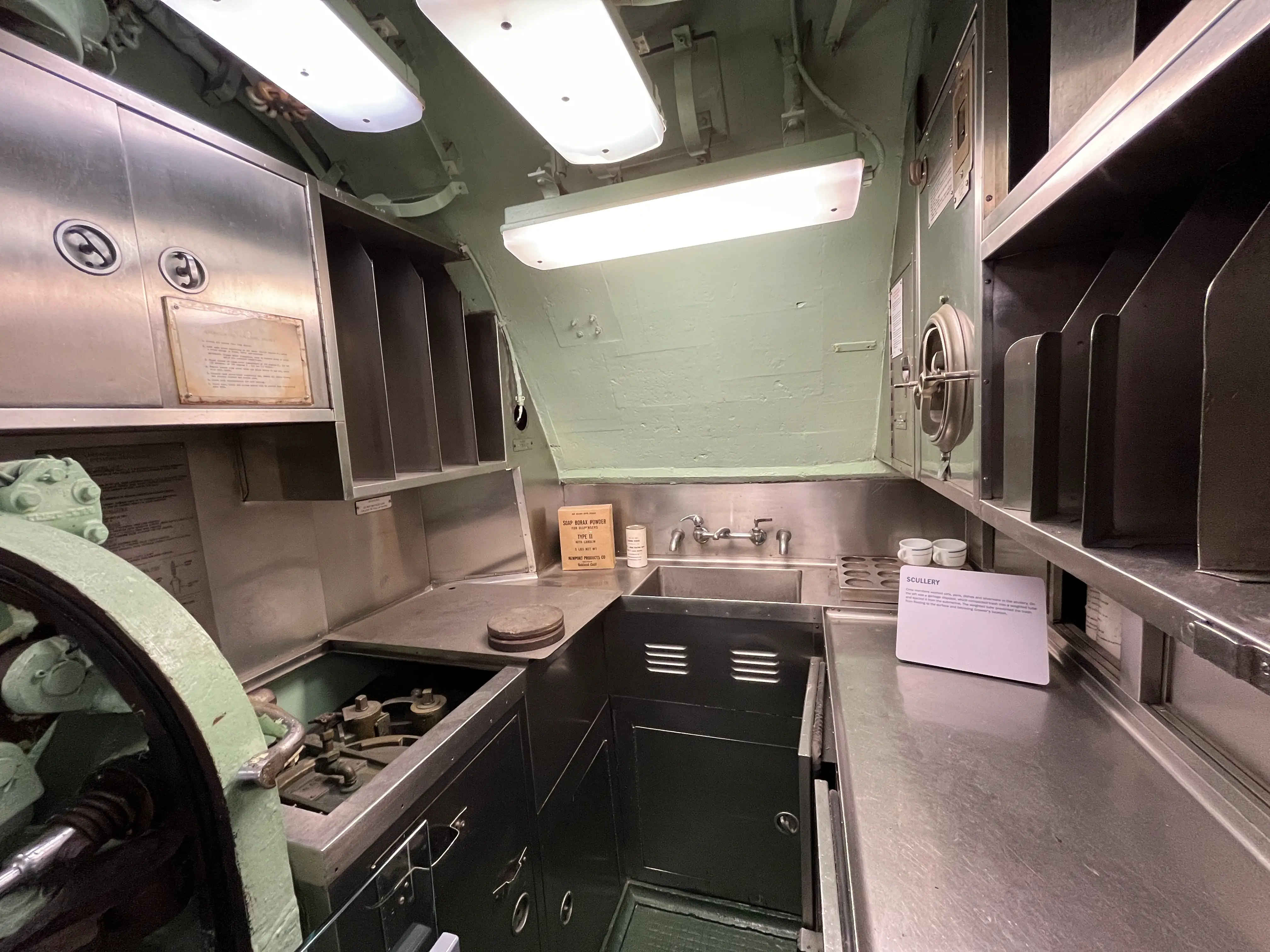
Trash was disposed of in weighted tubes that wouldn’t float to the surface and give away the submarine’s location.
The crew’s mess was the only common space on board Growler.
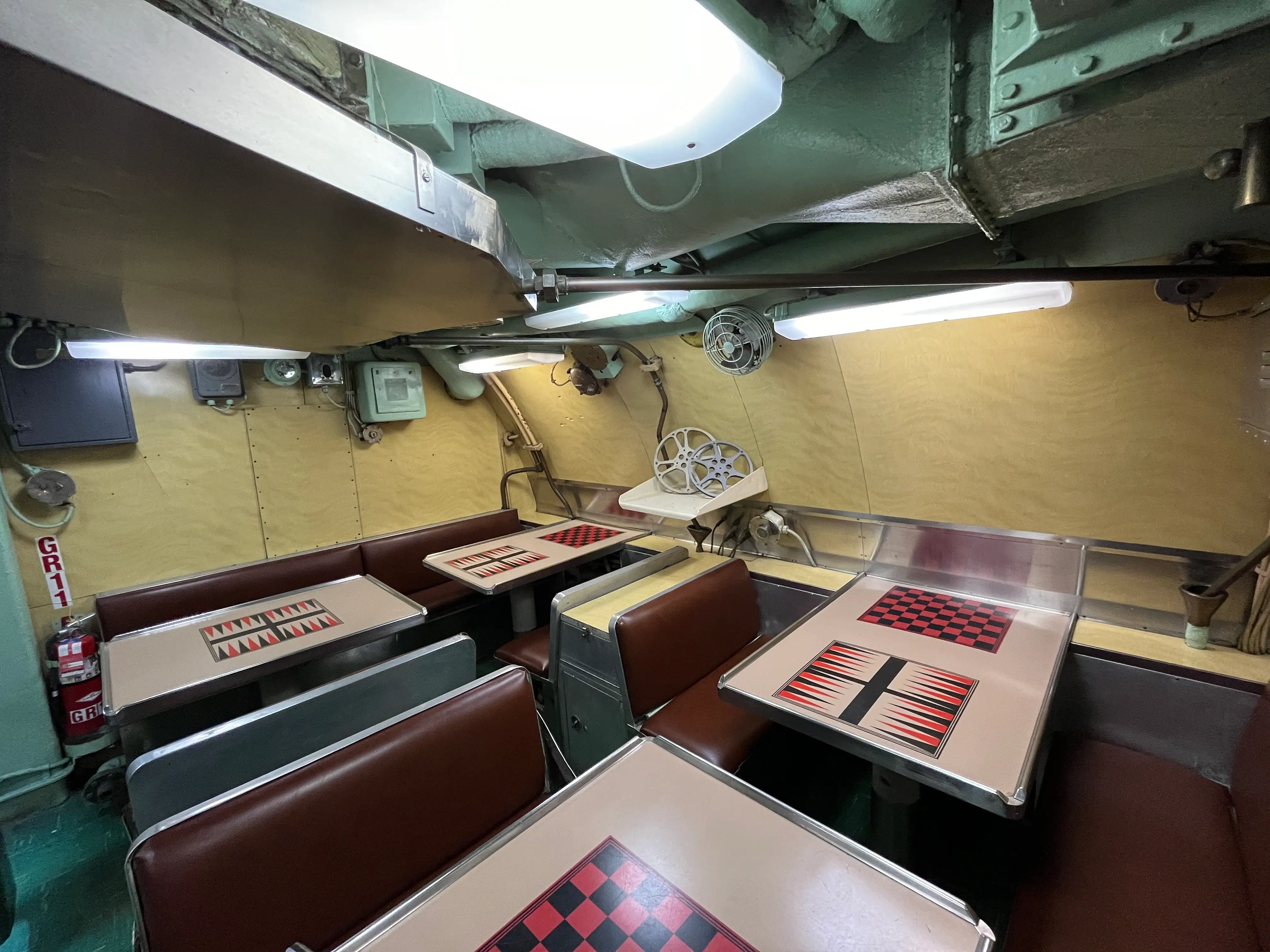
It functioned as the dining room as well as a place for crew members to play games and watch movies.
Growler’s largest sleeping area contained 46 bunks.
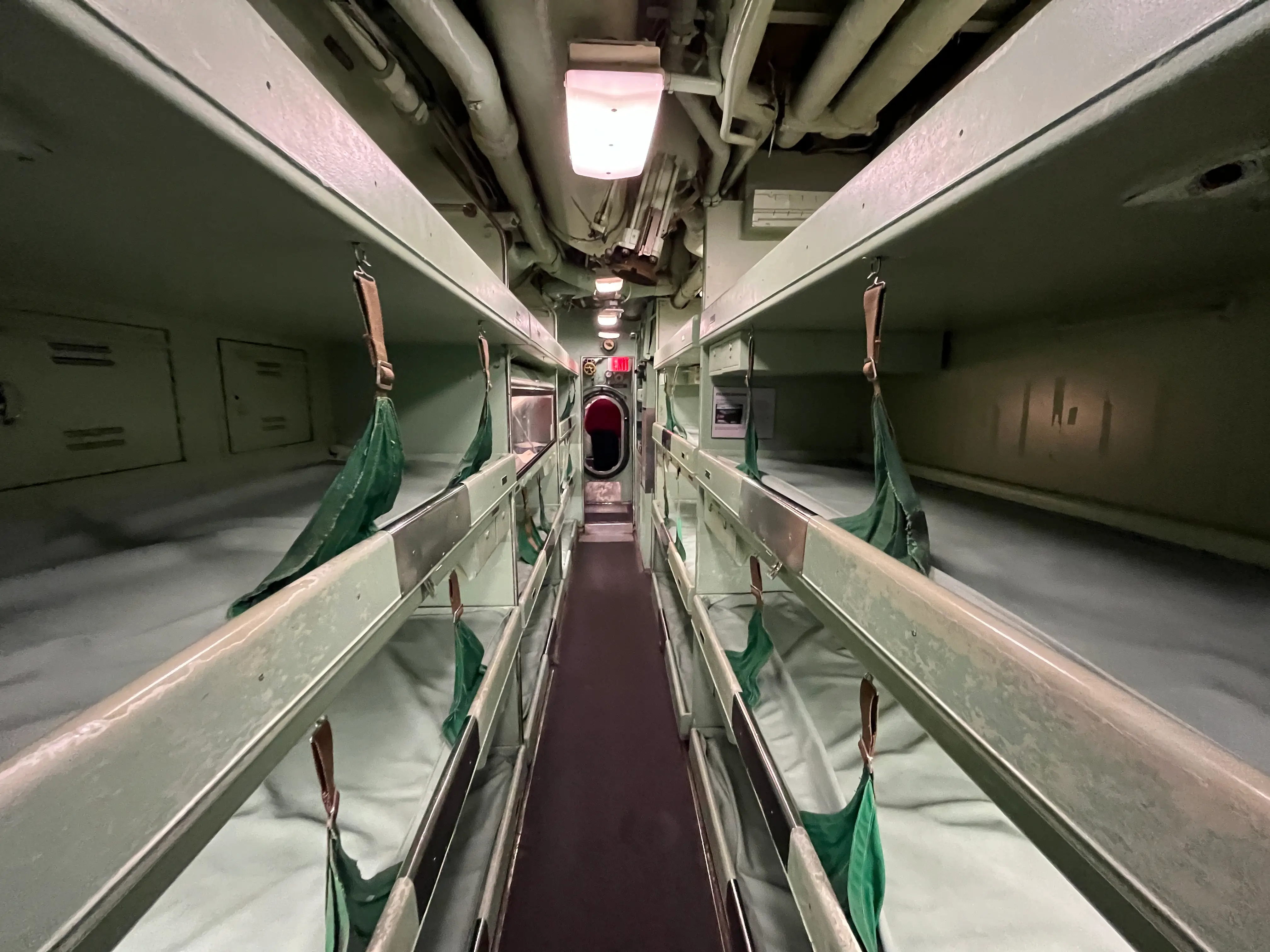
The green straps on the beds kept crew members from rolling out of the bunks during rough seas.
The crew’s washroom featured two showers.
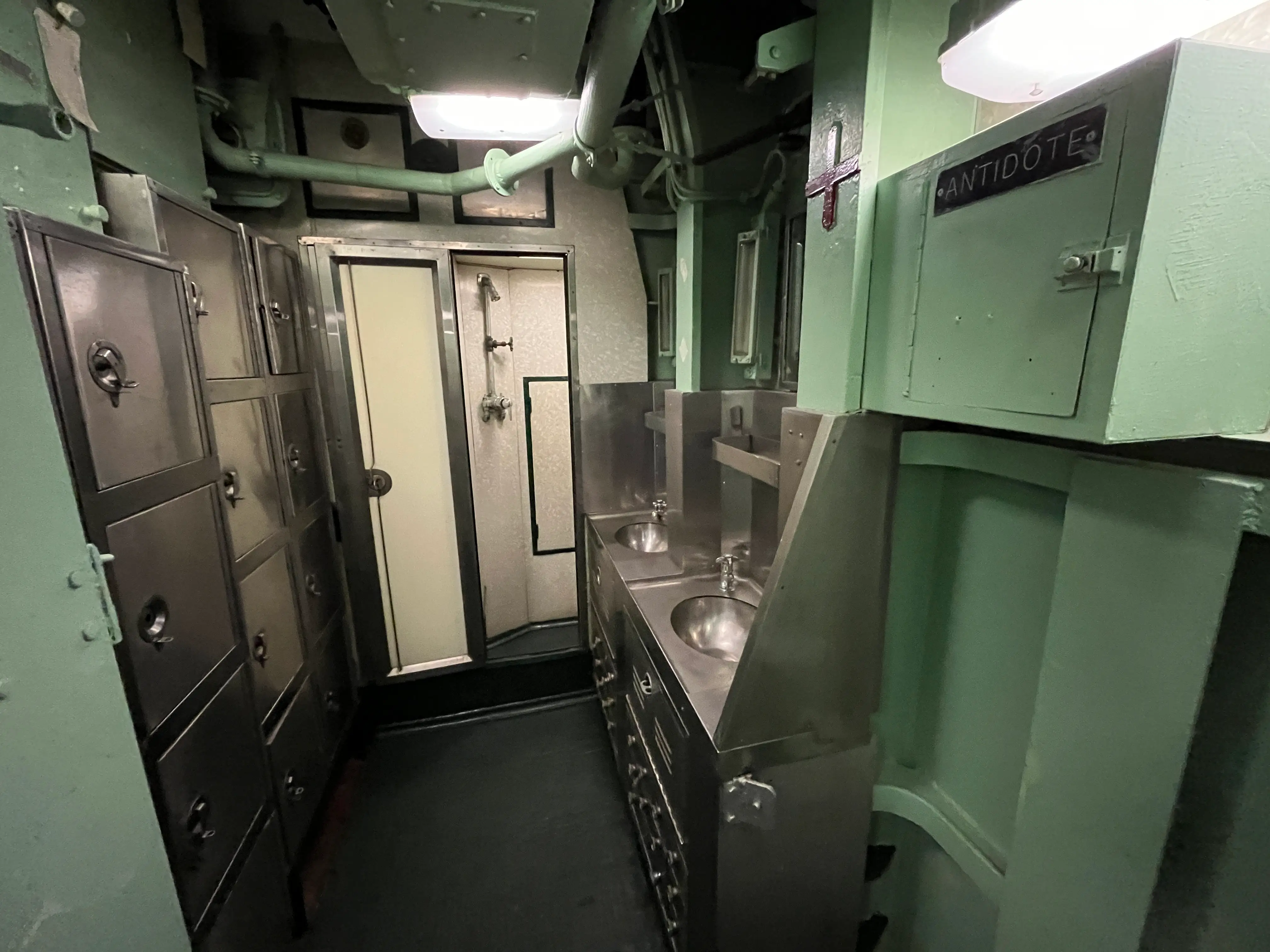
Showers were a rare luxury for crew members on Growler. A plaque displayed in the room read that some sailors said they never showered once during their two-month patrols.
A distillation system boiled seawater, filtering out the salt to supply fresh water.
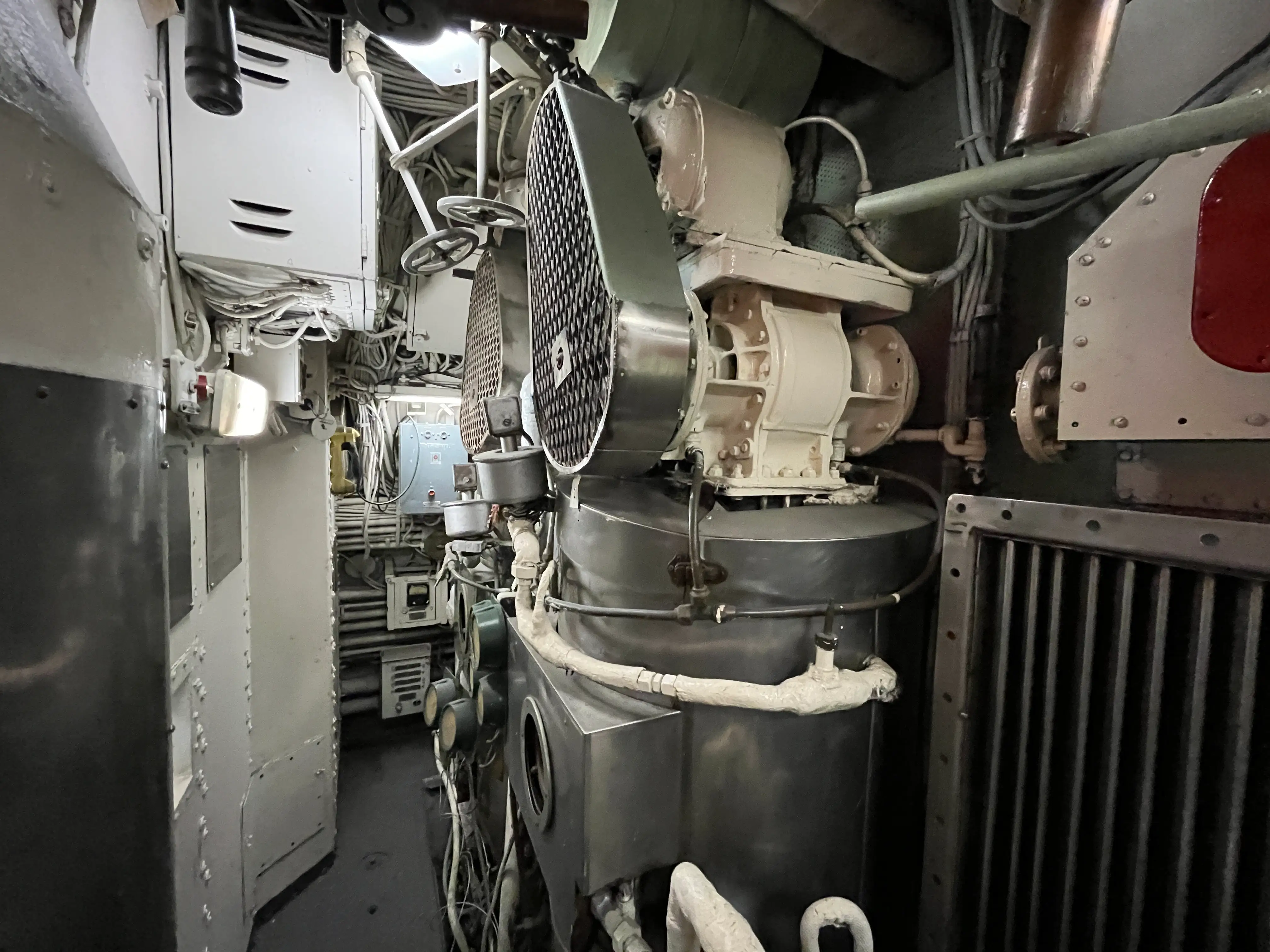
The distilled water was used for cooling the submarine’s diesel engines, cooking food, washing dishes, and bathing.
Growler’s three diesel engines were located in the engine room.
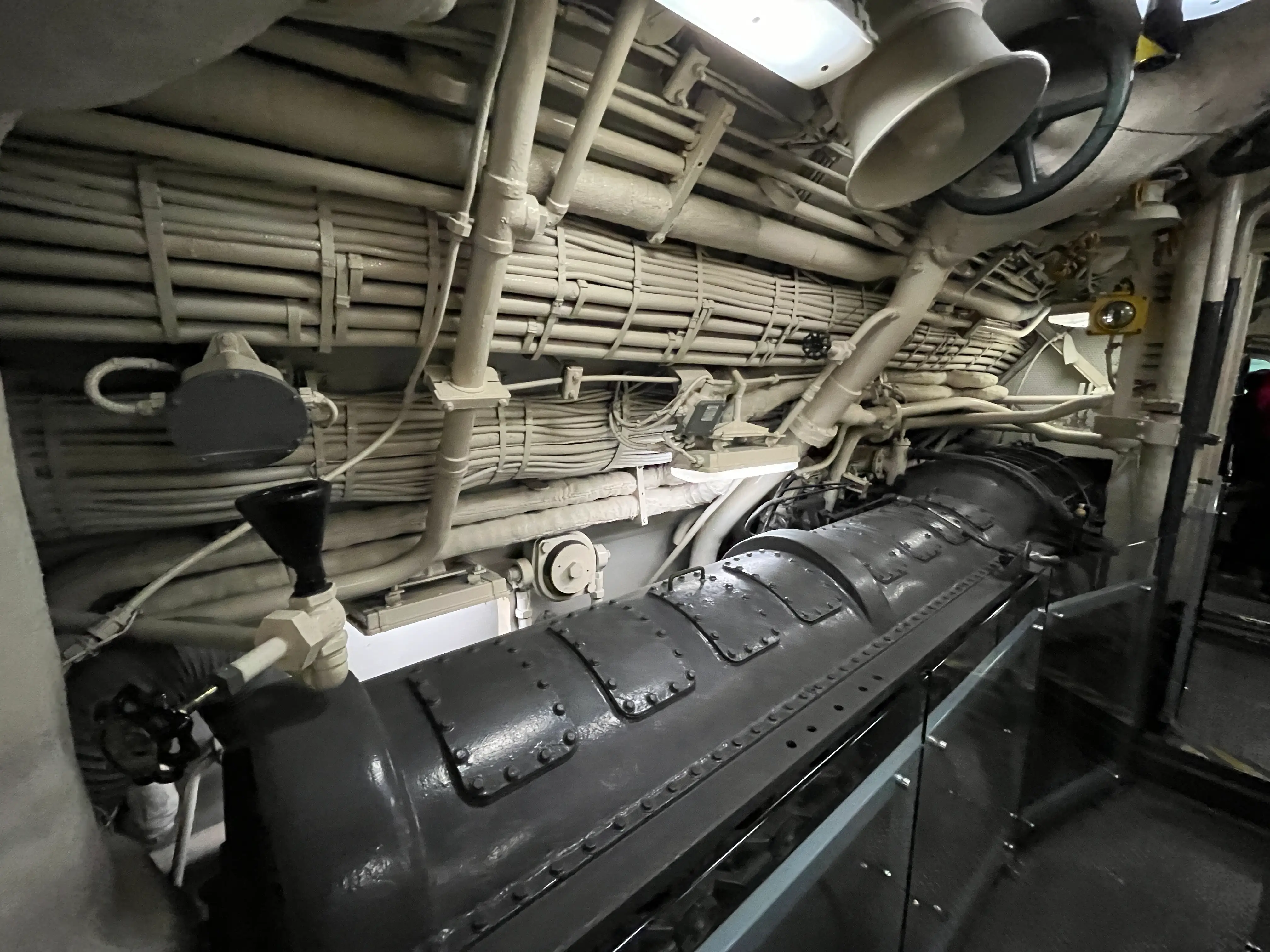
The engines were soundproofed.
Sailors controlled Growler’s speed in the maneuvering room, with officers communicating orders from the control room.
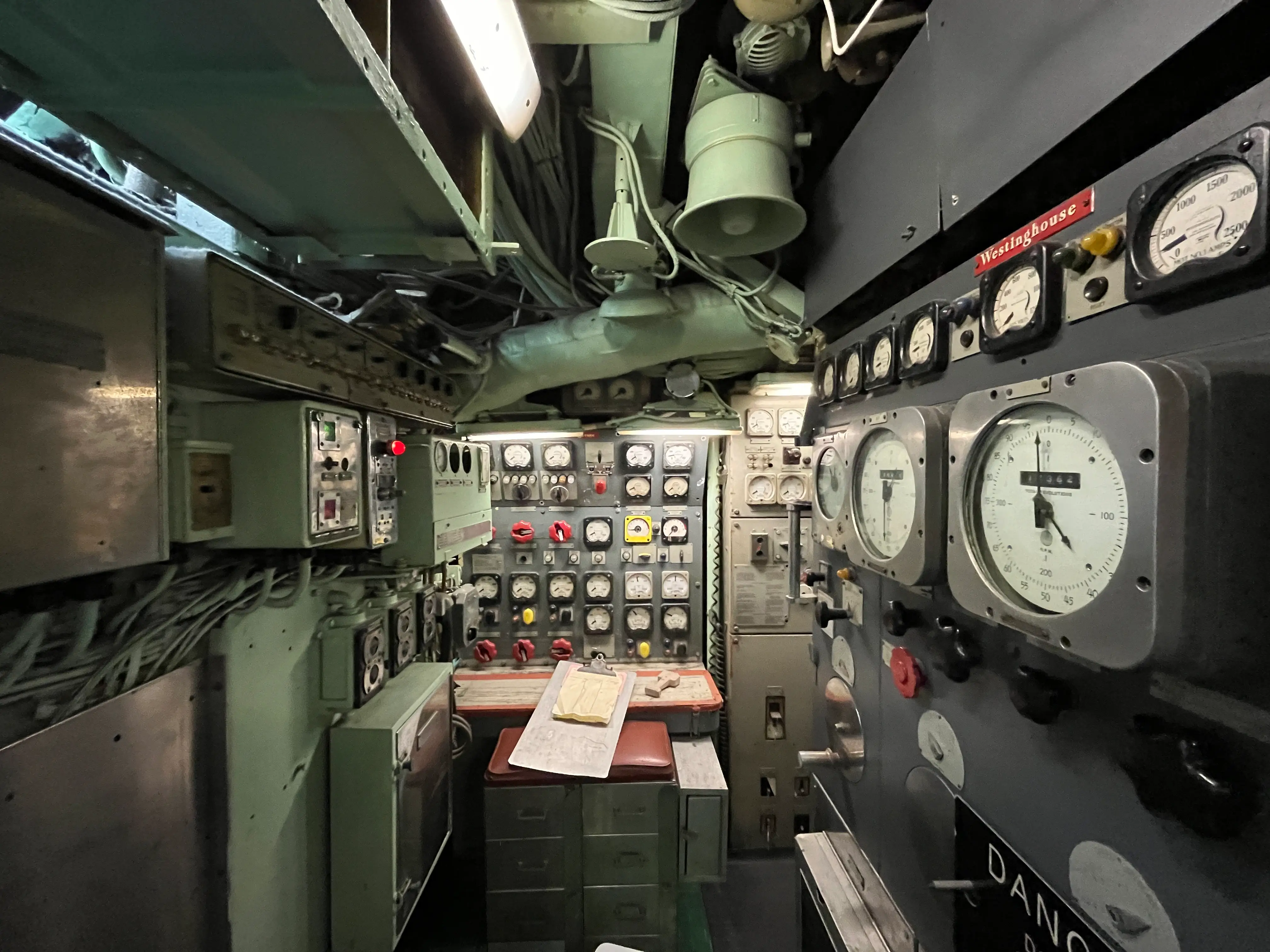
Growler’s maximum speed was 12 knots, or 14 mph, while submerged and 14 knots, or 16 mph, while surfaced.
In addition to carrying nuclear missiles, Growler was also armed with torpedoes.
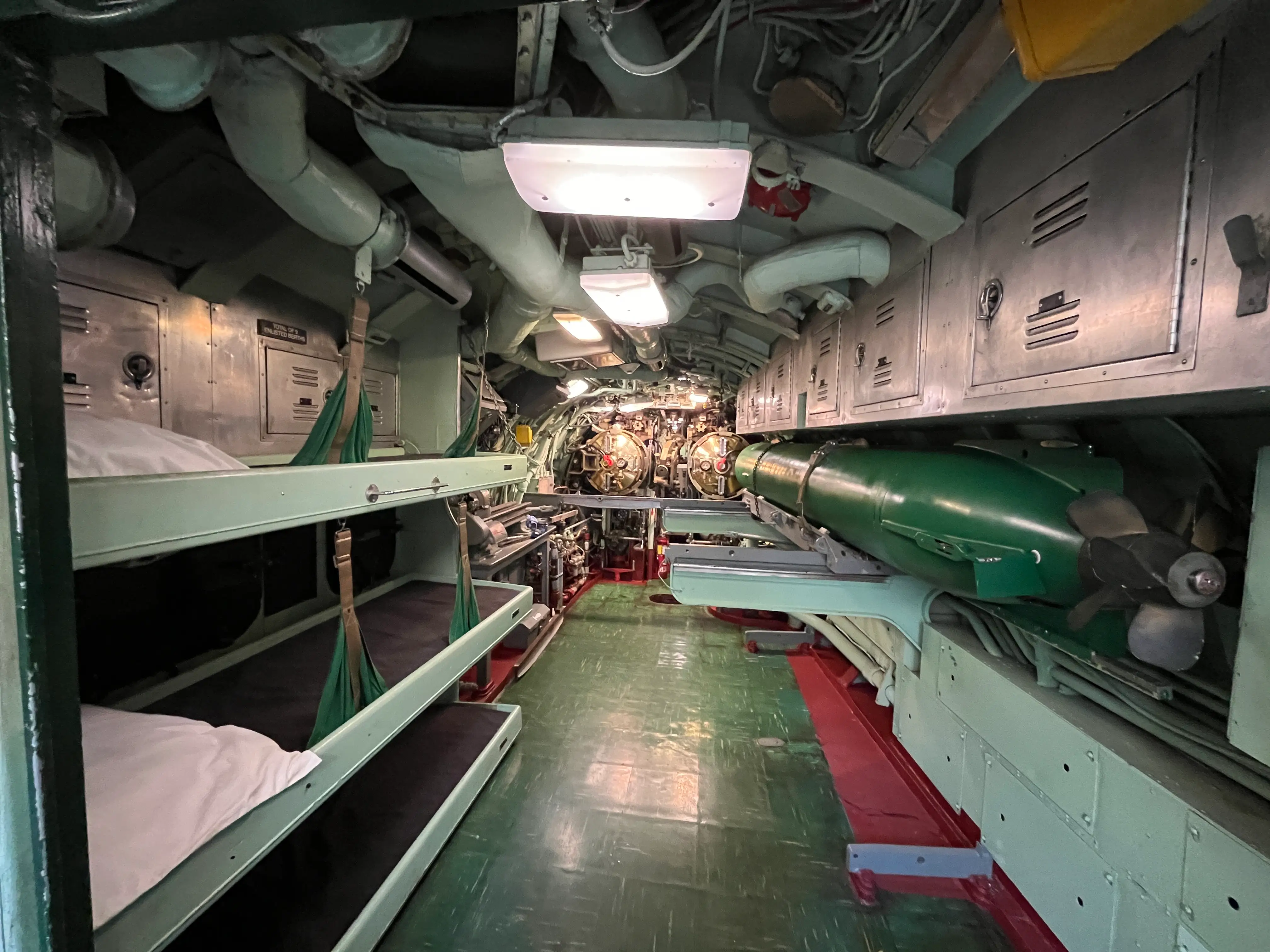
Nine crew members slept in the aft torpedo room, where weapons like the Mark 37 torpedo were kept.
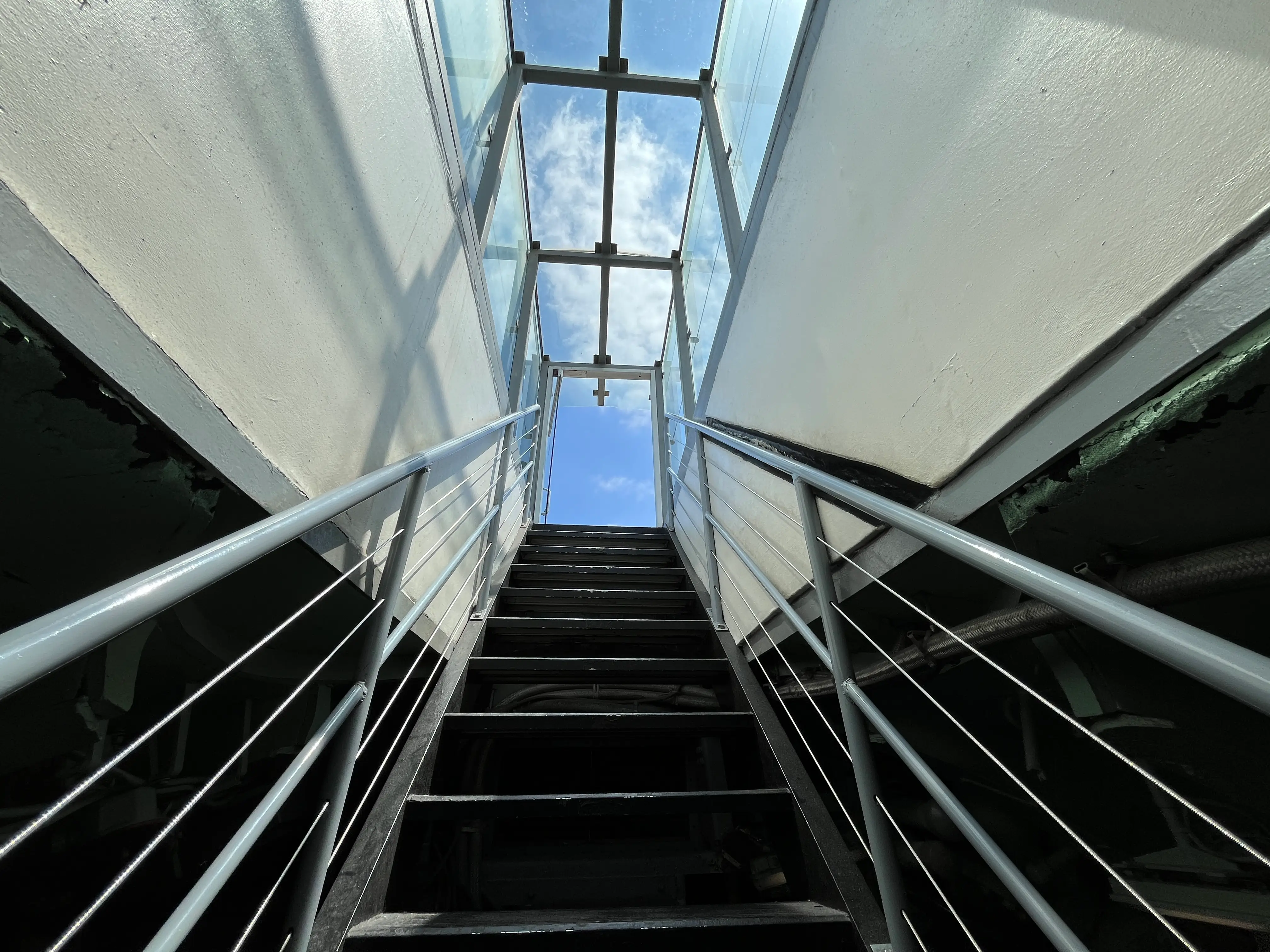
I was relieved to see the sky again as I exited Growler, and in awe of service members who spent months at a time on the vessel.
As the only nuclear-missile submarine in the US that’s open to the public, visiting the USS Growler is absolutely worth a trip to the Intrepid Museum.
I was fascinated by how self-sufficient the submarine was as it carried out top-secret patrols. It was hard to believe that 90 crew members operated in such small spaces for extended periods of time.
With its supply of nuclear missiles kept at the ready during the Cold War, the stakes couldn’t have been higher to keep Growler running smoothly and efficiently. The stakes remain high today as US Navy submarines continue to patrol waters connected to regional conflicts.
Read the original article on Business Insider
The post I toured the only nuclear-missile submarine in the US open to the public. Take a look inside the USS Growler. appeared first on Business Insider.