This is an edition of the Books Briefing, our editors’ weekly guide to the best in books. Sign up for it here.
As clichés go, “Know your enemy” is a pretty good one—a little melodramatic, sure, but widely applicable. It could, for instance, come in handy for authors and editors worried about artificial intelligence damaging their profession. This week, at least three distinct controversies popped up regarding AI use in literature: The Nobel Prize–winning novelist Olga Tokarczuk said that she uses AI while developing her novels; a nonfiction book about AI titled The Future of Truth was found to contain muddled quotes generated by chatbots; and a prize-winning story published in Granta, an august British literary magazine, was widely accused of being machine-made. Writing about the Granta case for The Atlantic this week, Vauhini Vara suggested that the online sleuths who suspected that the short story came from a large language model might be “more discerning than prize committees,” in part because the former were more likely to use—and therefore understand—AI.
First, here are four new stories from The Atlantic’s Books section:
- The book that plunges you into messy American history
- How Cuban history broke a family
- The perfect Gilded Age confection
- “Sonnet for the Tendered Garden,” a poem by Jill Bialosky
Early this week, readers began pointing out common signs of AI writing in “The Serpent in the Grove,” which won a Commonwealth Short Story Prize and, with it, publication on Granta’s website. Its author, Jamir Nazir, has not publicly responded to the affair. But both the Commonwealth Foundation and Granta released noncommittal statements. Granta’s, in particular, evinced a shaky understanding of the tools used to detect AI. Its publisher, Sigrid Rausing, wrote that the magazine had fed Nazir’s story into the chatbot Claude—which said that it suspected AI use, although its assessment wasn’t easy to parse. (The story was “almost certainly not produced unaided by a human,” the LLM wrote, but it might have a “human core.”)
This is not the ideal way to go about investigating such suspicions. As Vara noted, “Claude is a general chatbot, not a tool designed for AI detection.” The most frequently used platform for detection, Pangram, is considered the industry standard. It certainly has its biases, as Vara acknowledges; such tools have been found to have a higher “false-positive rate for text written by non-native-English speakers,” which would describe many Commonwealth Prize winners. But when she used Pangram to test all Commonwealth Prize–winning stories dating back to 2012, the tool flagged no suspected AI among honorees prior to last year. By contrast, 100 percent of “The Serpent in the Grove” was flagged as likely to have been produced by AI; among this year’s four other winners, Pangram flagged 100 percent of one story as likely machine-generated and 89 percent of another. One winner from 2025 had 88 percent of its text flagged.
Like many organizations, Granta and the Commonwealth Foundation are in a very tough spot: To advance their noble goal of promoting exciting work, they need to build trusting, protective relationships with writers even as they hold them to exacting standards, all in the face of unprecedented challenges to literary integrity.
But managing the risks of LLM technology requires understanding it. Vara was able to apply better tools because, as a tech reporter and a novelist, she understands AI better than most people. For her 2025 book, Searches: Selfhood in the Digital Age, Vara prompted a chatbot to expand on a personal essay she’d already published; she then included excerpts of the LLM’s writing and some of her exchanges with it. She was deliberately trying to show how AI can lead us astray, and her experiment worked: The results, she writes, are deeply flawed, both literally and spiritually false.
One lesson a reader could draw from Searches is that artificial intelligence is too compromising for a writer to use casually, especially at a time when, as Vara writes in The Atlantic, “so much of our language has been colonized by algorithms.” Asking a chatbot to generate ideas can easily slip into asking it to edit sentences—and before you know it, the words on the page might no longer be wholly your own. And yet, for an editor, or, say, a literary-prize judge, being ignorant of this process amounts to abdicating a new and essential duty of figuring out exactly where and how to hold the line. In order to protect human writing, they might have to get more familiar with their enemy.
This Literary AI Scandal Changes Everything
By Vauhini Vara
A magazine’s response to accusations of publishing AI-generated fiction points to a new phase in the struggle to keep literature human.
What to Read
Wicked Enchantment, by Wanda Coleman
Coleman has the sterling reputation of being a poet’s poet—admired and imitated by those in the loop—but her status shouldn’t lead you to think that her concerns are narrow or obscure. The poems collected in this posthumous volume are aimed at anyone who has grieved, loved, lusted, worked, or sat down at the end of the day after “carrying groceries home in the rain in shoes / twice resoled and feverish with flu.” Coleman was deeply concerned with contemporary life and frequently inspired by her home in Los Angeles: Turn to her sequence of American sonnets to see how she tailors this renaissance form to fit her “ruined curbless urban psyche”; flip to “The First Day of Spring 1985” or “February 11th 1990” for poems that respond directly to events in apartheid-era South Africa. Some of the works I like best are those that speak to irrevocable losses: of her departed older sister, to whom she writes a sequence of letters, or her son Anthony, who died from AIDS complications. In “Thiefheart,” Coleman makes a song out of her losses and imagines taking the sting from them: “were I the queen of sleight of hand / i’d steal the poison from this muthaland.” — Walt Hunter
From our list: The summer reading guide
Out Next Week
 The Land and Its People, by David Sedaris
Unpaid: The Past, Present, and Future of Wage Theft, by Matthew Cole
Your Weekend Read
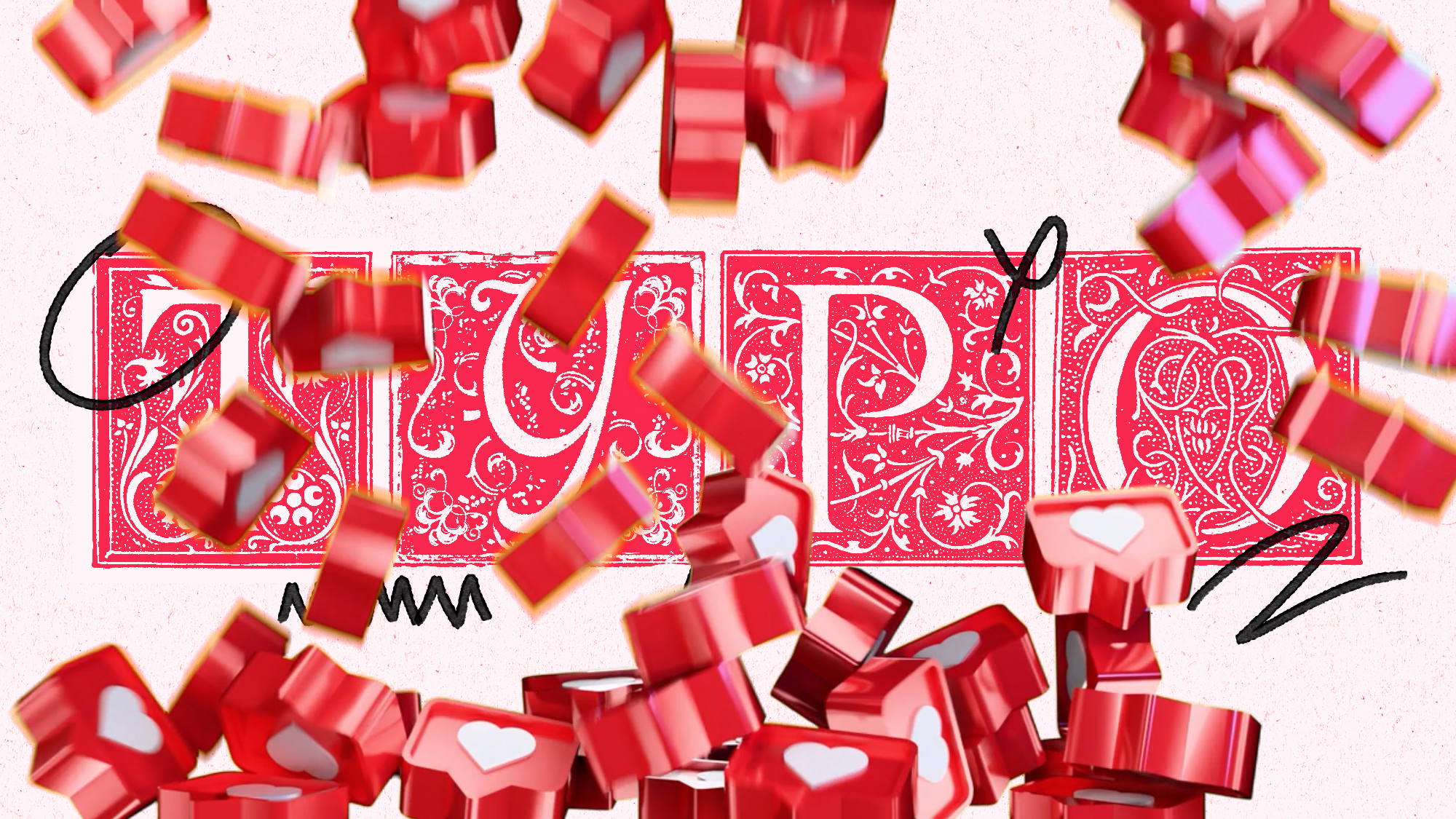
The Typo Vibe Shift
By Michael Waters
Some job applicants are intentionally adding typos to their cover letters to prove that they, and not an AI program, wrote them. Celebrities and CEOs are sending out error-ridden emails and Instagram Stories, and instead of getting a scolding, they are praised for sounding authentic. On some dating apps, where people are, somewhat absurdly, prompted to compose their profiles with AI, typos are apparently no longer an automatic repellent. Nicole Ellison, a University of Michigan professor whose 2006 study showed that dating profiles with spelling mistakes turn people off, now thinks people are warming to the Tinder typo. “A typo maybe signals that you actually do care,” Ellison told Time recently, “because you took the time to write it yourself.” A 2024 study even found that people view customer-service chatbots more warmly when they make and correct errors: A spelling mistake, it seems, is a kind of anthropomorphizing event.
When you buy a book using a link in this newsletter, we receive a commission. Thank you for supporting The Atlantic.
Sign up for The Wonder Reader, a Saturday newsletter in which our editors recommend stories to spark your curiosity and fill you with delight.
Explore all of our newsletters.
The post The Surprising Lesson of the Granta Controversy appeared first on The Atlantic.