The House rejected a bill on Thursday that would have advanced plans to construct an American Women’s History Museum on the National Mall, after a once-bipartisan coalition that had supported it fractured.
The legislation would have designated a location for the new Smithsonian museum, an effort that had collected supporters from both parties and has been backed by President Trump.
But Democrats rejected Republican-led changes to the bill that they said gave Mr. Trump and his allies too much influence over the development of the museum.
Many Democrats also balked at language that specified the museum would be dedicated to presenting the experiences and achievements of “biological women” in the United States. Some said that such a provision could block transgender women and girls from recognition in the museum’s exhibits.
The legislation was defeated by a vote of 216 to 204, with Democrats unified in their opposition. Six Republican congressmen broke with their party to vote against the bill, which had been introduced by Representative Nicole Malliotakis, a Republican from New York.
The effort to establish an American women’s history museum at the Smithsonian goes back more than 20 years. Progress has been slow, in part because other additions to the National Mall became priorities.
But in 2020, Congress voted to authorize the creation of both the women’s history museum and a National Museum of the American Latino. Both projects have advisory councils that are shepherding what is expected to be a long road toward opening their doors.
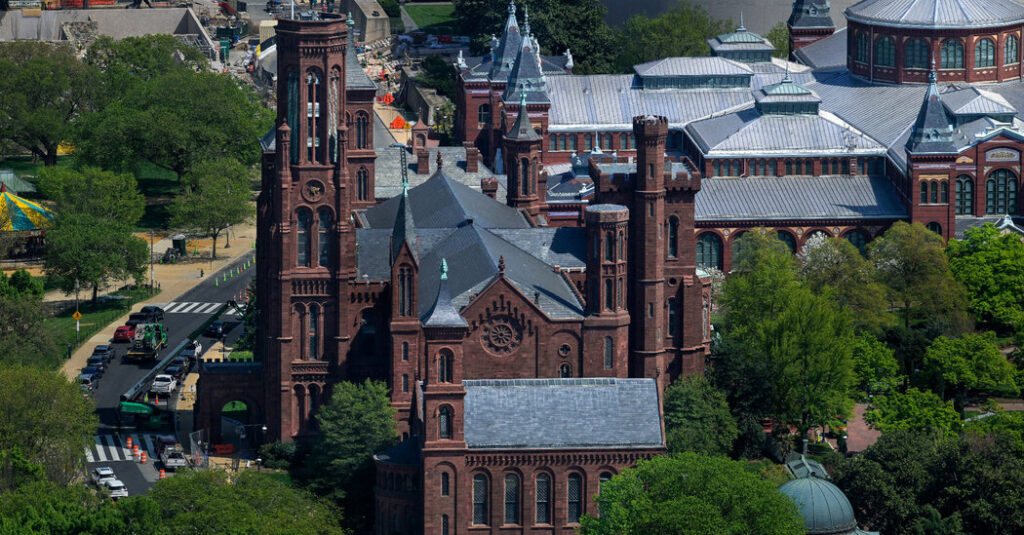
The House bill would have designated the women’s history museum for development on a particular plot of land on the National Mall, not far from the United States Holocaust Memorial Museum.
The Republican-led changes to the bill, which were added in March, specified that the president may “designate an alternative site for the Museum within 180 days of the date of the enactment of this subsection.”
The new language also gave approval power over the museum’s design and construction to the Commission of Fine Arts and the National Capital Planning Commission, both of which are controlled by members appointed by Mr. Trump. In his second term, Mr. Trump has tried to exert an unusual amount of influence on Washington’s cultural institutions, becoming a conservative watchdog over the Smithsonian’s content and taking over the John F. Kennedy Center for the Performing Arts as the chairman of its board.
Legislators from each party have blamed the other side for holding up the museum’s development.
The Democratic women’s caucus called the new version of the bill “hyperpartisan,” and members of their party began pulling their support.
“It was a simple bill — you kind of ruined it with your trans obsession and your culture wars,” Representative Teresa Leger Fernández, Democrat of New Mexico and the chairwoman of the Democratic Women’s Caucus, said on the House floor this week.
Republicans said Democrats were at fault for the gridlock.
Ms. Malliotakis argued on the House floor that specifying the museum’s focus as being on “biological women” was a minor change that should not have become a deal breaker.
She also noted that the history museum already had an advisory council made up of women from both parties that is responsible for advising on exhibit materials.
“So for anybody to stand up and say somehow this legislation would allow the president to dictate the content and what will be displayed in this museum is simply untrue,” Ms. Malliotakis said.
Julia Jacobs is an arts and culture reporter who often covers legal issues for The Times.
The post Women’s Museum Bill Sinks Amid Dispute Over Trump and Trans Issues appeared first on New York Times.