DANGEROUS, DIRTY, VIOLENT, AND YOUNG: A Fugitive Family in the Revolutionary Underground, by Zayd Ayers Dohrn
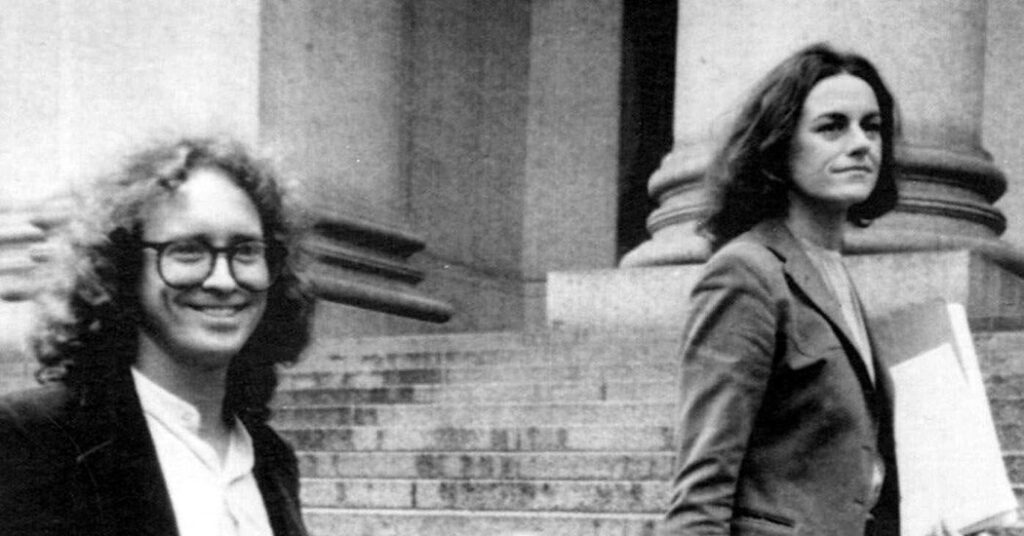
There have been numerous novels, films and memoirs inspired by the American radical left of the late 1960s and early ’70s, but Zayd Ayers Dohrn’s fascinating and affecting memoir, “Dangerous, Dirty, Violent, and Young,” stands out as definitive. Dohrn is both an outsider and an insider, having been born into the underground: His parents are the former Weathermen Bernardine Dohrn and Bill Ayers. Dohrn’s dual perspective yields a meticulously researched history of an explosive time as well as a deeply felt, intimate portrait of a very unusual family.
Dohrn, an accomplished playwright, strives to understand the context for his parents’ radicalism and why they moved from peaceful civil rights and antiwar demonstrations to embrace a “more angry, militant direction.” By the late ’60s, the carnage of the Vietnam War was, despite widespread protests and draft evasion, expanding. After the assassination of Martin Luther King Jr., the police violence against protesters at the 1968 Democratic National Convention and the F.B.I.’s relentless targeting of the Black Panthers, his parents believed peaceful resistance had failed; the moment required escalation, violence to fight violence. The tension in the book is not about his parents’ ideals, which Dohrn largely admires. He questions instead their extreme tactics and how reckless they often were.
Dohrn draws on his interviews with both parents (and other former Weathermen and Black Panthers) to explain the dramatic meltdown of the Students for a Democratic Society that led to the formation of the more militant Weathermen and the infamous Days of Rage. But it was the Chicago police force’s brutal execution of the Panther leader Fred Hampton in his bed (after he was drugged by an F.B.I. informant) that sent them over the edge.
The Weathermen are sometimes dismissed as rich white kids cosplaying revolutionaries, which misses both how committed they were and how their privilege was the point. Dohrn says his parents were determined to “reject the white skin privilege they had inherited, the comfort and willful blindness that was part of their birthright. They would not be complicit.” (Later, Weathermen deployed their “white edge” to drive getaway cars for the Black Liberation Army’s prison breaks and “expropriations” — bank robberies — using the “preconceptions and implicit bias of the police against them,” since white drivers were less likely to attract suspicion.) The Weathermen’s disdain for their privilege is what made them so unnerving to the establishment. That and all the bombs.
Dohrn unstintingly describes the group’s darkest period. Renaming themselves the Weather Underground, they said goodbye to their families and transformed themselves into ruthless guerrillas. They obtained explosives and guns. They took speed and hardly slept. They enforced loyalty to the group through sex and cultish “criticism/self-criticism” sessions in which a member’s ego was broken down and torn apart. They deranged themselves, and in 1970, they planned bombings that would have resulted in the deaths of many people, but luckily their plans failed.
When a Weather cell accidentally blew up a townhouse on West 11th Street in Manhattan that spring, killing three members, it shook the group, but also saved them from “moral catastrophe.” Led by Bernardine, they swore off violence against people and embraced “extreme vandalism.” It seems almost forgotten now, but the Weather Underground carried out more than two dozen bombings between 1970 and 1975, targeting police buildings, the Pentagon, the State Department and the Capitol. “There were no fatalities,” Dohrn notes. “The explosions went off in the middle of the night, in near-empty buildings, always preceded by a warning call.”
The bombings didn’t spark a revolution, but they did land Bernardine on the F.B.I.’s 10 Most Wanted list (her iconic mug shot also made her a counterculture celebrity). The F.B.I. became even more obsessed with surveilling and sabotaging the left. Dohrn draws from the F.B.I.’s Cointelpro records, which are still shocking. The agency’s methods included embedding informants in radical groups to stoke infighting and to entrap them; harassing, threatening and wiretapping aboveground family members without warrants; and executing “black bag” break-ins (and even stealing trophies, like Bernardine’s sister’s underwear). The irony is that the F.B.I.’s tactics were so lawless that the federal government later had to drop all its charges against Bernardine and Bill related to the bombings.
Dohrn’s sections remembering his early childhood underground are beautifully written and oddly sweet. His parents never lied to him about who they were, which made him feel they were all in it together: “When I was just 3 years old, I learned to recognize plainclothes police officers and undercover agents in a crowd,” he writes. “It was a bit like playing a game — a grown-up version of dress-up or make believe — that only my family was good at or knew all the rules.”
Bill was a teacher, patient and loving. Bernardine was more reserved, but her strength and “radical certainty” girded their life, giving the family a sense of order in the chaos. Dohrn’s parents taught him a counter-history of America, about John Brown, Nat Turner and other militant heroes. They raised Dohrn to be a freedom fighter, which he became in his own sensitive, writerly way. But he notes his tendency toward solitude and contemplation, and wonders if it’s a reaction against his parents’ “willingness to be swept away by a movement, to sacrifice free will and agency, even their own morality, in the name of mass solidarity.”
This idea becomes less abstract and more personal when Dohrn realizes that his parents didn’t always prioritize his safety over their militancy. After the Vietnam War ended, the revolutionary moment had clearly passed. The Weather Underground imploded, an event brought home in an extraordinary scene in which even Bernardine was expelled by an extreme faction for being “hopelessly compromised, middle-aged and middle-class.”
His parents withdrew from violence and started a family, giving birth to Zayd in 1977 and his brother, Malik, in 1980. But just before they resurfaced for a more stable life, each parent took some last serious risks that Dohrn only fully discovered while researching this book. He now recognizes how easily he could have lost both his parents to long jail sentences, as happened to the former Weathermen Kathy Boudin and David Gilbert, whose convictions left behind their baby, Chesa (who was then raised by Bill and Bernardine).
How could his parents have taken such risks after they had him? Dohrn can’t quite answer the question, but he frames his parents’ resolute worldview with sympathy and understanding. Surely Dohrn’s careful moral interrogations and his complex rendering of his parents’ contradictions show that they raised him to be his own person, with his own understanding of political ideals. In the end, Bill and Bernardine may have failed as revolutionaries, but they succeeded, in their idiosyncratic way, as parents.
DANGEROUS, DIRTY, VIOLENT, AND YOUNG: A Fugitive Family in the Revolutionary Underground | By Zayd Ayers Dohrn | Norton | 427 pp. | $32.99
The post A Searing Memoir of Being Raised by Radicals on the Run appeared first on New York Times.