Silicon Valley wants to be the best tastemaker in town. Artificial intelligence is changing how we decide what to wear and read and how we interact with pop culture. The Times Opinion culture editor Nadja Spiegelman talks to the New Yorker writer Kyle Chayka and the journalist and critic Sophie Haigney about the rise of “taste slop” and what happens to culture if the internet collapses into just a few chatbots that serve us everything.
Below is a transcript of an episode of “The Opinions.” We recommend listening to it in its original form for the full effect. You can do so using the player above or on the NYTimes app, Apple, Spotify, Amazon Music, YouTube, iHeartRadio or wherever you get your podcasts.
The transcript has been lightly edited for length and clarity.
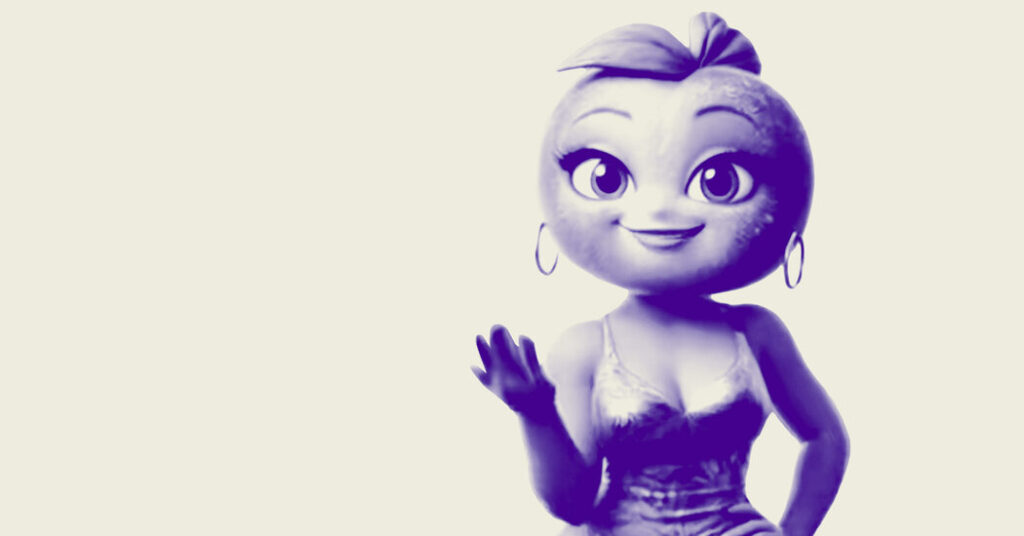
Nadja Spiegelman: There’s something I can’t stop watching. It’s called “Fruit Love Island,” and it’s just an A.I. slop version of the reality television show, and it’s really bad, obviously. But there’s something about it that’s just hooked me. And now Silicon Valley is showing a new interest in being cool and in the idea of taste. What will happen if A.I. starts creating culture that is actually good? How will any of us resist taste slop?
Today I’m talking to Kyle Chayka, a New Yorker staff writer who has been covering the way Silicon Valley is shaping our culture, and Sophie Haigney, a journalist and critic who thinks a lot about whether taste is fundamentally human. Kyle, Sophie, thank you so much for joining me for this conversation.
Kyle Chayka: Thank you for having us.
Sophie Haigney: Yeah, excited to be here.
Spiegelman: The reason we’re talking about taste in A.I. right now is in part because Silicon Valley has become really interested in this recently. The president of OpenAI, Greg Brockman, posted, “taste is a new core skill.” And in planning for this I have read endless tech blogs about taste, which is odd to me because I think of Silicon Valley as fundamentally anti-taste. And Kyle, you wrote about this recently. What is going on there? Why does Silicon Valley care about taste?
Chayka: Oh, my God. I feel like it’s because they realize they don’t have it. I started noticing it in the last year or two, I would say, as generative A.I. has become more and more popular and seen more uptake with normal people.
And I think the tech vanguard are kind of like, A.I. isn’t just slop. We’ll create tasteful things with A.I. We need to be enlightened about what we choose to make, and we need to exercise our personal judgment in order to use this new, crazy tool. And so I think they’ve realized that taste is something that they need and desperately are trying to claim, but are maybe not achieving that quite yet.
Haigney: Yeah. There’s definitely an element of coping to their taste obsession. I think they’re having a hard time. The products that they’re putting out, like Claude and ChatGPT, they’re having a hard time making the case that these are cool, because they’re kind of not. Like, when the iPhone came out, it was cool. Steve Jobs was cool. I remember the old Apple iPod ads; they were selling something that had a very clear design aesthetic. It was a physical object. I think a lot of people are just looking at A.I. and they’re like, “This is cringe.” Yeah, this is just not cool.
Chayka: Sam Altman is not a cool guy. Not in the way that Steve Jobs could be.
Haigney: At least he had something going on. He had a vibe. They’re very vibeless. And so I think the vibelessness of A.I. means that people have to cling to this life raft of the idea of taste.
Spiegelman: Yeah, I think that’s true. And taste — I mean, we could talk for a long time just trying to define taste. But you’ve both thought about this a lot. Kyle, you wrote a whole chapter about it in your book “Filterworld.” Sophie, you’re working on a book about collecting, in which you’ve written a chapter about taste. What is your working definition of taste for this conversation?
Haigney: Basically, it’s about how you respond to things that are in your environment. If you see a lamp, do you love it? Does it repulse you? Do you want it? Does it remind you of something?
You’re making all of these instantaneous judgments about things, based on what feels like instinct and pure preference to you, but is actually something that’s very much shaped by your background, by things you’ve seen in magazines or — more likely now — on Instagram. But I think the way we experience it is almost just like magic. We just connect with something or we don’t.
Chayka: It’s ephemeral and magical and instantaneous — and it happens inside of you. In my book and other research, the idea of taste traces back to 18th-century philosophers. So there’s this great Montesquieu quote that I’ve written down on my phone, because I like it so much: “Natural taste is not a theoretical knowledge. It’s a quick and exquisite application of rules which we do not even know.” And I think that’s what Sophie was talking about a little bit. You can’t guess it in advance. You can’t predict your reaction to something. It’s just this response within yourself.
Spiegelman: But it’s interesting because, as I’m listening to you talk, that specific definition — a quick and responsive response to a series of rules that we cannot know — isn’t that also exactly what large language models are, to some degree? And if taste is formed by consuming an enormous amount of information, couldn’t an L.L.M. theoretically do that better than a human could?
Chayka: Ingesting data is a really interesting part of it. L.L.M.s do have access to the whole of human knowledge in some ways, as a French philosopher may have thought they did in the 1750s. But to me, taste is not just that knowledge or the facticity of it. To know something is to actually appreciate it and to feel it.
Spiegelman: To feel it, yeah, which is what an A.I. can’t do.
Chayka: Right. So it could suggest something to you. It could produce text that makes you feel something, but the feeling is never in the L.L.M. And when Sophie was talking about vibes before, there’s academic work now on how vibes are these implied connections between huge sets of data, and that L.L.M.s are made up of vibes.
Spiegelman: There’s academic work on vibes?
Chayka: There definitely is. I think there’s a new book coming out pretty soon.
Spiegelman: I want to become a professor of vibe studies.
Chayka: So maybe this is also the A.I. taste connection, because it’s abstract and we don’t totally understand it. To me, it’s still a computer.
Spiegelman: And a computer fundamentally can’t have an embodied reaction to a piece of art.
Haigney: Yeah. Does an L.L.M. really have a concept of beauty? Like, does an L.L.M. really have a concept of hating something? But it can parrot it, and a lot of people do parroting in taste, too. There’s a lot of taste that is fundamental. A lot of the way we express taste is consumption. We buy clothes that we think look cool. We read books that we think will make us seem cool. And L.L.M.s are not bad at that.
Like, before this, I asked ChatGPT: “What are five books I could read that would make me seem like I have good taste?” It told me a Rachel Cusk book, a Maggie Nelson book, “Never Let Me Go” by Kazuo Ishiguro. It felt slightly dated, but I was like, OK, if you went to a party in Brooklyn and you talked about those books, you’re not off base. But there is that missing fundamental experience.
Chayka: But then, I feel like once the machine can reproduce that taste or that style, then we’ve all moved on.
Haigney: Right. It does feel really a little bit dated.
Chayka: Yeah, once it’s so predictable.
Spiegelman: Is the reason Silicon Valley is so interested in taste right now in part because it’s perhaps the final frontier of what makes us human? Like, one of the things that is essentially human?
Chayka: Yeah. It’s love and taste and beauty. That’s what A.I. is trying to disrupt. It’s technology that targets exactly our human identity and our sense of self, and our sense of what people can do and can’t do. And so I think they are chasing technology that replicates taste in a way, and they want to disrupt it in the same way that Facebook disrupted communication and friendship. Now A.I. is disrupting your own taste and culture even more so than algorithmic feeds have.
Spiegelman: Can you say more about that? How is A.I. disrupting our taste and culture even more than algorithmic feeds?
Chayka: To me, the era of generative A.I. is kind of a successor and an intensifier of the last era of digital technology, which was algorithmic recommendations. So algorithmic recommendations kind of pushed bodies of content and culture at you and tried to guess what you wanted.
And now the promise, or the hope, in Silicon Valley for A.I. is that it just produces what you want. You barely have to speak it or think it, and A.I. will deliver to you the “Fruit Love Island” of your dreams. Or what if Baby Yoda was in James Bond? And the taste problem is that it is their idea of goodness, I think — that wish-fulfillment sense of culture and art.
Haigney: I mean, you can fine-tune more and more about what you want. I was looking at this A.I. matchmaking dating app. The number of variables you could filter someone by included percentage body fat, and they were claiming that they could look at the picture of someone’s face and tell what they were going to be.
And A.I. didn’t create bad body standards, nor did it create the problems of dating apps, but I think it will intensify this hyper-specification of what you want, and then getting that wish back. I like that idea of wish-fulfillment culture. I mean, I hate the idea of it, but I think that it seems to speak to this era where you can increasingly tweak and tweak and tweak and get closer to what you want, and it will just be delivered to you. That is dystopian to me.
Chayka: And taste comes from outside of you. As we were talking about — the definition before — it surprises you. It’s not what you guessed it was. It’s something that comes up, and brings you somewhere new.
Spiegelman: Yeah. I asked my dad when I was 7, “What is art?” And he was about to go into the dentist’s office and get laughing gas and was like, “Hold that thought. I’ll think about this better when I’ve had laughing gas.” And then he came out and was like, “Art is giving shape to your thoughts and emotions.” And that’s obviously the artist’s perspective of what art is, but I think it’s what we want when we engage with it.
We want to feel like this is someone else who has experienced being alive, who knows that they can die, who has fallen in love, who has a body that can be harmed, and this is what it is like to experience the world through their mind. And that even if A.I. can perfectly simulate that experience, there’s a feeling of coldness that comes from knowing that you’re not connecting to another living being.
But as I’ve been thinking about this episode, and talking to you guys about it, I do keep going to: But does it really matter? I think, right now, A.I. can’t quite do this. But I would imagine that maybe five years from now, A.I. could write a perfectly passable Rachel Cusk novel.
Chayka: Is that an insult to Rachel Cusk?
Spiegelman: Oh, my God. I was only using her as a marker of good taste.
Chayka: Well, I mean, the comparison that people use, and that I’ve deployed myself probably several times, is that generative A.I. is similar to when painting encountered photography. The invention of photography — it was able to exactly reproduce reality. It was able to create the most realistic image possible. And so painting responded to that by getting crazier, by not depicting reality, by moving into emotional abstract painting and gesture and things that were not about depicting what’s in front of you.
So A.I. is like photography in this situation, where it can create a simulacra of art; it can create things that are like art or have artistic qualities, and that the profusion of that kind of slop — basically high-end slop, which the trend forecaster Emily Segal recently called “taste slop” — might push artists and writers and creators to go farther.
Spiegelman: “Taste slop” is so interesting to me as a word, because part of what I was thinking about when I was thinking about this is A.I. slop — we call it that to intentionally signify that this is of bad taste.
So taste slop creates such an interesting mishmash of where this might all be going. But I think my question is still: You both had this instinctive reaction that having a cultural production machine give you exactly what you want would be bad — but why?
Haigney: In some ways we do already live in a world where that is true. I feel like you’re constantly getting served something based on what you listened to before, but accelerating that. I just think that so much of what makes consuming culture worthwhile is to be surprised, to be challenged, to experience emotions you didn’t expect to feel.
Which doesn’t mean that there’s no room for “The Town,” starring Ben Affleck. I also like culture that I don’t necessarily think is good but provides pleasure. But I don’t want a world in which that entirely crowds out this whole other field of things that I can’t predict, that might move me in ways I don’t even want to be moved.
I feel like that’s a really bad future, and I feel like, well, what is even the point of being human? What is the point of these tools? What are they going to do for me if they’re kind of violating that fundamental human experience?
Chayka: Well, there was this flaw in some A.I. models that they were too obsequious. They would give you too much of what you wanted, and they would praise you too much and compliment you too much, and people got A.I. psychosis from this obsequiousness. But I feel like A.I.’s tendency to not challenge you and to not push you and to be so agreeable limits its ability to deliver culture that’s challenging, also.
Spiegelman: Are all of these anxieties that we feel, about how A.I. will shape our culture — is somewhere at the root of that anxiety the fear that we are all kind of mid and basic if left to our own devices?
Haigney: I guess I feel like more of the anxieties come out of a place of — one of the reasons I think people are obsessed with taste is because they just think A.I. is going to take everything from them or it’s going to revolutionize everything.
And so people are clinging to these life rafts, and taste is one of them. It’s scary. It’s scary out there with A.I., and we’re being told a lot of stuff, with varying degrees of confidence, that we don’t know if it’s true. Is A.I. going to take all our jobs or, like, not really matter that much? The uncertainty around it is very confusing.
Chayka: Yeah, we just don’t know what’ll happen. And people are adopting the tools. A.I. is being used in filmmaking and in music and in everything, and we can’t quite recognize it yet. Or maybe we are at the point where we can recognize it a little, and soon we won’t be able to at all. And so there’s this fear that, I don’t know, humanity is being cut through or adulterated with this new machine stuff.
Spiegelman: Is that an old fear that we’ve always had about technology? Should we be thinking about A.I. as it could be applied to culture as not so different from Photoshop or C.G.I.?
Chayka: Yeah. Was it the Plato thing, that written language is bad?
Spiegelman: And it will cause people to not remember anything?
Chayka: Yeah. And that turned out OK, and photography turned out OK. And I’m sure we’ll adapt to A.I., but I don’t know. I just keep coming back to, like, social media is now widely recognized as not very good for a lot of civilization.
Spiegelman: Right, yeah.
Chayka: And so, I don’t know. I hope we don’t rush uncritically into this next mass adoption of technology, which is generative A.I. Though I’m sure we will, sadly.
Spiegelman: I also want to talk about how A.I. is going to change the economic models for working artists. Could you tell me about that?
Chayka: I think A.I. is already changing how artists survive, because the way that these A.I. models work and the reason that they exist is because they have hoovered up all of human culture that all artists ever made already. And we put it into digital form. And so it could be mashed into a machine and turned into a trained model.
The models that exist now do not exist without all of the human art and writing and culture that came before them. And I think that in automating all of that stuff, it has kind of made it even more difficult for artists to survive. And the artists are not profiting from the way that their work was digested into these machines.
Illustrators and graphic designers are seeing their livelihoods vanish. So I feel like A.I. itself is making that situation worse, where there are fewer artists and creators who can make a living, and they have a harder time reaching the people who would sustain their careers. And, at the same time, A.I. companies — which are now valued in the trillions of dollars, probably — are not paying any royalties or fees. They’re not supporting artists. They’re not generating a new culture of their own or creating a sustainable ecosystem. Generative A.I. is impoverishing the cultural production model, which it’s, in turn, replacing. And so that makes it harder for us to have a new culture, and to even have a more organic, grass roots culture that we can enjoy.
Spiegelman: I was reading an article in Wired, the headline of which is “I Work in Hollywood. Everyone Who Used to Make TV is Now Secretly Training A.I.” And it was about how the A.I. training company Mercor has about 30,000 freelancers. Basically, just people training their own replacements.
And TV is a particularly dangerous one, because people have rarely known who is in the writer’s room. Like, we don’t have the same attachment to the human behind it. And if A.I. starts making prestige TV, my worry is also, what is the messaging behind it? What would we be getting out of an A.I.-created version of “The Wire”? What kind of values is it going to be giving us?
Chayka: Probably whatever it’s been trained and weighted to do by the companies that make the models. I don’t know. There have been some studies about how large A.I. models trend toward liberalism. Or they like socialism a little bit more than you might expect, because they see it as a logical, sustainable civilization or something. But I think we should not trust that the models that we’re using, and that are being adopted, are in any way neutral or creative or not following secret weights, as they call them — or variables that are in the systems, planted there by the founders of the companies. There’s just too much incentive for the companies to mess them up, for them not to interfere, basically.
Spiegelman: Yeah. That’s one of my anxieties about A.I. and culture. Are we actually just all basic, and is that the fear? But the other one is, so much of what we understand about the world, like when we read novels, when we read Tolstoy, we’re understanding so much about what a certain set of values are about the world — a certain sense of what it means to be alive and how, and very politically what it means to be alive and how.
And I worry that if we start consuming things that are made by A.I., these Silicon Valley companies are so openly in bed with the government. A.I. companies and executives are major political donors in the 2026 election campaign cycle. They’ve pledged $150 million to influence A.I. legislation. Is there anything stopping companies, like Anthropic or OpenAI, from introducing politically motivated messaging into the culture that we consume?
Chayka: I don’t think so. Social media had a lot of these same problems. There’s been very little regulation of it. And I think we can see a model or an idea of what might happen with Elon Musk buying Twitter and turning it into X and absolutely perverting the variables of the feed, and absolutely prioritizing content that, say, praises Elon Musk.
Haigney: Yeah, we’ve experienced this. The political transition of an algorithmic feed, I feel like X is a really good example of how one individual’s political viewpoints can be injected into mass consumption.
Spiegelman: And I find X such a good example, because so many of my friends and colleagues who know this, who know that X is now algorithmically weighted toward Elon Musk’s specific politics, still somewhere in their brain look at it and think: Oh, that’s what people are saying.
Chayka: Guilty. I’m guilty. So it’s hard to escape that, especially because before it was maybe a little bit better. And I think the same corruption can and will happen with the A.I. models. I mean, right now we’re in this phase of, like, Anthropic is supposed to be the good guys who are neutral and don’t want to make killing robots for the government, whereas, OpenAI is like: We’re going to follow the government and do whatever and chase profit as much as we can.
But neither of them are good. Neither are following a sense of human good that I believe in. They have barely even stated what they believe is human good. I’m like, great. So, you have this message of we’re going to dismantle civilization as we know it, and we have no idea and no philosophy for what comes next. We’ll just see. It’s fine.
Spiegelman: I wonder if we can cast ourselves, like, five years in the future to where we’ll be with all of this because we’ve formed a parasocial relationship with these bots, and we ask them for recommendations the way we would ask a friend or a bookseller or a critic for recommendations. And I wonder where that leaves us five, 10 years from now.
Chayka: If the user actions right now are any indication, people will be using chatbots a lot, and using them as a window to everything they’re doing and consuming. So right now, we open our phones and go to lots of apps and see lots of things, but I think, in the future, it’ll just be your A.I. model, like ChatGPT or Anthropic, and then that’s kind of the window through which you’ll see other stuff, whether it’s a YouTube channel or a book recommendation or your faux romantic relationship with a robot.
Spiegelman: I would also recommend having the New York Times app on your phone.
Chayka: But yeah, I think the A.I. model will be your guide to everything else, and thus it influences everything you do.
Spiegelman: And in that world, where everything that you experience now as multiple different apps on your phone, or as a search engine, is instead a singular A.I. model that is giving you information — what impact does that have on how we develop our sense of taste and how we experience culture?
Chayka: To me, it feels more homogeneous. I think a lot of users are pretty passive, and they identify with the first layer of what they interact with. So, it’ll be like, you don’t consume music through Spotify, you consume it through ChatGPT. You see an artist’s stuff — their music, their paintings, whatever — through the chatbot. And so you associate that culture with the chatbot itself. And it feels yucky to me.
Haigney: And it’s like you were saying, it feels like it’s your friend. That’s one of the weirder parts of it. It feels like it’s your buddy that has everything in it at the same time.
Chayka: And it remembers you. This is one of the most shocking experiential parts of it to me. They build up memories of what you’ve told them and your preferences and the things that you rely on.
Spiegelman: As part of researching this, I asked Claude: Who is the most beautiful woman? And it told me that it didn’t experience faces, but then it was like, Tilda Swinton and Lupita Nyong’o. And I was like, my Claude knows I’m gay; I wonder what happens if I ask generic Claude? So I created a new Claude account, and I prompted it in exactly the same way — I used exactly the same language — and it said “Audrey Hepburn.
Haigney: That’s fascinating.
Chayka: Based on your own tastes, like, what the ideal is.
Haigney: I think we’re just so unaware of those biases in the model. But that’s a hyper-specific way that it’s filtering culture and everything back to you via what you’ve told it before.
Spiegelman: And what impact do you think it will have in a world where, instead of a For You page on Instagram, everything is going through Claude or ChatGPT five years from now?
Haigney: I think, again, it’s just that hyper-optimization toward what you already like, and the feeling that it’s being fed back to you by this kind of friendly entity that knows you based on what you’ve told it already.
Spiegelman: And then, do we also see a convergence of these two things? Everything you consume is mediated through the app on your phone, your A.I. app. But then, you know, you’re also — through that app — consuming video that’s created by A.I. Is there any outside to this world created by A.I.?
Chayka: That is like the snake eating its own tail, I guess. I think, in the A.I. company’s aspirations, there is no outside. They would love to create this purely A.I. bubble, where it tells you what to consume and produces what you consume at the same time. And that would be the most profitable, efficient ecosystem for an OpenAI or an Anthropic to create.
I think the problem with that is that there is no mechanism for humans making anything, then. They are betting everything on the A.I. being good enough — that it’s smarter than a human, it can do and create better things than a human. So we’re going to find out, I guess. But if there’s no incentive for humans to make stuff, if there’s no economic function for it, I really worry that the cultural ecosystem and the information ecosystem will just degrade very quickly.
But I do think culture always lives. There’s always a new thing happening, and there’s some artist working in their basement, doing some crazy thing. And I don’t know, I do have hope that a human artist always has that urge to make something new.
Haigney: Yeah. And I also believe that outside of the economic model. Economic models for culture are terrible, but people have still always made music and art. I believe that will persist. It’s a very deep human urge. But we’re making it a lot harder for no good reason, as I see it.
Spiegelman: Can you be prescriptive? What can someone listening, who feels the anxieties about all of the things that we’ve talked about — about the flattening of culture, about A.I. taking over, about our own taste becoming more and more simply the easiest, most basic versions of ourselves reflected back at us — what specifically can you do, on an individual level, to keep making an argument within yourself and within the world for things that surprise and risk and challenge you?
Chayka: I love the question. I mean, it’s like a discipline that we all have to practice every day, to separate our taste and our identity from the feed or the A.I. model, or just from our screens. And to be like, “No, that’s not me.” My phone is not my entire identity. I mean, there’s different ways to go off the rails for yourself, I think.
You can explore the internet beyond what is fed to you directly by your feed. You can delve into a rabbit hole on Spotify or on YouTube. You can explore within these ecosystems, and I think you can just go offline. You can go to MoMA and look at a weird painting, or you can go to any art museum and not just go to the most famous piece of work or the most famous object, but just kind of wander around and experience something that you don’t understand yet. And just sit there and feel if you are gravitating toward something or not. And I don’t know. It feels like a meditative practice to me a little bit, to just exist and see what moves you. And that’s something that we don’t get the chance to do on our phones because they’re just bombarding us with new stuff all the time.
Haigney: In addition to being more open to randomness, there’s also the depth factor. I think it’s so rewarding to go so deep on one specific thing. Like, read all the novels by Elizabeth Bowen, who was a midcentury writer that I don’t think has had the critical renaissance that many of her peers have. Just read them all and see what happens. And you will be rewarded for deep attention and focusing hard on one specific thing or one specific area.
Be more like a collector. Be more open to the idea that depth and narrowness will reward you, rather than broad consumption of everything — like always being aware of things like what’s in The New York Times Book Review. Just follow your own eccentric path, I think.
Chayka: And that’s taste, right? You don’t have to chase everything. You can chase what fascinates you.
Spiegelman: Sophie, Kyle, thank you so much for talking about this with me. It was so nice to just get to air all of my biggest anxieties about A.I. and culture at you, and hear what you had to say.
Chayka: I feel inspired and hopeful.
Spiegelman: I also feel inspired and hopeful.
Haigney: Yeah. We left it on a good note.
Thoughts? Email us at [email protected].
This episode of “The Opinions” was produced by Vishakha Darbha. It was edited by Kaari Pitkin and Jasmine Romero. Mixing by Carole Sabouraud. Video editing by Steph Khoury. The postproduction manager is Mike Puretz. Original music by Pat McCusker, Isaac Jones, Carole Sabouraud and Aman Sahota. Fact-checking by Mary Marge Locker and Kate Sinclair. Audience strategy by Shannon Busta and Kristina Samulewski. The director of Opinion Video is Jonah M. Kessel. The deputy director of Opinion Shows is Alison Bruzek. The director of Opinion Shows is Annie-Rose Strasser.
The Times is committed to publishing a diversity of letters to the editor. We’d like to hear what you think about this or any of our articles. Here are some tips. And here’s our email: [email protected].
Follow the New York Times Opinion section on Facebook, Instagram, TikTok, Bluesky, WhatsApp and Threads.
The post Which Has Better Taste: A.I. or Humans? appeared first on New York Times.