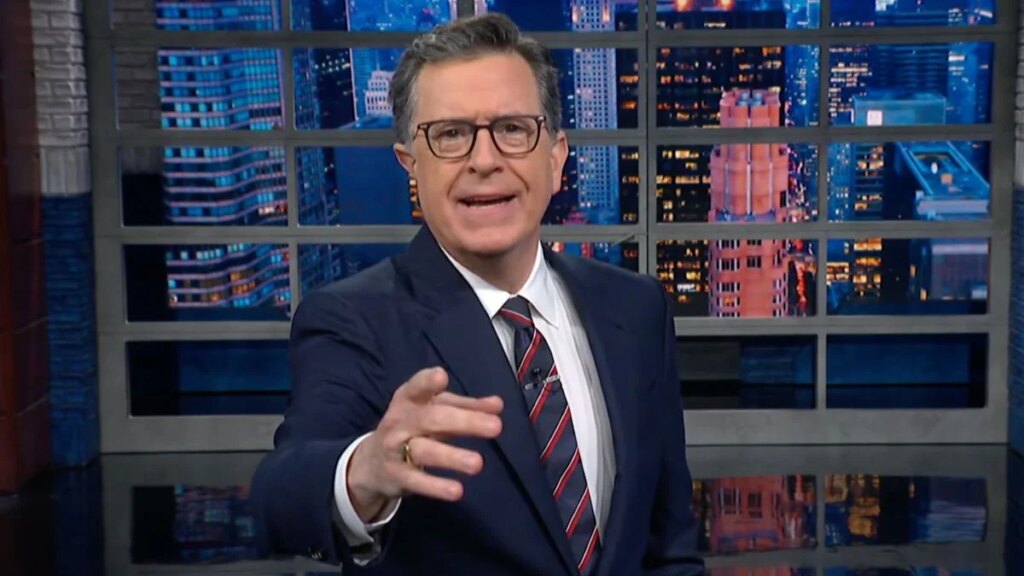
I used to watch late night television religiously. Like most of us over the age of 20, at the end of a long work day it was ritual to tune in to David Letterman or Jay Leno, then after they retired Stephen Colbert or Jimmy Kimmel or Jon Stewart.
Now I find myself scrolling on social media to relax before bed. I’m not proud of it, but it’s a fact.
That explains a lot about Colbert, who goes off the air on Thursday after CBS decided last year to end the show. No more late night chat for the network. Now it will be some downmarket filler called “Comics Unleashed,” produced by Byron Allen, while Kimmel on ABC and Jimmy Fallon on NBC hold on to their slots by increasingly slender threads.
Colbert has been No. 1 in the late night ratings with about 2.7 million viewers each night, according to Nielsen, but that isn’t saying much anymore. Because we’re all scrolling on social and streaming instead.
Personally I’m bracing for a shock, even though I’ve long fallen out of the habit of tuning in. Colbert’s exit is a loss to our shared daily lives. We need what he offers – a shared humor along with trenchant, piercing observations of our society, served up nightly for Americans’ consideration and amusement.
Colbert is one of those rare figures in media who holds the center at a time of division – reasonable rather than right or left, tolerant while openly loving of his Catholic faith, compassionate to a fault but bloodless in skewering the hypocrisy, corruption and buffoonery of the current administration.
Where will that come from now?
“He was gifted and his soulfulness next to his multi-hyphenate brilliance will be missed and hardly exists anywhere,” a veteran of the comedy business told me this week, when I asked for the prevailing view among his peers, a surprisingly sentimental view from a hard-bitten business guy. “But it’s also a statement about broadcast TV and what we all know.”
There are other losses to the industry itself: the late night shows are critical platforms for promoting movies, television shows and musical artists. Once upon a time late night provided a breeding ground for young stand-up comedians to be tested in front of a large audience, providing a launch pad for the likes of Jerry Seinfeld, Jim Carrey, Ellen DeGeneres, Marc Maron and many others.
Where will all of that promotional demand go? No doubt to junket interviews, chopped up into a million bites on TikTok. We already know it won’t be nearly as good.
Plenty of observers in the media have been arguing that Trump killed late night. Or that politics has killed late night. On the right, the argument goes, regular viewers are tired of tuning in to political lectures or mockery of the president on mainstream broadcast media. America needs more Johnny Carson. Less Kimmel and Stewart. Late night should be fun.
Certainly Colbert talks a lot about politics, and Trump’s chaotic, often cruel and sometimes comical administration visibly makes him crazy. In early May, he said Trump had the affliction of “Deja Hormuz” in the war with Iran, calling the president’s latest ceasefire proposal “a letter of intent to eventually outline the idea of what you might agree to some other time.” He mocked as “bulls–t” new $1 billion legislation to fund Trump’s White House ballroom with a supercut of the president’s promises that the project would not use taxpayer money.
But the slow, sad dismantling of what was once a vibrant part of our town square isn’t actually about that. As TheWrap has reported in great detail, broadcast audiences for late night (like for other news conversations, by the way), have been declining for over a decade. Fallon’s average “Tonight Show” audience has fallen 64% from 3.6 million viewers in 2015 to about 1.3 million now, according to Nielsen. Kimmel is down 13% in that time frame. Colbert has dropped the least – only about 9%. But that’s not enough to convince CBS that Allen’s programming isn’t a better business decision.
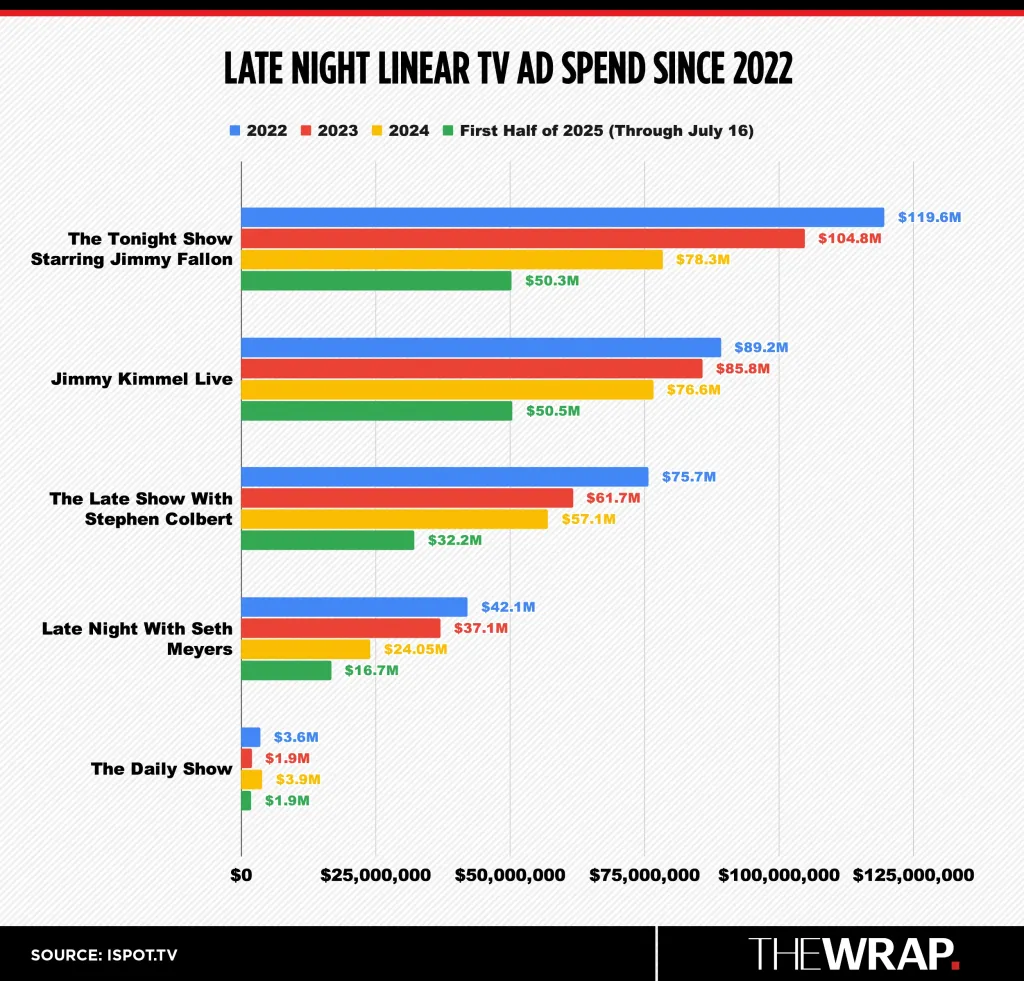
This shocked me: In just two years, the ad revenue for “The Late Show” cratered 25% from 2022 to 2024, according to data from iSpot TV. It dropped 35% on “The Tonight Show.” That ad revenue is never coming back.
The more frustrating part of that trend is that the streamed version of these shows has exploded. They’re not in decline, the audience has just moved. Colbert has a massive 10.7 million followers on his YouTube channel – which serves up pennies in advertising for what would be major dollars on television. A typical clip will get 1-2 million views, while others commonly hit 7, 8 or 9 million views — especially the political ones. What’s more, the online audience is much younger and a more desirable advertising demographic, with about half of them millennials.
But that simply means the business case for late night is now upside down. How do the networks justify the massive salaries for talent like Colbert? And how do they monetize these massive audiences on a tech platform? That part has no solution yet and many believe that Colbert should just start his own YouTube channel and sell advertising. None of us who observe the entertainment business would be surprised to see him do that.
The exit of Colbert is a loss, no doubt. Technology killed the format. Let’s hope the rise of new technology will create a place for him. We need it.
The post Did Politics Kill Stephen Colbert? appeared first on TheWrap.