Elon Musk’s $150 billion lawsuit against OpenAI and Sam Altman was quickly rejected by a federal jury on Monday, in a major blow to Mr. Musk’s credibility and his effort to become a serious competitor in the artificial intelligence race.
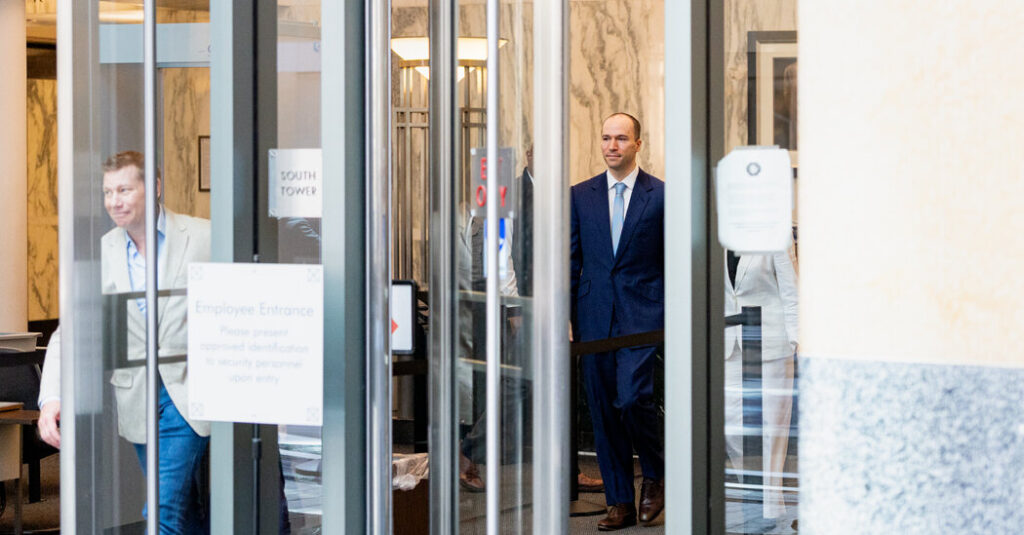
The nine-member jury, deliberating for less than two hours in U.S. District Court in Oakland, Calif., found that Mr. Musk had failed to file his lawsuit within a time frame required by law. The presiding judge, Yvonne Gonzalez Rogers, dismissed Mr. Musk’s claims after the jury’s decision.
Mr. Musk’s lead lawyer immediately said the tech mogul would appeal the decision, while OpenAI’s lawyers celebrated with back slaps in the hallway outside the courtroom. Neither Mr. Musk nor Mr. Altman was in the courtroom when the verdict was read.
In a social media post a few hours later, Mr. Musk attacked Judge Gonzalez Rogers, calling her an “activist Oakland judge, who simply used the jury as a fig leaf” for a decision that “creates such a terrible precedent.”
The outcome preserves the status quo in Silicon Valley’s race to build artificial intelligence, with OpenAI maintaining its role as one of the tech industry’s most essential companies. And it thwarted Mr. Musk’s efforts to implode an organization he helped to create in 2015.
Mr. Musk had accused OpenAI; its chief executive, Mr. Altman; and its president, Greg Brockman, of “stealing a charity” by attaching a commercial company to OpenAI, which was founded as a nonprofit, and taking billions of dollars in investments from Microsoft. He also accused them of unjustly enriching themselves through the nonprofit.
But Mr. Musk’s lawsuit faced a high legal bar in the three-week trial. The jury had to determine whether he sued within several statutes of limitations. Ultimately, the jurors did not get to decide whether OpenAI and its executives were liable for Mr. Musk’s specific claims because, they said, he filed his suit too late.
The court fight exposed years of backroom maneuvering and animosity between Mr. Musk and Mr. Altman, who co-founded OpenAI with Mr. Brockman and a group of A.I. researchers.
OpenAI, which launched the A.I. boom in 2022 with the release of its ChatGPT chatbot, has emerged as one of the most influential tech companies in the world, raising billions of dollars to build data centers and create technology that many in Silicon Valley believe could transform the global economy.
The failure of Mr. Musk’s suit removes one of the final roadblocks for OpenAI to an initial public offering, which could happen this year and could be one of the biggest in history. It also solidifies OpenAI, like its closest competitor, Anthropic, as one of the most important companies in the A.I. boom.
But OpenAI still faces plenty of threats. Anthropic has aggressively challenged it for business customers interested in using A.I. in their computer systems, and Google has been closing the gap in consumer use of the technology. It is also unclear if Mr. Altman’s credibility has been harmed by days of testimony claiming that he is untrustworthy.
Mr. Musk asked for $150 billion in damages and wanted Mr. Altman to be kicked off OpenAI’s board of directors. He also wanted OpenAI to unwind a move it had made to become a for-profit company before an initial public offering. He added Microsoft to the suit because of its investments in OpenAI.
Microsoft said in a statement that “the facts and the timeline in this case have long been clear, and we welcome the jury’s decision to dismiss these claims as untimely.”
That decision was not the final word in the unusual trial; the jury was merely an “adviser” to Judge Gonzalez Rogers, who could have still ruled against OpenAI. While the jurors deliberated, she listened to arguments from the trial lawyers on the questions of damages and remedies.
But after the jury’s rapid verdict, the judge quickly concurred. Marc Toberoff, one of Mr. Musk’s lawyers, gave a one-word comment on the decision: “Appeal.”
In another social media post on Monday, Mr. Musk repeated a claim he had made on the witness stand: that OpenAI “stole a charity” and stood to get away with it because of the timing of his suit.
“Regarding the OpenAI case, the judge & jury never actually ruled on the merits of the case, just on a calendar technicality,” Mr. Musk wrote. “There is no question to anyone following the case in detail that Altman & Brockman did in fact enrich themselves by stealing a charity. The only question is WHEN they did it!”
Outside the courthouse, William Savitt, OpenAI’s lead lawyer, said he was “delighted” with the verdict and thanked the jury. The fast verdict was “unusual,” Mr. Savitt said, but he thought OpenAI had a strong case.
While Mr. Altman and Mr. Brockman attended most of the trial, Mr. Musk appeared only for his own testimony at the start. Last week, while testimony was concluding, Mr. Musk traveled to China with President Trump, even though he could have been recalled to the witness stand.
Many legal experts were surprised that Mr. Musk’s suit even made it to a trial. Last year, the attorneys general in California (where OpenAI has its headquarters) and Delaware (where it was legally incorporated) approved OpenAI’s restructuring as a more traditional for-profit company.
Mr. Musk was OpenAI’s biggest early investor but left less than three years later, in 2018, after a power struggle with Mr. Altman. Because he exited the A.I. organization so many years ago, legal experts questioned whether he had the legal standing to sue.
After Mr. Musk left, Mr. Altman attached a for-profit company to OpenAI and started raising money from Microsoft and other investors. From 2019 to 2023, Microsoft invested more than $13 billion in the company.
Through the start-up’s commercial partnership with Microsoft, Mr. Musk’s suit claimed, OpenAI abandoned its original mission to build A.I. for the benefit of humanity.
“At the outset, most people were saying that it wouldn’t make it to trial,” said Dorothy Lund, a Columbia University law professor who specializes in corporate law. “I was surprised we got there.”
Ms. Lund said the case would not have made it to trial in Delaware, which typically takes a stricter approach to corporate law.
Mr. Musk’s lawyers argued that he first became aware of the breach in the fall of 2022, when he read a news article saying Microsoft was investing $10 billion in OpenAI. After reading the article, Mr. Musk texted Mr. Altman, calling the deal a “bait and switch.”
But OpenAI’s lawyers showed that when Mr. Musk was still at OpenAI in 2017, he repeatedly tried to transform the lab into a for-profit company, including an effort to fold OpenAI into his electric car company, Tesla. They argued that Mr. Musk had sued only after OpenAI had become hugely successful with the release of ChatGPT.
In his opening statements, OpenAI’s lawyer Mr. Savitt called Mr. Musk’s suit a case of “sour grapes.” He said that the OpenAI nonprofit still existed, that it controlled the for-profit company and that it now had assets totaling more than $200 billion.
Legal experts questioned whether the judge would have ordered a change in OpenAI’s corporate structure even if Mr. Musk had won, given that the attorneys general in California and Delaware had approved it.
“The court is really not going to get in the middle of corporate governance,” said Tre Lovell, a media and business lawyer in Los Angeles. “I don’t see the judge firing the C.E.O. and restructuring this company, especially on the precipice of them going public and maybe becoming one of the most valuable companies in history.”
One last part of the trial was unresolved on Monday. Mr. Musk also made antitrust claims against OpenAI and Microsoft. Judge Gonzalez Rogers had said she was skeptical of the claims, given the aggressive competition in the A.I. market, but she did not yet rule on them.
(The New York Times has sued OpenAI and Microsoft, claiming copyright infringement of news content related to A.I. systems. The two companies have denied the suit’s claims.)
Cade Metz is a Times reporter who writes about artificial intelligence, driverless cars, robotics, virtual reality and other emerging areas of technology.
The post Elon Musk Loses $150 Billion Suit Against OpenAI and Sam Altman appeared first on New York Times.