An outbreak of hantavirus aboard the Dutch cruise ship MV Hondius has so far sickened eight people, killing three of them. Five of these cases are confirmed and three are suspected, and as information about the outbreak unfolds, it’s causing panic, leading some to draw parallels to the early months of 2020.
“This is not coronavirus,” said Maria van Kerkhove, director of epidemic and pandemic preparedness at the World Health Organization (WHO), at a May 7 press conference about the outbreak. “I want to be unequivocal here; this is not SARS-CoV-2 and not the start of a COVID pandemic.”
The kind of hantavirus involved in this outbreak—a rare form known as Andes virus, WHO officials have confirmed—is the only hantavirus that can spread from person to person. But the situation aboard the ship is a contained outbreak that is not likely to spark a pandemic, van Kerkhove said. “This is not COVID, this is not influenza; it spreads very, very differently.”
How Andes virus spreads
Hantavirus is normally transmitted when people come into contact with infected rodents or their excretions. It can cause severe disease in people by infiltrating the respiratory system and in some cases even the kidneys. Hantavirus has a fatality rate up to 40%.
But Andes virus, which is found in South America, doesn’t require direct contact with rodents to keep spreading. “In previous outbreaks of Andes virus, transmission between people has been associated with close and prolonged contact, particularly among household members, intimate partners and people providing medical care,” said Tedros Ghebreyesus, WHO’s director-general, during the briefing. “That appears to be the case in the current situation.” Transmission of Andes is most likely to occur during the early phase of illness, the WHO website says, “when the virus is more transmissible.”
Read More: We Aren’t Ready for the Next Pandemic. This Game Proves It
The first two confirmed hantavirus cases in this outbreak had traveled through Argentina, Chile, and Uruguay prior to the cruise on a bird-watching trip, said Ghebreyesus. They visited sites where rodents who are known to carry Andes virus live. At least one of those confirmed cases was determined to be caused by Andes virus.
Previous outbreaks—most notably in 2018 in Argentina, where the virus is endemic—showed that people infected with Andes could pass on the virus to close or intimate contacts, likely via droplets containing the virus that are released when people cough. Abdirahman Mahamud, head of health emergency alert and response operations at WHO, said at the press conference that the current outbreak “feels quite familiar to the 2018 outbreak in Argentina,” in which 34 cases were reported, and that “we don’t anticipate a large epidemic. With the experience our member states have, and the actions they have taken, we believe it should not lead to subsequent chains of transmission.”
Andes does not spread as easily as SARS-CoV-2, but Ghebreyesus said the current outbreak could lead to more cases in coming weeks. “Given that the incubation period of Andes can be up to six weeks, more cases may be reported,” he said. “While this is a serious incident, the WHO assesses the public health risk as low.”
What’s happening with the passengers?
The cruise ship is currently on its way to the Canary Islands where passengers and crew are expected to disembark. No one on board is currently symptomatic, said Ghebreyesus—who is in regular contact with the ship’s captain—and people are being asked to stay in their cabins, which have been sanitized.
A WHO expert, along with two doctors from the Netherlands and experts from the European Center for Disease Prevention and Control, boarded the ship in Cape Verde and are assisting with evaluating passengers and developing a plan for how they will safely disembark after reaching the Canary Islands and remain in contact with health officials should they develop symptoms in coming weeks.
Read More: Hobbies May Be the Key to a Satisfying Life. Here’s How to Find One
Over the course of the cruise, passengers from 12 countries—Canada, Denmark, Germany, the Netherlands, New Zealand, Saint Kitts and Nevis, Singapore, Sweden, Switzerland, Turkey, the U.K., and the U.S.—disembarked at one of the stops in Saint Helena. The WHO is working with health authorities from these countries to ensure officials are tracing their close contacts to monitor any further spread of the virus. Because the Andes virus is not common, the WHO has arranged for the shipment of 2,500 diagnostic kits from Argentina, where testing is more prevalent, to labs in five countries.
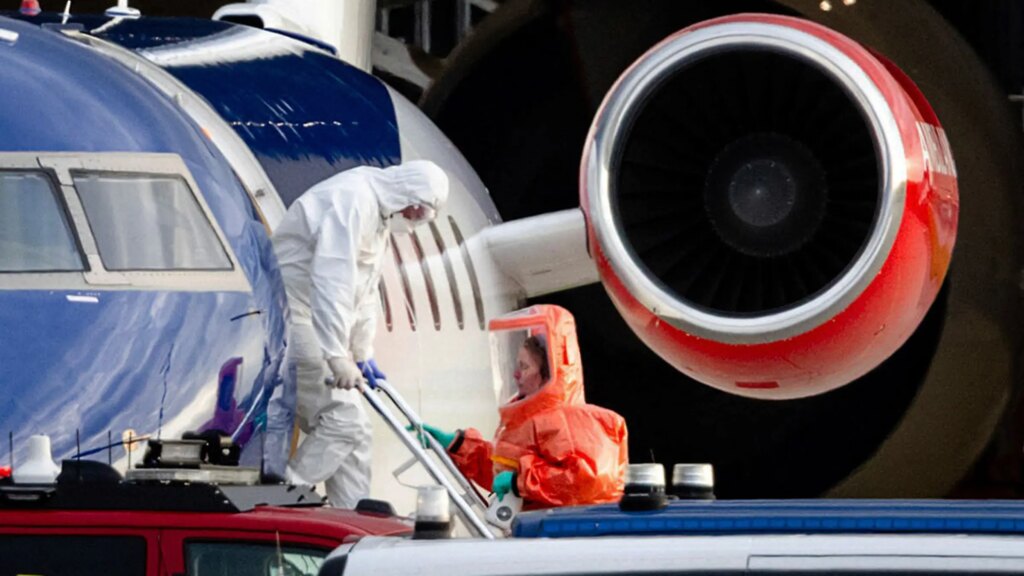
One man is currently hospitalized in South Africa after being flown there. He remains in intensive care but is improving, said van Kerkhove. Three others were evacuated from the ship on May 6; two are in stable condition, and the other person is not experiencing any symptoms. The latest case is a man who disembarked from the ship in Saint Helena and flew to Zurich, where he developed symptoms. (The ship’s operator sent emails to all disembarked passengers about the outbreak with instructions that anyone with symptoms should seek health care.) Health officials in Zurich tested his virus and confirmed he was infected with Andes virus.
A challenge during a fragile public-health moment
WHO officials emphasized the importance of being prepared for outbreaks like these, as early detection, isolation, and management of patients are critical to halting spread. The outbreak occurs after the U.S., one the largest financial supporters of the WHO, officially withdrew its membership earlier this year after announcing plans to do so in 2025. Argentina—which has the most experience with Andes of any country because the hantavirus strain is endemic there—also withdrew earlier this year.
The U.S. Centers for Disease Control and Prevention (CDC) has not yet held any public briefings on the outbreak, despite the fact that U.S. passengers are on board. On May 6, the CDC released a statement that “the Administration is closely monitoring the situation” and “working closely with our international partners to provide technical assistance and guidance to mitigate risk.” The WHO also said it is exchanging information with CDC officials.
“This is what makes a platform like WHO very, very important,” Ghebreyesus said during the WHO briefing. “Because of the event happening now, in which both Argentina and the U.S. are affected, I think they will reconsider their decisions because they can see how important universality is for health security. Because viruses don’t care about our policies. Viruses don’t care about our borders. I hope this could be a good lesson for the whole world, because solidarity is our best immunity.”
The post The Hantavirus Outbreak Is Serious. But It’s No COVID, Health Officials Say appeared first on TIME.