Oil prices were little changed on Thursday as investors struggled to parse conflicting and rapidly shifting signals from Iranian officials and the Trump administration over the war and possible peace talks.
While President Trump said Washington had held “very good talks” with Iran in the last 24 hours, Iranian officials said they were still reviewing an American plan to end the war and would relay their views through Pakistan.
Oil prices remain subdued.
-
The price of Brent crude, the global benchmark for oil, rose less than 1 percent to about $102 a barrel. The price had fallen 8 percent in the previous day’s trading.
-
West Texas Intermediate crude, the U.S. benchmark, was around $96 a barrel, up less than 1 percent. The price had declined 7 percent on Wednesday.
-
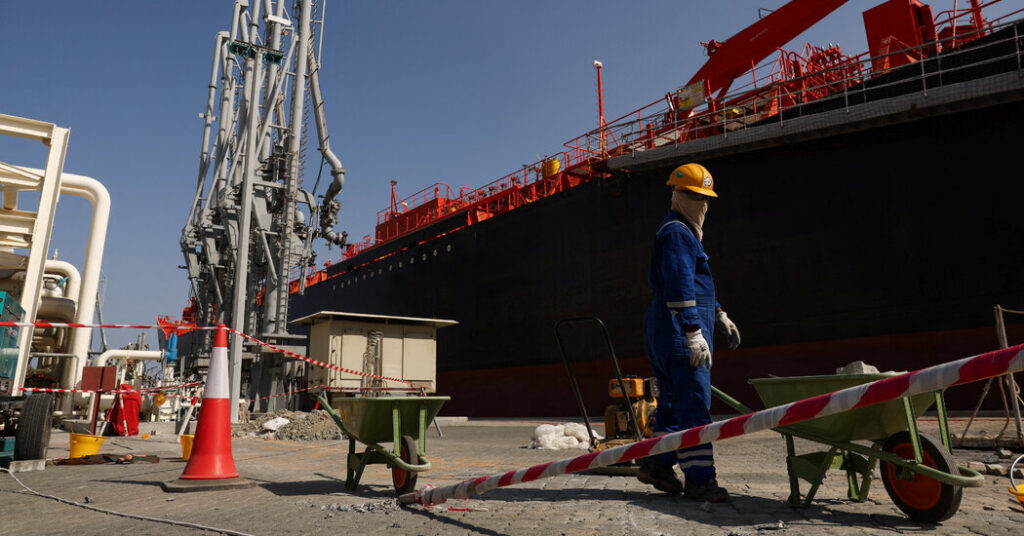
Investors and analysts are focused on the continued disruption to shipping in the Strait of Hormuz, the narrow waterway between Iran and Oman that is a vital trading route for oil and natural gas that normally carries as much as one-fifth of the world’s oil supply.
Stocks in Asia rise.
-
Futures on the S&P 500 were little changed, as investors searched for clues on what was happening in the Middle East.
-
Stocks in Asia, where countries import vast quantities of oil and gas, were up in most markets. Japan’s Nikkei 225 was the best performer, up 6 percent. South Korea’s KOSPI Index and Hong Kong’s Hang Seng Index were both up more than 1 percent.
Gasoline prices jump again.
-
U.S. gas prices rose again on Wednesday, jumping to a national average of $4.54 a gallon, according to the AAA motor club. The increase has raised the cost for drivers 53 percent since the war began.
-
Gas prices don’t move in lock step with crude, usually trailing increases or drops by a few days.
-
The average price of diesel ticked higher to $5.67 a gallon on Wednesday, up 51 percent since the start of the war.
The post Oil Prices Hold Steady as Iran Talks Remain Murky appeared first on New York Times.