Iran struck a defiant tone on Wednesday as President Trump pressed for a deal to end the war, but also acknowledged that its economy is being squeezed.
As Iran reviews the latest U.S. peace proposal, lifting the U.S. military blockade of its ports and relieving pressure on its oil industry is one of the main incentives for Tehran to seek a deal.
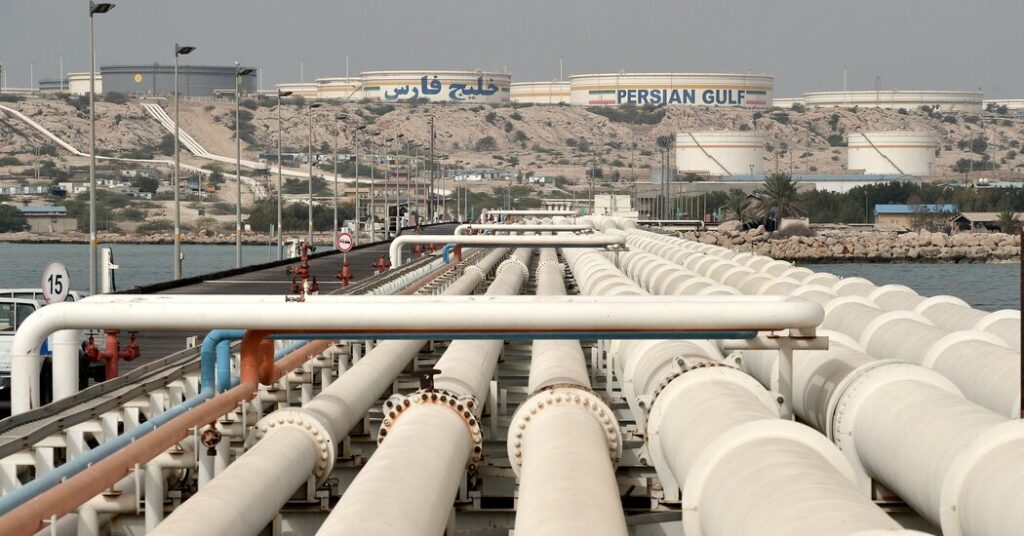
The blockade has halted Iran’s oil exports, choking off crucial revenues, and the country risks running out of places to store its oil. It is also affecting the import of other goods, forcing Iran to seek alternative routes through neighboring countries and its smaller ports on the Caspian Sea. And the economic pain inside Iran, already dire before the war, is becoming much worse.
“The sea blockade is a much more serious threat than even war, and the current stalemate must be broken because the export of our oil and energy and the fate of our refineries is now at risk,” said Hamid Hosseini, an expert on Iran’s oil sector who serves on the energy committee of Iran’s Chamber of Commerce, in an interview from Tehran.
The oil sector
About 98 percent of Iran’s oil exports passed through the Strait of Hormuz before the blockade, according to Kpler, a global maritime data company. Even during the five-week bombing campaign by the United States and Israel, Iran’s oil exports continued.
But since the U.S. blockade began on April 13, no Iranian tankers filled with oil have been able to exit the strait.
Iran usually produces about 4 million barrels of oil a day. Roughly half is used domestically and the rest is exported. The oil awaiting export is stored onshore in tanks and in tanker ships in the Persian Gulf. That capacity — about 120 million barrels onshore, including Kharg Island, plus 32 million on tankers — is filling up fast because the blockade prevents almost all empty tankers from returning.
The bottom line is that Iran could run out of storage space in about 25 to 30 days if the blockade is not lifted, according to Homayoun Falakshahi, Kpler’s head of oil analysis. Other experts have given different estimates ranging from a few weeks to a month or more.
“The blockade really is about putting a financial deadline on the Islamic Republic’s head,” said Mr. Falakshahi.
An Iranian oil ministry official said Iran had started production cuts at some of its oil wells to mitigate the storage crisis. The official, who asked not to be named because he was discussing sensitive issues, estimated a timeline of about 40 to 45 days before onshore and offshore storage run out.
Iran could be forced to shut down some oil wells, which can be slow and prohibitively expensive to restart. The oil ministry official said the shutdown could be permanent for some older wells, because restarting them would not be cost-effective.
Seeking other trade routes
Before the war, about 70 percent of Iran’s imports and exports passed through the ports on its southern coast. It imports a wide array of goods, including grain, pharmaceuticals, electronics and industrial equipment. The government is seeking new ways to access the goods its economy and its people need.
Iran has numerous land and sea borders — Turkey and Iraq to the west, Afghanistan and Pakistan to the east, and Azerbaijan, Armenia, Turkmenistan, and the Caspian Sea to the north — that are not subject to the U.S. blockade. It has started trucking goods overland from Pakistan and Turkey, receiving shipments via the Caspian Sea from Russia, and using a railway that links China to Iran through Turkmenistan and Kazakhstan. (There is no easy way to use those routes to export oil in significant quantities.)
“These routes are not going to compensate entirely for the disruptions in the Persian Gulf but it just provides a little bit of support and a small alternative to the southern ports,” said Esfandyar Batmanghelidj, the chief executive of the Bourse & Bazaar Foundation, a London-based think tank that tracks the Iranian economy.
Hamid Ghanbari, the deputy foreign minister for economic diplomacy, told a leading business newspaper on Sunday that Iran could endure the economic pain, “but it doesn’t mean everything is normal, and everything will be great, and we will feel no pressure. We are at war and war has difficulties.”
Economic pain
The war has devastated Iran’s economy, which was already battered from years of U.S. sanctions, mismanagement and corruption. Just before the war began, inflation and a devaluation of Iran’s currency sparked a nationwide wave of protests, which the government crushed with deadly force.
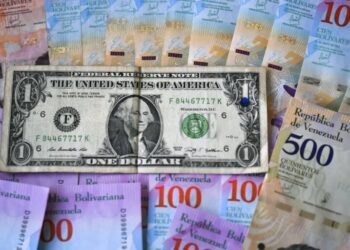
The value of Iran’s currency, the rial, is plunging even more now. Inflation is at an all-time high of 60 percent. Iranians are carrying cooking oil across the border from Turkey. At least one million jobs have been lost, with widespread layoffs reported in nearly every sector. Many government workers have not been paid in full for at least two months.
“The enemy is seeking through a naval blockade to exert economic pressure, wage a media campaign, and undermine national unity to force us into surrender,” Gen. Mohammad Bagher Ghalibaf, the speaker of parliament and lead negotiator with the U.S., said in an audio message to the Iranian people on Wednesday.
People are filling social media with stories of being forced to exhaust their savings and sell personal items to survive. If the economy continues to deteriorate, the government risks more protests and public fury. While previous protests have created a legitimacy challenge for the Islamic Republic, they have not toppled it because of the government’s willingness to use lethal force against demonstrators.
“I don’t think life has ever been this catastrophically humiliating for Iran’s modern middle class,” an Iranian woman named Sara Karimi wrote on social media this week. “This country’s history hasn’t lacked famines or crises, but the economic nosedive has been paired with such an everyday sense of discrimination, inequality, and violation of human dignity that all that’s left for a person is rage.”
Farnaz Fassihi is the United Nations bureau chief for The Times, leading coverage of the organization. She also covers Iran and has written about conflict in the Middle East for 15 years.
The post Iran’s Oil Sector and Economy Are Under Pressure as U.S. Blockade Bites appeared first on New York Times.