When I first moved to Shanghai from Virginia in 2008, China still looked up to America. Much of what China did, how it saw itself, what it strove for and its place in the world was measured against “Meiguo” — the “beautiful country” — as America is known in Chinese.
Fresh out of college, I had no work experience. But just being American was enough. I landed jobs at top high schools and universities where I taught classes such as Western culture. But there wasn’t really a curriculum. All the schools and students seemed to want was simple proximity to a person who came from this country of wealth, cultural power and confidence. One school’s annual highlight was its talent show. I sang R. Kelly’s “I Believe I Can Fly,” and a friend of mine showed off a skateboarding trick — clumsy tutorials on how to navigate an unbuttoned American way that the students felt was their future.
Things are different now.
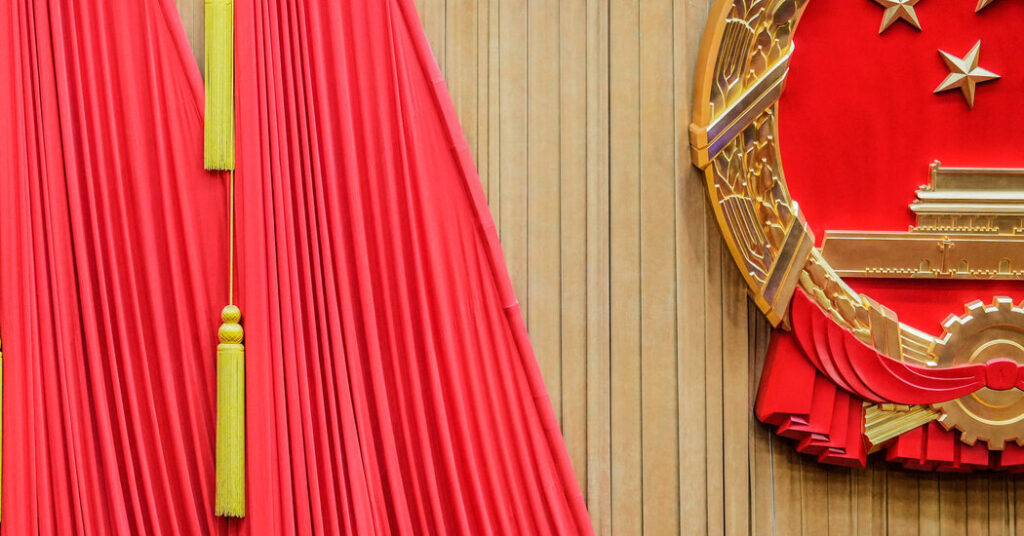
When President Trump arrives here in China in mid-May for a planned meeting with President Xi Jinping, there will be the usual expectations of potential trade deals or a reset of an often troubled relationship. But Mr. Trump may want to temper his expectations.
Deng Xiaoping, the former Chinese leader, once said: “If China wants to be rich and strong, it needs America.” But this isn’t the same country that once looked to a U.S. president’s visit as a moment of global validation. It is a country where the realization has dawned that it may have learned all it can from America and has begun to chart its own course.
This was bound to happen as China grew stronger and richer. But Mr. Trump has accelerated this shift. China’s people have watched with a mix of fascination and revulsion as the president — through his abortive tariff wars, the war with Iran and callow allegiance to financial markets — has completed America’s transformation from a model to emulate to a troublesome distraction to be managed. With sinking approval ratings and potential losses awaiting in the midterm elections, Mr. Trump will arrive in Beijing a more diminished figure in Chinese eyes than perhaps any visiting U.S. president.
This matters, both for the visit itself and for the future of the relationship between the two countries. China’s leaders, aware of Mr. Trump’s weakness and perfidy, are unlikely to strike any meaningful bargains with him. His actions strengthen China’s Communist-ruled system at home by making it look superior by comparison.
Many Chinese people increasingly view the United States less as the lodestar it once was and more as a cautionary tale. Popular sentiment in China is of course state-managed, but it resonates because it mirrors what the Chinese see for themselves. I hear it in daily conversations: Chinese friends who return from America with tales of homelessness, dilapidation and political rancor, which contrast sharply with China’s clean and safe cities, gleaming infrastructure and political stability.
I recently joined a gathering of a Shanghai book club whose members are predominantly young Chinese professionals from technology, finance and other fields. After debating a book about China’s rise, the discussion slid into what ails America. Nearly all of the participants had studied or lived in the United States, spoke fluent English and could have stayed there, as millions of Chinese have over the last century. But they came home. Several of them said they sensed invisible barriers to what they could achieve in the United States. Others said Chinese government incentives made it easier to start their businesses. Women in the group said they felt unsafe in America. One member who travels regularly to Silicon Valley for business said the decline in living standards has become palpable. “You can feel that everyone has lost the sense of vitality and optimism that characterized the past,” he said.
Contemplating a future in which the United States is no longer the unquestioned world leader is an unfamiliar, daunting feeling. Despite Beijing’s often hostile rhetoric toward the United States over the years, many Chinese citizens still think of the United States fondly and take for granted that the postwar U.S.-led world order provided the peace and stability that China needed to prosper. They worry that China isn’t ready to fill those shoes and lead a fracturing world.
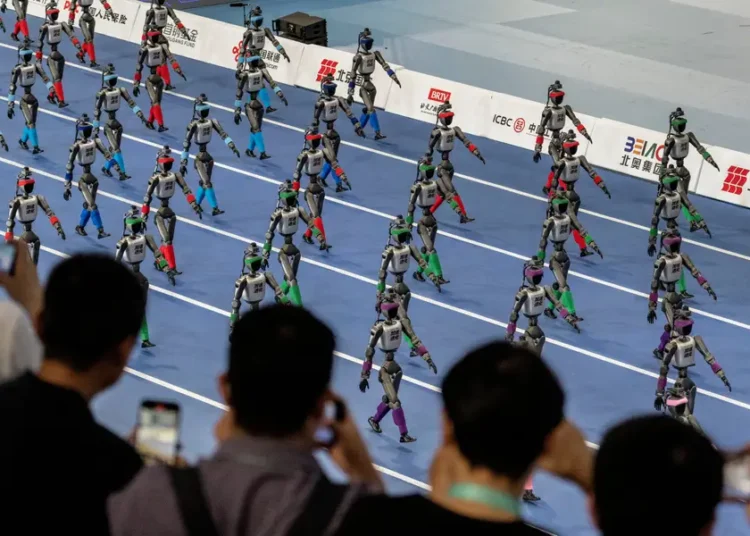
China, after all, has its own problems. Economic growth has slowed over the years as the country transitions from a dirty, old industrial model to one oriented around artificial intelligence, green energy, robotics and other advanced technologies. Many ordinary Chinese aren’t sure how they or their children will fit into that brave new world. There is gloom over things such as high youth unemployment and the sense that rural communities are being left behind. The uncertainty is causing many to shun marriage and having children, which is causing a population decline. A confident, dynamic America once served as a symbol that challenges like these could be overcome. Now, for many, that source of comfort is gone.
Still, there is a clear sense about the need to move past America. Mr. Trump will be gone in two years, but Mr. Xi can rule for as long as he wants and has laid out ambitious plans that are likely to survive him. Those plans include a China that is at the center of new types of energy, the use of data and technologies like artificial intelligence for urban management, the delivery of public services, cheaper health care and better access to education. Chinese people also see that the world is increasingly open to adopting Chinese technology, products, investment and other solutions, maybe even its governance ideas.
For Americans, it’s a strange sensation to see a society that, in many ways, is passing us by. But just as Deng Xiaoping, after the chaotic decades of Mao Zedong’s rule, looked to America to repair his country, perhaps America should now look more at what China is doing right. We don’t need to take on its political system — China, of course, hasn’t adopted ours. But when it comes to industrial focus, farsighted infrastructure investment and long-term national planning, there is now much that we can learn from China.
It’s encouraging that Mr. Trump wants to work on the relationship. But maintaining a tense stability is about all he can hope for. When he lands in Beijing, it should be with the full recognition of the new dynamic that he, more than any previous president, has helped bring about: a China that is now just as likely to set the agenda, to show the way forward, as America once did.
Jacob Dreyer is a writer and editor who has lived in Shanghai for most of the past 18 years.
The Times is committed to publishing a diversity of letters to the editor. We’d like to hear what you think about this or any of our articles. Here are some tips. And here’s our email: [email protected].
Follow The New York Times Opinion section on Facebook, Instagram, TikTok, Bluesky, WhatsApp and Threads.
The post Trump Is Coming to a China That Has Moved On appeared first on New York Times.