Raghu Rai, a prominent photojournalist who captured many of India’s political milestones and major tragedies, as well as figures who shaped the country’s modern history, died on Sunday in New Delhi. He was 83.
His death was confirmed by his daughter Avani Rai. She said he had been undergoing treatment for lymphoma.
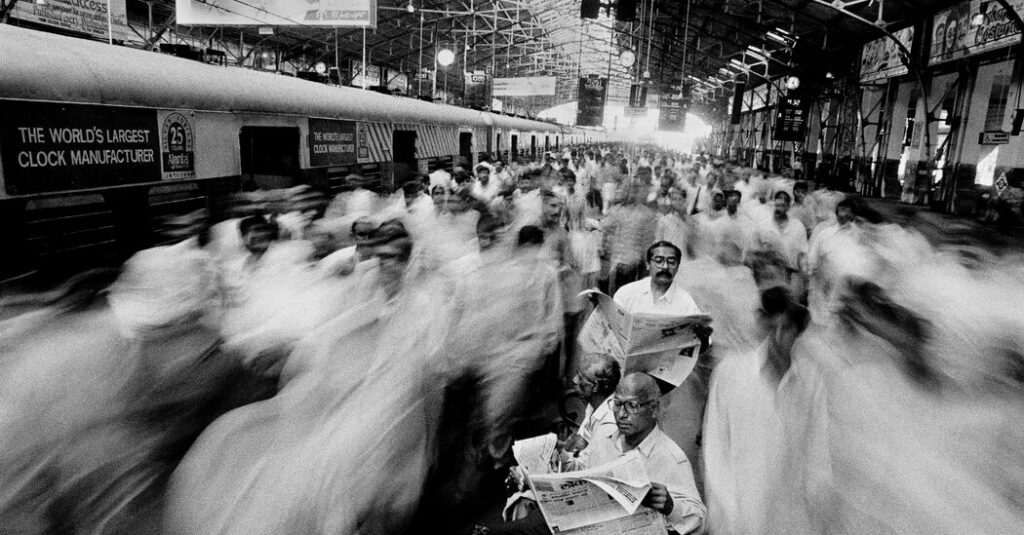
Over a career spanning more than 60 years, Mr. Rai photographed Mother Teresa, the Dalai Lama and Indira Gandhi, India’s only female prime minister. He also captured daily life in images of the Taj Mahal, a Mumbai train station and other landmarks.
Mr. Rai’s harrowing photographs of the 1971 war between India and Pakistan, which resulted in the creation of Bangladesh, earned him the Padma Shri award, one of India’s highest civilian honors.
He also captured indelible images of a 1984 toxic gas leak in the Indian city of Bhopal that killed thousands of people.
“No matter how many shots I took,” he wrote of that disaster in a 2014 essay, “one couldn’t capture the scale of it.”
“One always feels inadequate seizing only fractured moments, losing what is happening just to the left or right of your frame and the experiences you go through in those moments,” he wrote in that essay, published by the advocacy group Amnesty International.
Raghu Rai was born on Dec. 18, 1942, in the village of Jhang, which was part of the Punjab region of British India. Since the 1947 partition of India, the village has been part of Pakistan, according to the Raghu Rai Foundation, an organization founded by Mr. Rai.
While Mr. Rai had originally set out to become a civil engineer, he took up photography in 1965, the foundation said. A year later, he began working as chief photographer for The Statesman, an English-language newspaper based in New Delhi.
In 1976, Mr. Rai became a picture editor for Sunday, a weekly news magazine based in Kolkata, then known as Calcutta. He moved in 1980 to India Today, an English-language news magazine, where he worked as a photographer and a photo editor, according to the foundation.
“I was never just a photographer on assignment,” he said in a 2024 interview with The Hindu newspaper, referring to the years when he worked for Indian publications.
“I was sent to shoot specific stories, but I would document the entire journey and take my camera out on the plane, on the train, sitting in a taxi, or even a bullock cart, photographing the people, landscape and life.”
In 1977, Mr. Rai joined Magnum Photos, a New York-based photography agency.
From the 1960s through the 1980s, Mr. Rai closely followed Ms. Gandhi as she steered India through war and domestic upheaval, including her decision to impose a 21-month period of authoritarian rule known as the Emergency.
He would return to Bhopal around a dozen times to cover the tragedy’s lasting effects, he said. One of the best-known photos from his Bhopal collection, “Burial of an Unknown Child” (1984), shows the face of a dead child who is covered in earth.
“I had never seen anything like it,” he wrote in the 2014 essay, referring to covering Bhopal. “It was as if a war had just ended or in the aftermath of an earthquake.”
In 2009, the French Ministry of Culture awarded Mr. Rai the Order of Arts and Letters, which recognizes eminent artists and writers. In 2017, he won a lifetime achievement award from the Indian government.
Mr. Rai also produced nearly 20 books and served on the juries of international photography awards run by World Press Photo Foundation and UNESCO, according to Magnum Photos.
According to Ms. Rai, Mr. Rai is survived by his wife, Gurmeet Sangha Rai; three daughters, Purvai, Avani, and Lagan; and a son, Nitin.
Ms. Rai, 34, said her father gave her memorable advice when she was in her early 20s.
“Baby, if you want to be my daughter, you can stay here,” she said he told her. “You’ll be loved. You’ll have a home. I will love you every day.”
Then he paused.
“But if you want to be a photographer — if you want to be a creative being — then you need a rocket inside you,” he said. “Something that never stops firing. You don’t rest. You just keep flying.”
Jin Yu Young is a reporter and researcher for The Times, based in Seoul, covering South Korea and international breaking news.
The post Raghu Rai, Photographer Who Captured Modern India, Dies at 83 appeared first on New York Times.