The Justice Department is wielding a pricey strategy to undermine cases brought against President Donald Trump’s allies during previous administrations: high-dollar payouts to the subjects of those investigations.
The settlements, arranged by the Justice Department, could help fuel the Trump administration narrative that the federal government had wrongly investigated or prosecuted these subjects — even though no court has made such a determination. And the payouts could be used to bolster the president’s repeated claims that the Justice Department had been weaponized to go after him and his supporters, making them victims of a corrupt legal system.
Trump has contended he too was a victim and is owed money.
Earlier this week, the Justice Department finalized a $1.25 million settlement to Trump’s 2016 campaign adviser Carter Page to settle claims that he was illegally surveilled by federal authorities. Multiple courts had dismissed federal lawsuits that Page — who was never charged with a crime — filed against the government, saying the statute of limitations on his ability to make these claims had lapsed.
Last month, the Justice Department reached a settlement with Trump’s former national security adviser Michael Flynn for more than $1 million, asserting he had been the victim of a politicized prosecution. Flynn pleaded guilty to charges that he lied to law enforcement about his conversations with a Russian diplomat during Trump’s 2016 presidential campaign, then later sought to withdraw that plea. The case against him was dismissed in 2020 after Trump pardoned him.
Now Mark Meadows — Trump’s chief of staff during his first administration — is asking the Justice Department to reimburse him for legal fees that he incurred as federal and state prosecutors investigated the president and his allies for their alleged attempt to overturn the results of the 2020 presidential election. The Justice Department has not yet formally responded to his request.
Former Justice Department officials interviewed for this article said there is typically a high threshold to meet before officials grant such payments funded by taxpayers. They criticized the Trump administration for making these payments when no judge suggested that the lawsuits were likely to prevail in court.
The department under the Biden administration had fought to have the suits filed by Page and Flynn thrown out, arguing that they were legally meritless.
“These types of settlements — which I view as collusive settlements — undermine the rule of law and send the wrong message,” said James Pearce, a former member of the special counsel team that prosecuted Trump during the Biden administration, who now works at the Washington Litigation Group. “It is deeply disturbing.”
The Justice Department defended the settlements and said, “it was our predecessors who weaponized the Justice Department against President Trump’s allies.”
“The weaponization of the Department of Justice against ordinary Americans during the Biden-Garland era stands as a shameful stain on the department’s history,” Justice Department spokesperson Emily Covington said in a statement. “Beyond firing the prosecutors who orchestrated this lawfare, true accountability demands that we compensate the victims of wrongful prosecutions. We will do what we can under the law to make these Americans whole, and every settlement comports with the Justice Manual’s requirements.”
Since Trump’s return to the White House last year, the Justice Department has paid at least $8.5 million to resolve high-profile legal claims brought by allies and supporters who allege they were improperly targeted by federal law enforcement during previous administrations, according to legal filings and people familiar with those deals who spoke on the condition of anonymity to discuss privately held details about the settlements.
And more could be coming.
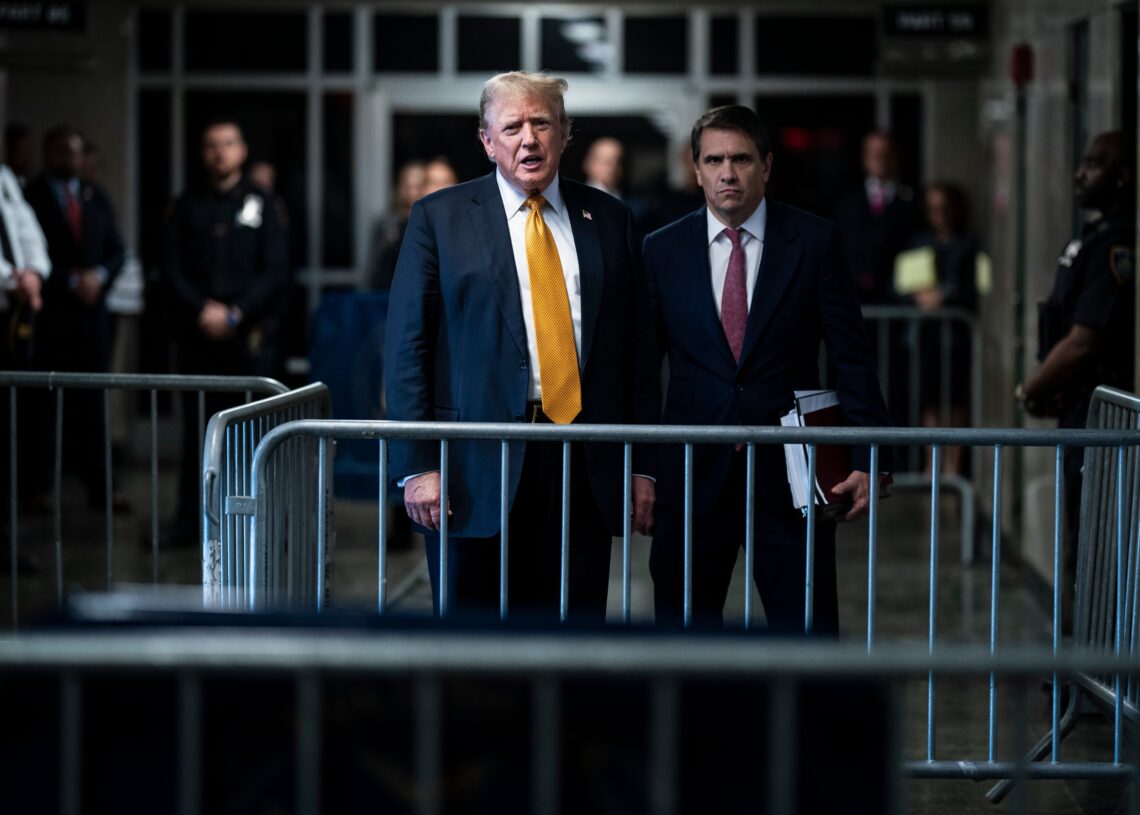
The Justice Department has looming requests for major payouts that could help define the legacy of the law enforcement agency and its leaders during Trump’s second term. Two of those requests totaling about $230 million, alleging prosecutorial abuse in multiple cases, were made by Trump himself.
As a private citizen, Trump claimed he was entitled to money to compensate him for what he calls politicized investigations.
In 2023, Trump filed a demand with the Justice Department to pay him for damages he said he suffered as a result of the FBI probe and special counsel investigation that looked into the connection between Russia and his 2016 presidential campaign.
In 2024, Trump filed his second complaint, that time seeking $100 million in damages related to the FBI search of his Mar-a-Lago property in Palm Beach, Florida, in 2022. That raid helped lead to an indictment against Trump in a case that ultimately was dropped after a judge found the special council was unlawfully appointed.
A federal law known as the Federal Tort Claims Act requires those seeking damages from the federal government to file such a claim before suing, allowing the Justice Department to decide whether to settle before litigation.
The Justice Department or Trump have not said whether they will settle those claims. Acting Attorney General Todd Blanche, who was Trump’s defense lawyer in the Mar-a-Lago case, has decried the federal prosecutions against Trump as politicized and examples of prosecutorial overreach.
Trump has not filed a lawsuit against the Justice Department on these claims.
The president last year acknowledged the thorniness of the situation.
“It’s interesting because I’m the one that makes a decision. And, you know, that decision would have to go across my desk,” Trump told reporters last year. “It’s awfully strange to make a decision where I’m paying myself.”
“President Trump continues to fight back against all Democrat-led Witch Hunts, including the ‘Russia, Russia, Russia’ hoax and the un-Constitutional and un-American weaponization of our justice system by Crooked Joe Biden and his handlers,” a spokesman for Trump’s legal team said in a statement.
Following Trump’s lead, more than 450 people accused or convicted of participating in the Jan. 6, 2021, Capitol riot have also filed claims for compensation under the Federal Tort Claims Act. These requests follow Trump’s blanket pardon, covering almost 1,600 riot participants, on the first day of his second term, said Mark McCloskey, a lawyer representing several accused rioters in those efforts.
McCloskey — who rocketed to public notoriety six years ago after he pointed an AR-15-style rifle at social justice demonstrators outside of his St. Louis home — expressed hope during a public online meeting with rioters last year that the Trump administration would quickly settle. “The only thing I can do as your lawyer is to turn your losses into dollar bills,” he told them at the time.
Nearly a year later, the department has not responded to any of those requests, though McCloskey said he has had several meetings with senior department officials about potentially resolving those claims.
“I’m hopeful,” he said in an interview. “But the wheels of justice grind slowly.”
Other recent litigation includes a separate proposed class-action lawsuit filed in Florida seeking compensation for hundreds of rioters and a lawsuit from the leaders of the Proud Boys, who were convicted on charges of seditious conspiracy. The Justice Department moved to vacate those convictions earlier this month but have opposed the Proud Boys’ civil suit as recently as last summer. A federal judge in Florida dismissed the case this month but left open the opportunity for the plaintiffs to refile it.
The Justice Department last year paid nearly $5 million in 2025 to the family of Ashli Babbitt, the Trump supporter from California who was fatally shot by police during the attack on Jan. 6, 2021, The Washington Post has reported. The Biden administration Justice Department had been prepared to go to trial in the case in defense of the government.
In February, the department settled a lawsuit with Mark Houck, a Catholic father of seven children who was indicted during the Biden administration on charges he assaulted a volunteer outside a Planned Parenthood clinic in Philadelphia while he was protesting abortion access with his son. He was acquitted by a jury.
Houck later sued the government for damages. A judge dismissed that lawsuit, saying he had not laid out “a plausible case” that agents had improperly pursued a case against him. Houck was in the process of appealing that decision when the Trump administration settled with him for more than $1 million.
Houck, in an interview with The Post, said it wasn’t until last summer, when his lawyers got in touch with Stanley Woodward, a Trump appointee and the Justice Department’s No. 3 official, that progress toward a settlement began in earnest.
“He was really very friendly to us,” Houck said. “He was helping us.”
Department officials touted the Houck settlement earlier this month in a deeply critical report they issued accusing the Biden Justice Department of improperly targeting antiabortion Catholics.
“Do I feel strongly that there ought to be a remuneration in those circumstances. You bet I do,” Woodward said in an interview earlier this month. “If I didn’t think there was any merit to the case, I couldn’t have settled it. … There was definitely risk to the department in the case.”
The proliferation of those payouts has sparked concern among legal observers and Democrats on Capitol Hill.
“The American people are watching this Department squander their tax dollars, handling over giant sums to the President’s friends for claims that multiple federal judges have rejected as having no legal merit,” Rep. Jamie Raskin (Maryland), the top Democrat on the House Judiciary Committee, wrote in a letter to the Justice Department this month. “The American people deserve a full accounting of why our tax dollars are being used this way.”
The post DOJ’s big payouts to Trump allies could undermine past investigations appeared first on Washington Post.