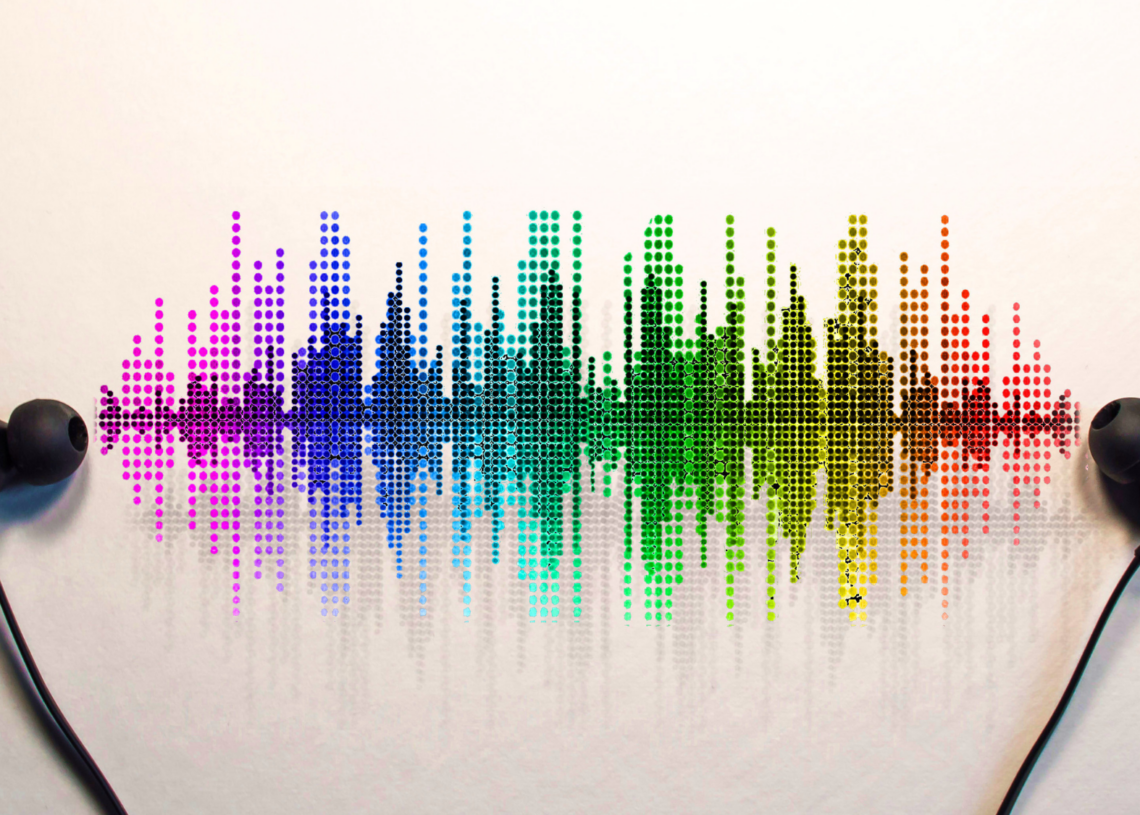
Some people move through the world with a completely different sensory experience than everyone else, and most of them have no idea it’s unusual.
As ScienceAlert reports, somewhere between 1 and 4 percent of people have a neurological trait called synaesthesia, where activating one sense involuntarily triggers another. Hear a piece of music and see colors. Read a word and taste something. Watch someone get touched and feel it on your own body. These aren’t metaphors or creative flourishes. For synaesthetes, they’re just a normal day.
The experiences are spontaneous, vivid, and remarkably consistent over time. A person who perceives the letter “A” as red will almost certainly see it as the same shade of red years later. There’s no controlling it and no switching it off. For many people, it’s so woven into how they perceive the world that they never consider it abnormal—because for them, it isn’t.
Researchers writing for The Conversation note that synaesthesia appears more frequently in women, though that finding may reflect who gets studied rather than who actually has it. Genetics likely plays a role, too, since it runs in families.
Where Does Synaesthesia Come From?
As for why it happens, scientists have two competing theories and no definitive answer yet. The first, called cross-activation theory, suggests synaesthetes have more neural connections than the average brain, possibly because a process called synaptic pruning, where the brain clears out unused connections during development, didn’t fully do its job. Under this model, the region of the brain that processes letters might be directly wired to the region that handles color, so one automatically fires the other.
The second theory argues that the brain structure is the same as everyone else’s, but certain pathways are simply more active. There’s actually a version of this that applies to all of us: if you see a photo of a grey banana, your brain still registers “yellow” on some level. Synaesthetes may experience a more amplified version of that same mechanism.
What’s super interesting is the creative angle. A large survey of Australian synaesthetes found that roughly 24 percent worked in creative fields like art, music, architecture, or design, compared to less than 2 percent of the general population. That’s a gap nobody has fully explained yet, though the leading idea is that linking sensations in unexpected ways may produce a more associative, generative way of thinking.
Artists like Kandinsky and musicians like Lorde have described synaesthetic experiences. Which, in retrospect, explains a lot.
The post The Scientific Reason Some People Literally Hear Colors appeared first on VICE.