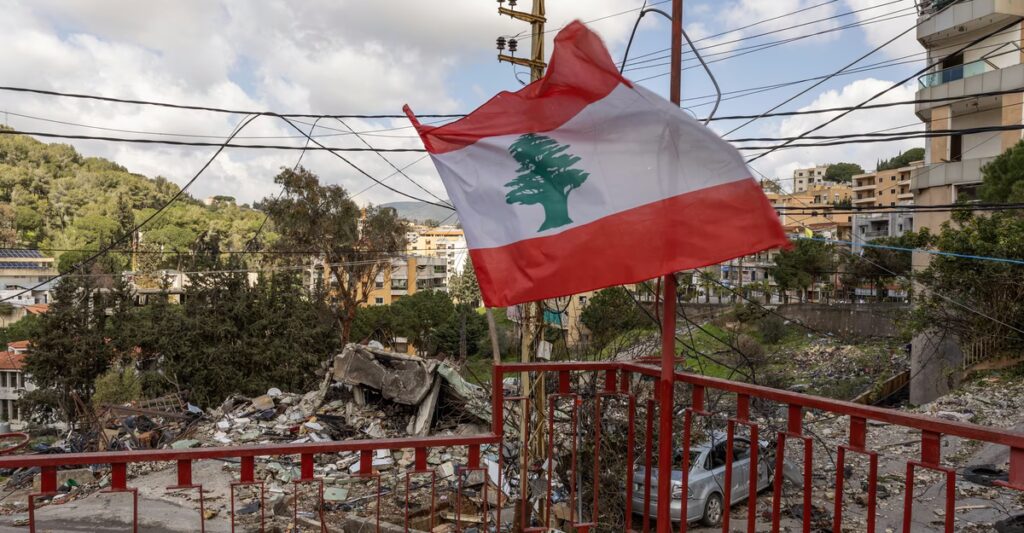
Parallel to the shaky truce between the United States and Iran, a cease-fire between Israel and Hezbollah has temporarily stopped the fighting in Lebanon, but without settling any of the important questions behind it. That’s a shame, because prospects for a lasting resolution in Lebanon are better than ever—if only Israel would embrace the Lebanese government as the indispensable partner it could be.
Both Israel and the Lebanese government seek to free Lebanon from the excessive influence of Hezbollah and Tehran. When the latest conflict began on March 1, many Lebanese I spoke with across the country were horrified to be yet again plunged into a conflict with Israel that serves no Lebanese national interest whatsoever. Hezbollah had sent a barrage of projectiles into Israel as a show of solidarity with Tehran after an Israeli air strike killed Iran’s supreme leader, and Israel responded with predictably aggressive military action.
The previous round of fighting between Israel and Hezbollah, in 2023–24, devastated the militia, destroyed much of its missile and drone arsenal, and killed most of its senior battlefield commanders and political leaders. It also left the Lebanese government with the task of disarming the group in the south of the country, which it did not do very effectively. Indeed, the most recent exchanges of fire have demonstrated just how disturbingly successful Hezbollah has been in rebuilding its capabilities. The result is that Lebanon, against the will of its government and most of its society, is now suffering through yet another war with Israel.
[Read: Israel is missing its big chance in Lebanon]
The day after Hezbollah’s barrage, Lebanon’s prime minister, Nawaf Salam, made a historic announcement: Hezbollah’s arsenal and paramilitary activities were officially designated illegal, by a near-unanimous decision of the government. Lebanese President Joseph Aoun reiterated this policy to foreign diplomats, adding that it was permanent and irrevocable. The military was duly instructed to disarm the organization, but General Rudolph Haykal, the commander of the Lebanese Armed Forces, has not yet issued a general order to confront and disarm Hezbollah fighters throughout the country. That’s because Lebanon’s political and military leaders are divided. Civil authorities believe that the overwhelming public backlash against Hezbollah presents a unique opportunity to defang and control the group; the country’s military brass fears that an order to disarm the militia could split their troops and even lead to civil conflict.
Israel would be advised to be patient with this delicate situation. But ever since the October 7, 2023, Hamas-led attack on southern Israel, the country has taken a hyperaggressive approach toward armed nonstate actors on its borders. Israel’s latest military operation in Lebanon appears to be modeled on the one it undertook in Gaza. As soon as the fighting began, Israel ordered the evacuation of most of southern Lebanon, and within days, more than 1 million refugees poured into Beirut and other parts of the country from the south and the southern suburbs of the capital. Much of southern Lebanon has been both devastated by military strikes and depopulated.
In recent days, refugees have begun returning to wrecked villages and towns. Over the weekend, the Israeli military released a map delineating an area that runs deep into Lebanon—a so-called yellow line where five Israeli divisions will continue to operate during the cease-fire. Israel may well hope to control this territory for the foreseeable future, as a buffer to protect northern Israel from Hezbollah. And it may prefer for much of this region to remain essentially uninhabited. Indeed, the Israeli military reportedly told Christian and Druze villagers in southern Lebanon that they could remain there only if they declined to harbor refugees from Shiite villages (the latter are apparently presumed to support Hezbollah).
The map also outlines a new maritime buffer zone that conflicts with the borders that the two countries agreed on with the United States in 2022. Enforcing Israeli control of this zone would cut Lebanon off from its Qana gas field. The map also opens the possibility that Israel might divert waters from the Litani and Wazzani Rivers, which flow down from the Golan Heights.
History strongly suggests that any Israeli attempt to occupy Lebanese territory in the name of security will backfire. In 1982, Israel launched a war to drive the fighters and political leadership of the Palestine Liberation Organization out of Lebanon. The ensuing occupation, which lasted until May 2000, led directly to the creation of Hezbollah, a far more dangerous and entrenched enemy on Israel’s northern border. Today Hezbollah’s best shot at rebuilding its forces, along with its popularity and political viability within Lebanon, is to return to its origins fighting Israeli occupation in southern Lebanon.
[Jonathan Chait: Israel moderates are losing the Democratic Party]
The Lebanese government sincerely wants to take control of the south and disarm and contain Hezbollah. To do that, it will have to persuade the army to move systematically through the region, ridding each targeted area of militia fighters until the job is done. That’s a long, slow, risky endeavor. Under a peace agreement, Lebanon might consider allowing Israel to do the heavy lifting in pulling it off.
For its part, Israel would have to accept that the only alternative to a Hezbollah-dominated Lebanon is a strengthened and sovereign Lebanese state, which cannot emerge in the context of a new Israeli occupation in the south or an effort to force Lebanon into an Israeli sphere of influence in the Levant. That sort of overreach could give Hezbollah new life by lending credence to the political rationale behind its paramilitary activities.
The Israeli and Lebanese governments don’t want to admit this, but they need each other. Both would like to subdue Hezbollah and transform it into a relatively normal Lebanese political party. To make that happen, both will need to take risks. They will also have to avoid undermining each other—and to even work together, tacitly and delicately, toward their common goal.
The post Israel Could Have What It Most Wants in Lebanon appeared first on The Atlantic.