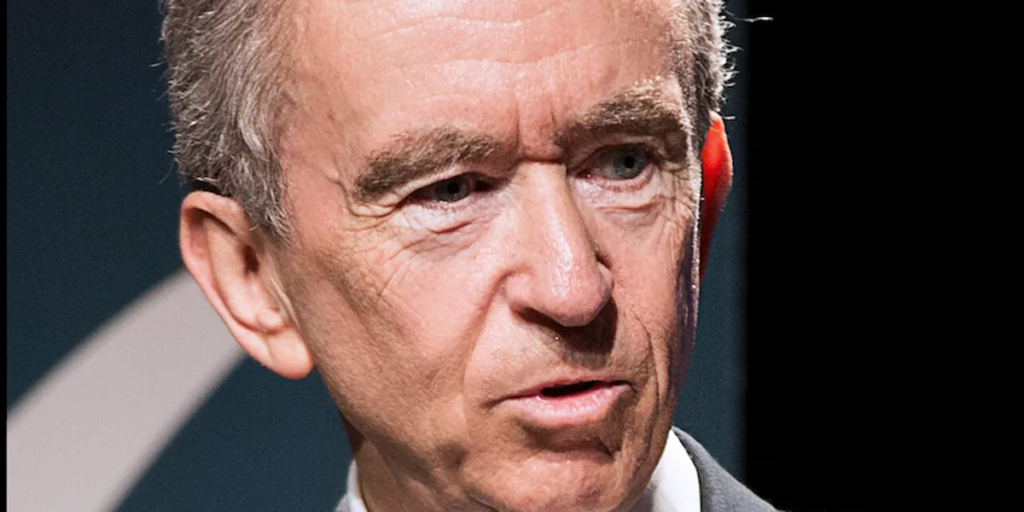
A French billionaire much admired by President Donald Trump warned of the Iran war’s catastrophic risks to the global economy.
LVMH CEO Bernard Arnault warned Thursday that failure to resolve the Middle East conflict could trigger a “world catastrophe” with severe economic consequences, as the Iran war has already halved the luxury giant’s first-quarter sales growth, reported CNBC.
“The world is now in a pretty serious crisis in the Middle East,” the longtime CEO told shareholders at the company’s Annual General Meeting in Paris.
“Either it’ll be a world catastrophe with very serious and very negative economic impact – in which case, who can say how 2026 will unfold – or it will be resolved more rapidly in some shape or form that we all hope for, even if it doesn’t seem to be easy, in which case, business will recover and resume their normal course,” Arnault added.
Arnault, the richest person in France and the fifth-richest in the world, attended Trump’s inauguration in January 2025 with his son and daughter, and Trump and his own daughter Ivanka visited the luxury brand tycoon’s 100,000-square-foot leather factory in Texas in 2019.
“He’s someone Trump really looks up to and wants to make happy,” a source told the New York Post last year.
LVMH reported organic sales growth of just 1 percent in the first quarter of ths year, with the Middle East conflict accounting for a 1 percent negative impact on growth — effectively cutting quarterly expansion in half. The world’s largest luxury company is among several major fashion and accessories brands experiencing significant sales declines in the Middle East, a traditionally robust market for high-end goods.
Gucci-owner Kering reported an 11 percent decline in Middle East retail revenue during the first quarter, despite growth during the first two months of the year. Hermes also significantly underperformed, noting that wholesale activity was “significantly affected by lower sales to concession stores, particularly in the Middle East and in airports.”
The conflict arrives at a precarious moment for the luxury sector, which had been expected to return to growth in 2026 after a prolonged slump caused by weak Chinese consumer demand. McKinsey Senior Partner Gemma D’Auria described the situation as a “double whammy,” with consumer sentiment, retail traffic, and spending all declining across the region.
For many luxury companies, the Middle East represents mid-single-digit percentages of total sales, but profitability rates are significantly higher, making the conflict’s impact on bottom lines particularly severe. Some brands, including Cartier-owner Richemont, have substantially higher exposure to the region.
A ceasefire is currently in place, but resolution remains unclear. The effective closure of the Strait of Hormuz — a chokepoint through which approximately 20 percent of global oil normally flows — has created what the International Energy Agency called the “biggest energy security threat in history.”
Arnault expects a return to growth in the second half of 2026 if the conflict is resolved. Meanwhile, LVMH is shifting strategy toward luxury jewelry, targeting Tiffany to drive expansion into higher-margin categories less vulnerable to regional disruptions.
The post Billionaire much admired by Trump warns Iran war may set off ‘world catastrophe’ appeared first on Raw Story.