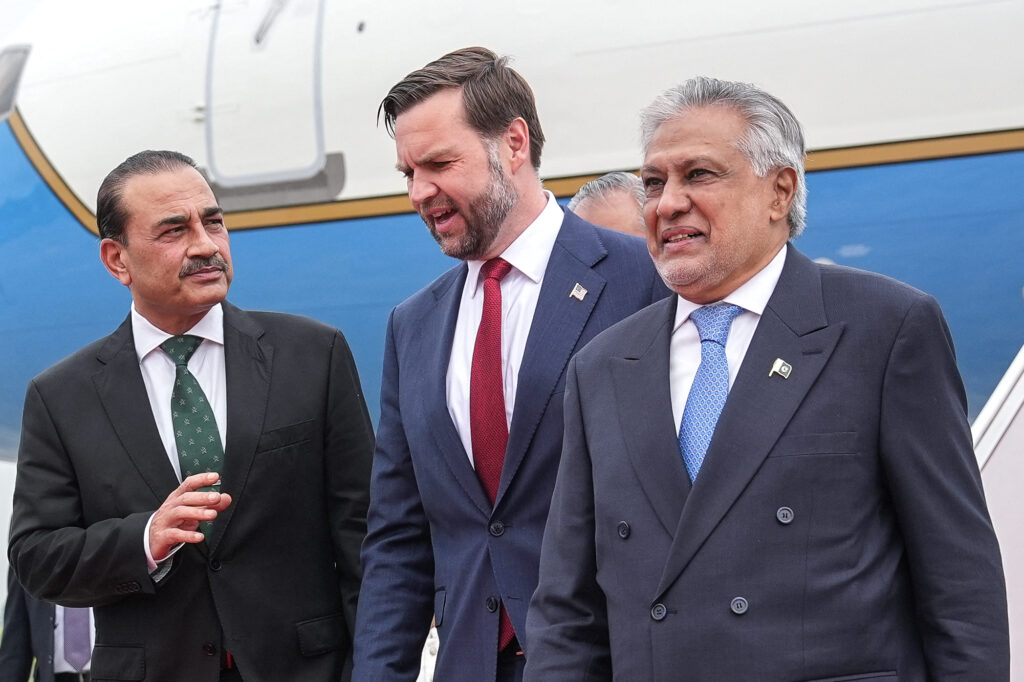
ISLAMABAD, Pakistan — The country hosting talks to end the Iran war was not a likely mediator. Pakistan does not formally recognize Israel, one of the key countries involved. It became a nuclear power in secret, as the U.S. and Israel have accused Iran of seeking to do. And it did not start off on the right foot with President Donald Trump, who in his first term said Pakistan had given Washington “nothing but lies and deceit.”
But over the past year, a focused campaign to win Trump’s favor appears to have paid off. For months, Pakistan’s leaders wooed the Trump administration with flashy deals and public praise.
“We read him right,” said Mushahid Hussain Syed, the former chairman of the Pakistani Senate’s Defense Committee. He said Pakistan recognized Trump’s transactional approach to diplomacy early.
“We delivered, and we delivered big time,” Syed said. “We gave him the three C’s: crypto, critical minerals and counterterrorism.”
With peace talks between the United States and Iran set to return to Islamabad this week, another round of high-profile mediation offers Pakistan the opportunity to draw closer to Trump.
Early in Trump’s second term, Pakistan tracked down one of the people behind the deadly attack on U.S. service membersin Kabul as U.S. forces were withdrawing from Afghanistan in August 2021. Months later, Pakistan’s government signed a critical minerals deal with the U.S. And this year, the ministry of finance signed a deal with a firm connected to the Trump family’s crypto company.
Other Pakistani outreach to the Trump administration includes repeated public thanks to Trump for securing a ceasefire with India after a four-day conflict last May (while India denied there was a U.S. role), the Pakistani prime minister’s nomination of Trump for the Nobel Peace Prize and Pakistan’s decision to join Trump’s Board of Peace.
By October, Trump was calling Gen. Asim Munir, who as army chief and field marshal is the most powerful man in Pakistan, his “favorite field marshal.”
Because Pakistan’s role in the Iran talks is largely facilitating communication, Syed said, what matters is that Pakistan has the trust of both the United States and Iran. He said Pakistan’s status as a nuclear power adds to its prestige. And he said the fact that the country doesn’t recognize Israel doesn’t complicate mediation, because Iran and Pakistan believe if a deal is secured with the United States, Trump will pressure Israel to abide by it.
“Israel is a proxy of the U.S., and we are negotiating with the ‘mother country,’” he said.
Coverage of the Iran talks in Pakistani media — most of which is tightly controlled by the country’s military — has been ecstatic in tone.
“Vibrant diplomacy” and “remarkable achievements,” a talk show panelist on the ARY television news channel said. Another panelist on the same network said: “Who could have imagined that the Pakistani prime minister would do a post on X and that would be reposted by the U.S. president!”
Maleeha Lodhi, a prominent Pakistani diplomat who served as Pakistan’s ambassador to the United States and high commissioner to the United Kingdom, said the country is right to be proud of the delicate diplomacy that was necessary to balance ties with both Iran and the United States.
“It’s a ‘feel good’ moment. Yes, absolutely, no question about it. It elevates the image and standing of the country,” she said.
But most Pakistanis will “watch it on TV and then, the next day, they move on to the new story,” she said. “What will affect them is if the government is able to address Pakistan’s structural economic problems.” Hosting peace talks “does nothing, zilch, zero.”
In the past year, Pakistan has faced mounting security challenges, twice coming into all-out conflict with its neighbors — India last year and Afghanistan in recent months — as tensions with the Taliban flared. Meanwhile, the country’s currency has plummeted in value, triggering a cost-of-living crisis that Pakistan’s leadership has struggled to respond to, most recently relying on bailouts and loans from Saudi Arabia and the United Arab Emirates. Previously, Pakistan looked to the International Monetary Fund to prop up its economy.
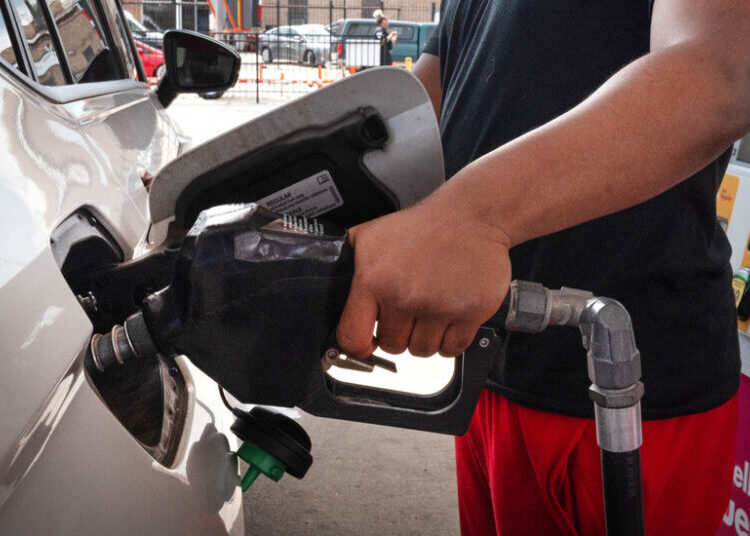
The war in Iran has only aggravated the crisis. More than 90 percent of Pakistan’s fuel imports come through the Strait of Hormuz and its near-total closure by Iranian forces has forced the government to dip into reserves and take the deeply unpopular step of increasing fuel prices. Security in the country is also fragile. After Iran’s supreme leader was killed in U.S. and Israeli strikes in late February, clashes that broke out in several parts of Pakistan left 22 people dead and 120 injured, including in Karachi, where a mob attempted to storm the U.S. Consulate.
“We are extremely happy Pakistan was chosen for this honor,” of hosting the Iran talks, said Liaquat Khan, a 51-year-old waiter at a simple Pakistani restaurant in central Islamabad selling sandwiches and flatbreads called parathas, just over three miles from the luxury hotel where U.S. and Iranian delegations are set to meet this week. But “everyone got very worried” after the first round of talks failed, fearing prices of gasoline and cooking gas would continue to rise.
The economic pain of working-class Pakistanis is “beyond your imagination,” said Khan’s manager, Sajjad Abbasi, 40. But he said the talks are only making things worse, with the citywide shutdowns the government here imposes that force shops to close for days when the delegations arrive.
“They are the latest thing to add to our woes,” he said.
Joshua White, who served at the White House as a senior adviser and director for South Asian affairs at the National Security Council, said Pakistan recognized the opportunity in Trump’s personality-driven style of diplomacy and “lack of a structured policy process in the United States.”
But so far, he said, Pakistan’s leadership doesn’t appear to be using the warmer relations to improve the lives of the Pakistani people. Drawing closer to Trump, he said, is another example of the country’s leadership “reaching out to other, wealthier countries to paper over serious structural problems.”
“The critical minerals deal is unlikely to materialize, and the crypto deals are probably mostly smoke and mirrors,” he said.
Critics of Pakistan’s current leadership see the country’s expanded moves on the global stage as aimed at consolidating control domestically.
Hussain Nadim, who served as a policy official in the government of Pakistani Prime Minister Imran Khan, who was ousted in 2022, and is now affiliated with George Washington University, said Munir and Pakistan’s political leadership are “trying to enhance the country’s geopolitical profile to distract” from their political opponents.
“They don’t really care about peace in Iran. All of this geopolitics comes down to domestic political wins.”
The post How Pakistan learned to speak Trump’s language, becoming an unlikely peacemaker appeared first on Washington Post.