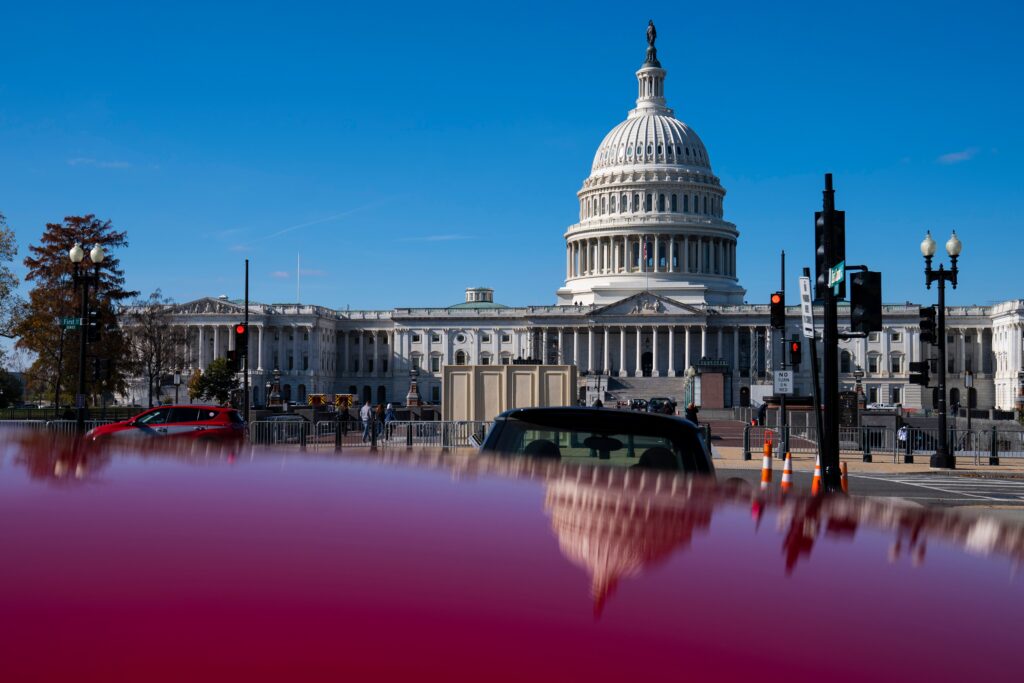
The House Ethics Committee is publicly requesting information from any victims of sexual misconduct by members of Congress and others aware of such incidents, an unusual move that comes during a spate of high-profile cases.
The request was issued in a statement Monday, one week after the resignations of Reps. Eric Swalwell (D-California) and Tony Gonzales (R-Texas) highlighted sexual misconduct on Capitol Hill and raised questions from lawmakers and others about the effectiveness of the Ethics Committee in addressing it. In the statement, the committee defended its record of handling such cases.
The committee, tasked with policing lawmakers, emphasized its dedication to cracking down on sexual misconduct and making those findings public, and it ticked through its record of investigating those cases during the past 50 years.
The statement said the committee “strongly encourages anyone who may have experienced sexual misconduct by a House Member or staffer, or who has knowledge of such conduct” to contact the Ethics Committee or other offices that handle sexual misconduct. The committee’s “greatest hurdle” in evaluating allegations of sexual misconduct, it said, is convincing victims and witnesses to come forward. The panel pledged to protect “witness confidentiality and safety.”
Some lawmakers on both sides of the aisle have said that the committee does not move fast enough on cases that it handles, and some have called for the House to change how it handles accusations of sexual misconduct against lawmakers.
Rep. Teresa Leger Fernandez (D-New Mexico), who chairs the Democratic Women’s Caucus, has called for speeding up how the House Ethics Committee investigates sexual misconduct cases. She said Gonzales’s acknowledgment of an affair with a staffer who later set herself on fire and died should have been enough to remove him from office under House rules.
Sexual relationships between lawmakers and staff violate #MeToo-era House rules, but Gonzales faced no immediate discipline. House GOP leaders — who have a razor-thin majority in the chamber — did not move to oust Gonzales, citing the ongoing Ethics Committee investigation, despite calls to do so from some Republicans.
Rep. Anna Paulina Luna (R-Florida), who led the push with Leger Fernandez to oust Swalwell and Gonzales from the House, also called for changes to the Ethics Committee.
Rep. Pramila Jayapal (D-Washington) said Congress needs an independent body with subpoena power and the ability to work faster than the Ethics Committee so lawmakers could more swiftly expel colleagues who engage in misconduct.
“If we have clear evidence, they’re out,” Jayapal said. “I don’t even know that it needs to go to a vote of the House.”
Not everyone agrees. House Majority Leader Steve Scalise (R-Louisiana) has cautioned against speeding up Ethics Committee investigations. “It’s one of the few places in Congress where it has to be bipartisan for something to move forward, so they’re very deliberate,” Scalise said.
The panel has “adopted a more aggressive and robust approach to allegations of sexual misconduct,” the committee wrote in its statement Monday.
Congress faced similar calls to improve its mechanisms for handling sexual misconduct early in the #MeToo movement. People on Capitol Hill came forward with their own stories about a culture that left staffers, particularly young women, vulnerable, and nine lawmakers lost their jobs in six months over allegations of sexual impropriety or related workplace misconduct. Congress adopted overhauls in 2018 that included streamlining the complaint process and forcing members to personally pay for harassment and retaliation settlements.
Now, after Swalwell and Gonzales resigned, the institution’s handling of sexual misconduct is back under scrutiny. The Ethics Committee is investigating a case involving Rep. Cory Mills (R-Florida), who is accused of sexual misconduct and violence against an ex-girlfriend. Mills has said he will fight those and other allegations.
A recent Washington Post investigation found D.C. police were about to arrest Rep. Cory Mills (R-Florida) after a woman accused him of assault last year, but a lieutenant ordered them not to when she changed her account after appearing to talk to the congressman.
The next day, police reversed course, asking then-interim U.S. attorney Ed Martin, an appointee of President Donald Trump, to sign off on a warrant to arrest Mills, a request the prosecutor denied. The Feb. 19, 2025, incident is part of the Ethics Committee’s investigation into Mills, who is now seeking a third term with Trump’s endorsement.
The post House Ethics panel makes rare request about sexual misconduct appeared first on Washington Post.