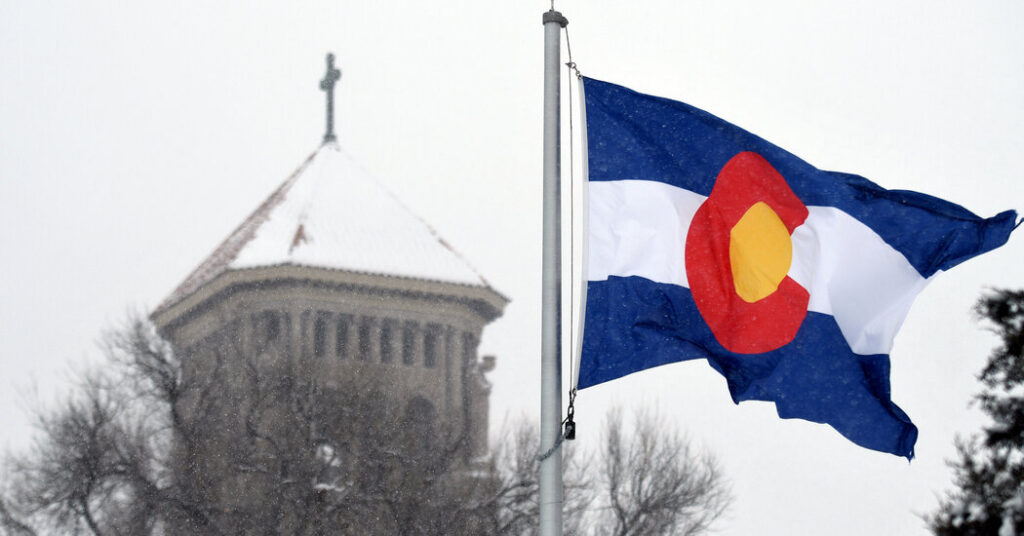
The Supreme Court agreed on Monday to decide whether Catholic preschools in Colorado that decline to enroll 4-year-olds with gay or transgender parents can participate in a publicly funded state program.
Two Catholic parish preschools in the Denver area said admitting such children would require them to violate their religious convictions. A Colorado program pays for families to send their children to the preschool of their choice, public or private, including faith-based programs. But the state refused to grant an exception to its anti-discrimination rules to allow the preschools to participate. The church then sued.
Lower court judges sided with the state.
The case, which the court is expected to hear once its next term begins in October, is the latest clash between anti-discrimination principles and claims of conscience from religious groups.
So far, those groups have overwhelmingly prevailed before the current Supreme Court. In 2018, the court ruled in favor of a Colorado baker who refused to create a wedding cake for a same-sex couple. In 2021, the court ruled unanimously that a Catholic social services agency in Philadelphia could defy city rules and refuse to work with same-sex couples who apply to take in foster children.
In the latest case, the Archdiocese of Denver and two Catholic parishes asked the court to reconsider a precedent limiting First Amendment protections for religious practices. The precedent, Employment Division v. Smith, decided in 1990, holds that neutral laws that apply equally to all people cannot be challenged on the grounds that they violate the First Amendment’s protection of the free exercise of religion.
That decision, arising from a case involving the use of peyote in Native American religious ceremonies, is unpopular among many conservative Christians, who say it does not offer adequate protection to religion. Justices Clarence Thomas, Samuel A. Alito Jr. and Neil M. Gorsuch have all signaled that they are open to reconsidering it.
At issue in the Colorado case is the state’s universal preschool program, adopted by voters in 2020. The program requires participating schools to ensure that all families have an “equal opportunity” to enroll, regardless of their race, religion, sexual orientation, gender identity, income level or disability.
Lawyers for the Catholic organizations said the state had granted exemptions from that requirement by allowing schools to admit only low-income families or children with disabilities. But the state, they said, has excluded Catholic preschools from the program because they admit only families who follow Catholic teachings, including on sex and gender.
Colorado’s exclusion of Catholic preschools “reduces access, pushing parents and children toward preschools that share the government’s views on these issues and penalizing the religious schools and families who disagree,” the schools’ lawyers from the Becket Fund for Religious Liberty told the justices in asking them to review the case.
Attorney General Phil Weiser of Colorado, a Democrat, said faith-based providers have the flexibility to create their own curriculum but that no publicly-funded preschool “can turn away children and families” based on their status.
“This ensures that all Colorado parents — including Catholic parents and same-sex parents — know their children will not be excluded, because of their protected-class status, from the publicly funded preschool that best meets their families’ needs,” the state’s filing said.
The U.S. Court of Appeals for the 10th Circuit upheld a lower-court decision siding with the state and finding that Colorado’s exclusion of the Catholic schools was not “on the explicit basis” of religion and that the program does not permit any exceptions from its equal-opportunity requirements.
Ann E. Marimow covers the Supreme Court for The Times from Washington.
The post Justices to Hear Case on Catholic Preschools That Reject Children of Gay Parents appeared first on New York Times.