Across the country, retailers and low-income Americans are facing complex new rules overhauling what millions of people can buy with food stamps.
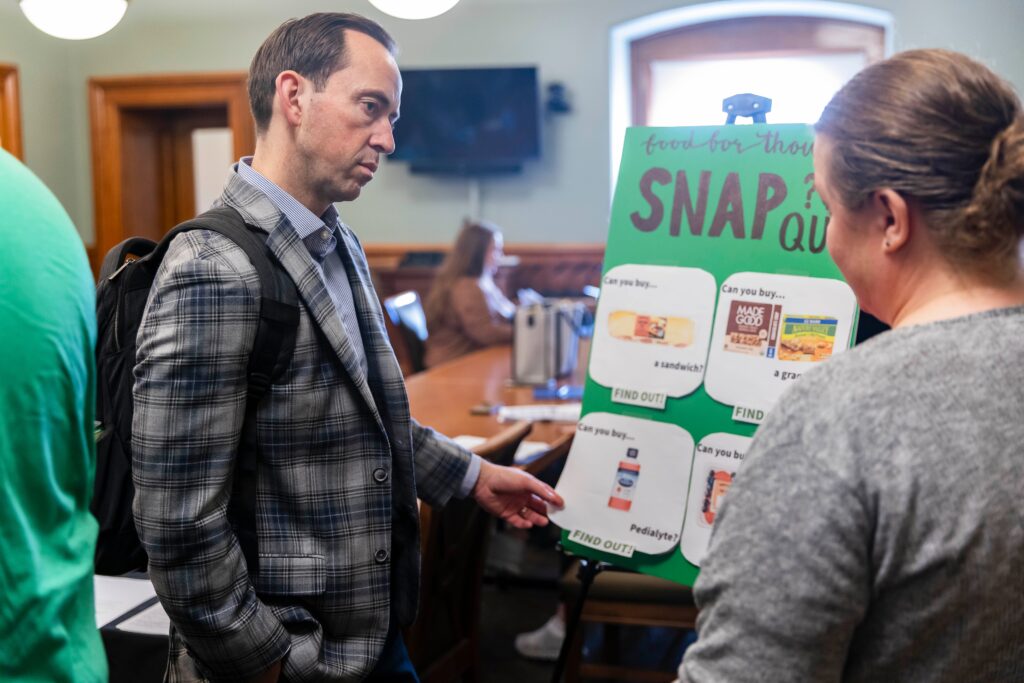
In Iowa, anti-hunger advocates recently sought to highlight how some cold sandwiches and granola bars may not qualify. In Idaho, legislators had attempted to clarify the state’s candy ban, since it allows KitKats and Twix because they contain flour. And in some states, food stamp recipients said they were surprised to learn sports drinks and certain flavored fizzy waters are off-limits.
As Health Secretary Robert F. Kennedy Jr. and his allies seek to tackle the widespread rate of chronic diseases causing Americans to die earlier, they argue federal dollars shouldn’t help people buy products increasingly linkedto poor health and obesity. Trump administration officials have pushed states to bar the use of food stamps for soda and candy.
Yet rolling out the changes to the nation’s largest food assistance program has led to a complicated, and at times counterintuitive, maze of new restrictions, according to more than two dozen interviews with trade groups for independent grocers and convenience stores, store owners, anti-hunger advocates, SNAP participants and others.
So far, nearly two dozen states, most of which lean Republican, have received federal approval to make changes to the Supplemental Nutrition Assistance Program. As of Monday, 10 states have implemented their own approaches to the new restrictions.
In interviews, some SNAP recipients expressed support for the changes, while others said they felt stigmatized because they are poor. Some participants have joined a recent lawsuit seeking to halt the changes in five states arguing the rules are unlawful and complicate a program vulnerable Americans rely on.
Hannah Hansen, a single mom of four girls, glanced at a receipt from a recent trip to Fareway in West Des Moines, Iowa, and began to tick off items. Her food stamps didn’t cover her sweetened wild cherry sparkling water or semisweet chocolate chips for baking, but paid for some ultra-processed items.
“The biggest surprise to me is chips and cookies, that stuff is still covered,” said Hansen, who works as a special education associate at a high school and receives $597 per month in food stamps. She has been buying less soda and candy since the restrictions went into effect, she said, but doesn’t understand the rationale behind some of the decisions.
Some retailers are taking different approaches on what specific items no longer qualify for SNAP, meaning what is eligible varies not only state-by-state but potentially store-by-store.
“Some grocers are purposely being more restrictive to make sure that they don’t lose their SNAP license while others are trying to be more exact,” said Stephanie Johnson, the group vice president of government relations at the National Grocers Association, which represents independent grocers.
“Secretary Kennedy has been clear that we will support efforts by states to pursue SNAP waivers that prioritize healthier food options,” Andrew Nixon, a spokesman for the Department of Health and Human Services, said in a statement. “The goal is to empower families with better access to nutritious foods and support a healthier future.”
Trump officials have met with food industry groups and others where they have reiterated support for the waivers, according to an administration official who spoke on the condition of anonymity to discuss internal conversations. The administration has offered to work with the industry on creating federal standards, which the official said the industry rejects.
At a February rally in Austin, Kennedy asked a crowd why the government is paying for soda and candy for poor children: “If somebody wants to buy a Coke in this country, they ought to be able to do it. The taxpayer shouldn’t have to fund it for children. … We’re giving them diabetes and then we’re paying for it. The whole system is insane.”
A major test
The U.S. Department of Agriculture, which oversees SNAP at the federal level, has never before approved such sweeping restrictions. But that’s not because no one has asked.
In 2011, federal officials rejected New York Mayor Mike Bloomberg’s attempt to block purchasing sugar-sweetened beverages with food stamps, partly fearing the scale of the proposal was too large and complex. During President Donald Trump’s first term, the USDA denied Maine’s effort to ban candy and sugary drinks.
The anti-hunger community broadly opposes the measures, arguing they punish the poor, but nutritionists and nutrition advocates have mixed opinions. Some expressed skepticism amid Republican cuts to nutrition programs for SNAP recipients as well as expanded work requirements. Others say they have long sought to test SNAP changes, and want to see data showing whether the new rules impact consumer behavior and improve health.
“I can argue that really nobody who wants to be healthy should be drinking sugar-sweetened beverages … taxpayers should not be paying for sugar-sweetened beverages for anybody,” said Marion Nestle, a retired professor of nutrition, food studies and public health at New York University. But, she added, “I can also argue it the other way: that it’s demeaning, it stigmatizes low-income people.”
States have been given permission to pilot the programs for two years.
“This is all a test at this point,” said a senior USDA official who spoke on the condition of anonymity because they weren’t authorized to speak publicly. “It’s been talked about for many years, and we have states, both Democrat and Republican, that came up with these plans. And so we’re watching their test in real time.”
In choosing to seek the changes, states told the USDA they would provide federal officials with quarterly updates, generally consisting of the monthly number of complaints and compliments; SNAP dollars spent out of state; and, “whenever possible,” retailer data on shopping cart transactions.
Brian Elbel, a professor of population health at NYU Grossman School of Medicine, noted that for most SNAP participants, the program doesn’t cover all of their monthly groceries. He said he hopes states analyze whether recipients instead pay for restricted items with their own money or whether they switch to healthier foods, as well as how individual stores implement the changes.
“You really do need to be on the ground in these communities, in these stores, to really understand and see how it’s being implemented,” Elbel said.
Several SNAP recipients described frustration, particularly for paying out of pocket for Gatorade and other drinks with electrolytes they said they often give their children when they’re sick or dehydrated.
Torri Langdon, who participates in a network the nonprofit Hunger Free Oklahoma created to help those experiencing food insecurity with advocacy efforts, said that she “got rejected for some things that I was going to buy that I had to put back. … It’s just really embarrassing when you don’t have the money to cover something.”
Others expressed support for the new rules, saying the changes haven’t bothered them.
April Hardy, of Polk City, Iowa, said she had stopped drinking soda before the new restrictions kicked in on Jan. 1. Hardy works at a day care center, and said many of the foods she buys her children with $324 in monthly benefits still qualify.
“I’m hoping it’s going to be for the best,” Hardy said.
Of the 22 states approved for federal waivers, all have restricted certain drinks. Fourteen states have also limited candy.
In Utah, state lawmakers initially sought to bar both soda and candy. But the industry was concerned about the definition of candy, and legislators could not settle on one. So instead, they decided the bill would focus on soft drinks — defined as a flavored drink that has carbonated water and is sweetened with sugar or artificial sweetener — according to state Rep. Kristen Chevrier (R). The legislature is now studying how to expand the pilot program to also include ultra-processed foods.
“I understand people want their candy and they want their soda,” she said, “but it’s not building health, and the mission of the program is to build health.”
High stakes
In Oklahoma, Katie Plohocky combed through a state-provided list of thousands of products no longer eligible for SNAP.
She paused at certain items, grappling with how she should update her point-of-sale systems for her “healthy” corner stores. In some instances, she made quick judgment calls: If she carried a product similar to one on the list but with a different label, she deemed it ineligible.
The stakes are high: A store could potentially lose its ability to accept food stamps. Plohocky — who founded and runs RG Foods, a Tulsa-based nonprofit that runs several small grocery stores in underserved areas — estimated SNAP benefits cover 60 percent of overall sales.
“We just want to make sure that we protect our SNAP permit because our customers rely on that to get food,” she said.
Oklahoma is one of several states that distributed lists of product codes for newly ineligible items, but as a small retailer, Plohocky said it was still complicated to pore through and update her systems.
Other states did not share specific lists. Indiana officials said doing so would be “inaccurate and impractical,” as such codes frequently change. Third-party companies have stepped in to create lists and sell them to retailers, for up to thousands of dollars. West Virginia said it was “cost prohibitive” to purchase a one-time list of ineligible items to give to retailers: The price was $130,000, according to a spokeswoman for the state’s human services department.
For large retailers, the changes may be easier to manage. Fareway, a Midwest grocery chain, said it is confident it’s in compliance with the rules and was able to sort through the changes in Iowa and Nebraska.
Iowa’s rules are considered one of the most sweeping. Food and drinks subject to sales tax are generally no longer eligible to be purchased with SNAP benefits, making it easier for retailers but creating a labyrinth for food stamp recipients to navigate. For instance, whether cold sandwiches are eligible depend on a variety of factors. Two retailers and a state industry group told The Washington Post that Pedialyte is no longer eligible.
OFW Law principal Stewart Fried, who represents retailers on SNAP-related issues, faulted the USDA for not establishing uniform definitions for candy and soda. “This has created massive confusion across the entire country.”
The department did not set nationwide standards, the senior Agriculture Department official said, in part because states run their own programs and allowing for differentiation will help USDA evaluate what works.
The agencies that administer SNAP in Idaho, West Virginia, Indiana, Texas, Iowa and Utah said they engaged with retailers throughout the process. Some states said they gave retailers fliers they could post in their stores, hosted office hours and conference calls, and invited store operators to share any concerns.
For now, the Agriculture Department says it is working with retailers, not penalizing minor, inadvertent mistakes, as stores navigate “significant technical challenges associated with these bold, innovative waivers.” After a 90-day runway, enforcement — which can include a warning letter — has begun in at least five states.
Marc Craig, an Iowa food stamp recipient who was until recently homeless and works as an Uber Eats driver, has been documenting his experience with the changes. He is one of the plaintiffs in the lawsuit challenging the state’s changes.
“It says you’re supposed to show proof of how it improves health,” Craig said. “How does limiting me getting a healthy sandwich and letting me eat cookies and cake make me healthier?”
The post KitKat, Gatorade or granola bars? What’s banned under new SNAP rules is mixed. appeared first on Washington Post.