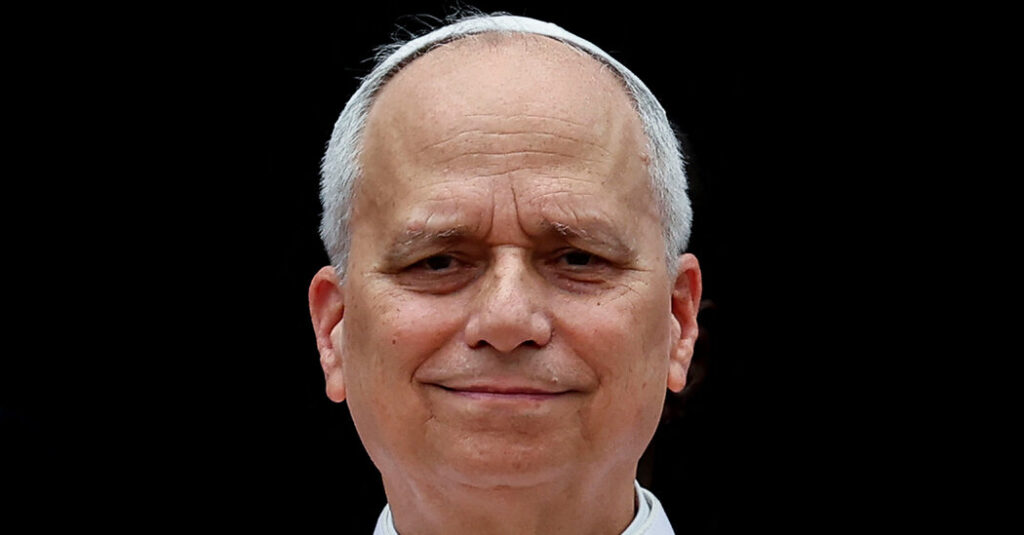
When Pope Leo XIV visits the African nation of Angola on Saturday, he will encounter one of the Catholic Church’s enduring challenges on the continent.
Angola has more than 20 million Catholics, but not a single cardinal, making the country a stark example of Africa’s lack of representation in Vatican leadership.
Only 14 of the 121 cardinals eligible to elect a pope are from Africa, where the church is growing faster than anywhere else in the world. There are 365,000 Catholics for every bishop in Africa, a ratio higher than any other continent.
But the Angolan church is the oldest Catholic community in southern Africa, with a history that goes back more than 500 years.
Portuguese settlers arrived in the Kongo Kingdom, which is part of present-day Angola, toward the end of the 15th century. Its Black rulers quickly embraced Catholicism. They were baptized, established local clergy and sent an envoy to represent them at the Vatican.
Within just a few decades, Catholicism had become the kingdom’s dominant religion, leading to a rare instance, historians say, of African and European states interacting as equals during slavery.
But a power imbalance quickly emerged.
The kingdom asked Vatican officials to appoint a local bishop. Instead, at Portugal’s urging, they gave control of the kingdom’s church to a bishop nearly 800 miles away on the tiny Portuguese island colony of São Tomé. It was a bitter pill to swallow.
Since then, Angola has only ever had two cardinals, and just one of them was Angolan. Portugal, which colonized Angola in the 16th century, currently has six cardinals.
“I believe we have not been treated with the same attention that the Vatican gives to other regions,” said Albino Pakisi, a former priest and now a professor at Catholic University in Luanda, the capital of Angola. “We feel a bit like stepchildren when other churches have cardinals and we do not.”
While many members of the Angolan clergy are looking at the pope’s visit through the lens of spiritual enrichment rather than Vatican politics, some analysts see Leo as uniquely positioned to address the needs of the church in Africa.
He has African roots — something many Africans remain unaware of — and a familiarity with the continent, having visited more than a dozen times as a bishop, including at least nine trips to Nigeria and five to Tanzania. He belongs to the Order of St. Augustine, a bishop who did some of his most important work in Algeria and encouraged the church to speak out on biblical values, such as the rights of the most vulnerable.
Many African Catholic leaders, including in Angola, have had to grapple with those values in the face of autocratic governments.
Leo is scheduled to meet with Angola’s president, João Lourenço, whose government has been accused by the church and civil society leaders of failing to address grinding inequality. Despite the country’s oil wealth, more than half the population lives on less than $3.65 per day.
Three out of four Angolans are under 30. Young people in the country face mass unemployment and lack of access to health care and education. Young Africans more broadly represent a critical demographic in the church’s growth. While other regions struggle with aging populations, Africa is experiencing a youth boom.
José Manuel Imbamba, the Archbishop of Saurimo in eastern Angola, said he hoped that Leo’s visit would help heal the political and societal tensions that have lingered in Angola after its 27-year civil war, which ended in 2002.
Leo will be the third pontiff to visit Angola, after John Paul II in 1992 and Benedict XVI in 2009. Diplomatic relations between the Vatican and Angola span seven centuries. António Manuel Nsaku Ne Vunda of Angola was the first African diplomat to reach the Vatican, said Carlos Bumba, a historian in Luanda.
Ne Vunda met with the pope in Rome in 1608 to negotiate better treatment and representation for African Catholics in the kingdom before succumbing to a severe illness shortly after his arrival.
Despite his short stay in Rome, Ne Vunda became a popular figure at the papal court. He was immortalized with a bust in the Vatican and buried in the Papal Basilica of Santa Maria Maggiore, where Pope Francis is also buried.
Filomeno do Nascimento Vieira Dias, the Archbishop of Luanda, said in a news conference this month that he hoped Leo would, “at his own pace and without pressure,” appoint an Angolan cardinal because the country had one of the oldest Catholic communities in Africa, according to the Angolan newspaper Novo Jornal.
Some in Angola say that the country should have an archdiocese with a cardinal’s seat, meaning that the bishop who occupies it would automatically become a cardinal.
While in Angola, Leo will also pray with pilgrims at the Sanctuary of Our Lady of the Conception of Muxima, a shrine along the Cuanza River where enslaved Africans were baptized before being forced into a treacherous voyage to the Americas.
Today, the shrine, known as Mama Muxima, is one of the most popular pilgrimages in southern Africa, where visitors offer up their prayers to the Virgin Mary. The shrine’s visitors rarely focus on its role in the slave trade, and several Angolan clergy members said they looked forward to Leo sharing a positive message while in the country.
Pope John Paul II prayed for forgiveness for the church’s role in the atrocities of slavery during visits to Africa in 1985 and 1992.
In the present day, the church has to contend with other challenges. Although about 40 percent of the population is Catholic, the church has stiff competition from evangelical Christian sects. They combine local faith systems, like the belief in modern-day prophets, with evangelical Christian teachings. They host huge conferences throughout the country that reach into both rural and urban areas.
One of the most popular evangelical churches in Angola, the Universal Church of the Kingdom of God, has experienced huge growth over the last two decades, including among politicians, and built large cathedrals in Luanda.
Father Celestino Epalanga, who leads a commission of justice and peace in the Angolan bishop’s conference, said the growth of evangelical churches in the country reflected the richness of its religious diversity. But those churches also present “a challenge to society” because of what he said were their predatory practices, such as equating support for particular politicians with salvation.
Catholic leaders and analysts say that the challenges for the church in Angola and other African nations are both internal and external. The Angolan church does not have enough bishops and priests writing about “profound theological issues,” said Mr. Pakisi, the Catholic University professor.
Manuel de Jesus João Dias Brandão, the director of liturgy in the Saurimo archdiocese, said African priests and bishops needed to show more leadership and influence in their communities. He pointed to the church in Latin America as a model.
Even though the church in Latin America is younger than Africa’s, it has greater representation at the Vatican and is more influential worldwide, Father Brandão said. Latin American Catholics also have more parishes and missionaries around the world than Africans, he said, “which tells me we need to be more conscious of our responsibilities.”
Father Epalanga questioned whether the church in Africa was doing enough to help people live the message of the Gospel, and added that could be one reason for the lack of African representation at the Vatican.
“I don’t know,” he said. “It’s difficult to judge if really the Vatican is looking down upon us or we Africans are not doing enough.”
John Eligon is the Johannesburg bureau chief for The Times, covering a wide range of events and trends that influence and shape the lives of ordinary people across southern Africa.
The post In Angola, Pope Faces the Legacy of Colonialism appeared first on New York Times.