An existential question: Can you have an N.B.A. career without hosting a podcast?
Lately, the answer seems to be no.
There are podcasts from starters and bench players, from veterans and at least one rookie. Agents have podcasts. Players’ siblings, spouses and best friends make appearances. Dozens of former players have done it. New podcasts debut (and disappear) regularly.
Hosts talk about the great players they faced. They give behind-the-scenes looks at famous moments from their careers. Some break down game film. Some opine on current events in and out of basketball. They interview their friends and fellow players. Their producers splice up the juiciest clips hoping to go viral on TikTok or Instagram.
An incomplete list: “Club 520” (on which the recently retired Jeff Teague delights N.B.A. junkies with insider tales from his playing days). “The Draymond Green Show” (which Mr. Green once recorded on a night he was ejected from a game). “Roommates Show” (Josh Hart and Jalen Brunson make fun of each other). “Mind the Game” (LeBron James and Steve Nash explain basketball). “Gil’s Arena” (on which Gilbert Arenas once appeared holding a brown paper bag labeled “Informant Lunch” after he was accused of being an informant in federal gambling investigations). “7PM in Brooklyn” (Carmelo Anthony interviews rappers and athletes and, once, included his son, Kiyan). “Podcast P” (which Paul George put on hiatus after critics said it was a distraction when his team went on a losing streak).
There are more podcasts started by current and former N.B.A. players than there are from athletes in other major American sports, perhaps because the league encourages star power and individuality.
“Everyone thinks they should have a podcast,” said Gina Paradiso, an agent who has helped broker podcast deals for basketball players. “Not everyone should. It doesn’t mean that not everyone will. There’s someone out there that might be willing to buy your idea.”
Many of these shows don’t get huge audiences. On YouTube, numbers can range from a couple of thousand subscribers for “The Bench Seat” with Georges Niang, who played for five N.B.A. teams from 2016 to 2025, to more than a million for shows like “Gil’s Arena.”
The average salary in the N.B.A. is more than $10 million per year, and podcasting isn’t that lucrative for the vast majority of hosts. But it can be a launchpad for future endeavors.
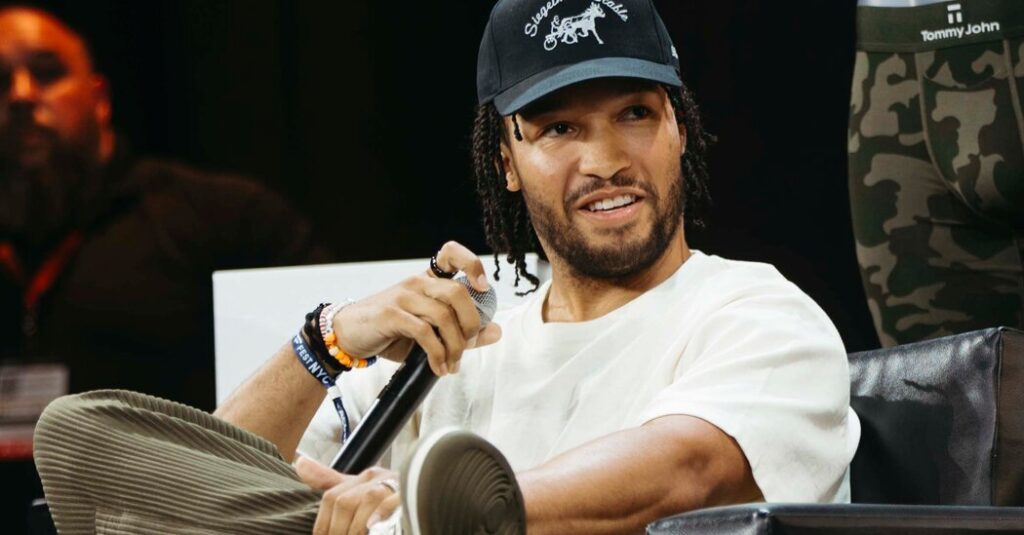
“It’s a great opportunity for us for possibly life after basketball,” said Mr. Brunson, the New York Knicks star and “Roommates Show” co-host. “We’re always thinking about what’s next.”
In the show’s most popular episode on YouTube, Donte DiVincenzo, then a Knicks teammate, joined Mr. Brunson and Mr. Hart to share stories about their days playing together at Villanova and in the N.B.A. It has gotten 473,000 views.
Ms. Paradiso said that players in the recent past had seen podcasting as a way to build themselves up for broadcast roles, but that most young players didn’t think that way now.
“Now I think the goal is exactly what they’re doing,” Ms. Paradiso said. “You want to be Bill Simmons, you want be Joe Rogan.”
‘We Are the Influencers’
Ms. Paradiso, a former ESPN producer, started working with podcasting athletes in 2020 when Rasheed Wallace and Bonzi Wells, who had starred together on the Portland Trail Blazers in the late 1990s and early 2000s, started the short-lived “Let’s Get Technical.” (The name was a play on the pair’s penchant for amassing technical fouls — the kind you get for taunting opponents or cursing at referees — during their careers.)
In the years since, podcasts have become a central part of sports media business plans. The Ringer, Bleacher Report and Barstool have all had player podcasts as part of their networks, reflecting a bet that audiences want to hear directly from players and former players without intermediaries like sports journalists. Sports gambling companies like FanDuel and DraftKings spend money to sponsor or distribute them. In 2024, “All the Smoke,” hosted by the former players Matt Barnes and Stephen Jackson, signed a deal with Meadowlark Media and DraftKings that Mr. Barnes said on a “Boardroom” podcast was a “high seven-figure” two-year partnership.
Players also like the idea of controlling their own narratives.
“We are the influencers,” said Paul Pierce, a 48-year-old Hall of Famer. He has three podcasts: “No Fouls Given,” which he records with another former player, Danny Green, for the Playmaker network; “The Truth after Dark”; and “Ticket & the Truth,” which he does with his former teammate Kevin Garnett.
Draymond Green, whose podcast is distributed by Audacy, said: “You can talk through different things from an athlete’s perspective and actually have the time to give context that we don’t have in interviews. In a world that’s full of clickbait, a 24-hour news cycle, context is lost often.”
Mr. Green has started calling himself part of “the new media.” His most popular episode has gotten 3.3 million views on YouTube — a conversation with Stephen Curry two months before they won their fourth championship together with the Golden State Warriors.
When Mr. Green started his show in 2021, pundits suggested that it was irresponsible of him to be podcasting while he was playing — particularly during the playoffs.
“Obviously we won a championship my first year doing it, and so that whole narrative went away,” he said.
He was surprised at first, he said, that shows like those on ESPN or Fox Sports built entire segments around something he had said on his podcast. He quickly saw the power in that.
Media organizations get grist for the content mill from player podcasts, but they also lose out to them.
Patrick Beverley would sometimes refuse to answer questions from reporters during mandatory media appearances unless they subscribed to his podcast. When he shut out a producer from ESPN this way during his last N.B.A. season in 2024, it became a national story, and Mr. Beverley apologized. (Barstool produced his podcast, but that relationship disintegrated after Mr. Beverley was arrested on a felony assault charge; a grand jury declined to indict him. He has started a new, independent podcast.)
Success and fame on the court don’t necessarily correlate to success behind the mic. Mr. Teague’s “Club 520,” which has 822,000 YouTube subscribers, is so popular that Adidas signed it to a sneaker and apparel deal. It is co-hosted by two friends of his, DJ Wells and Brandon Hendricks, who goes by B Hen. Mr. Teague was a first-round draft pick who played 12 seasons in the N.B.A., but he is hardly a household name. People listen because he’s funny.
A Brief History of Basketball Podcasts
There are no N.B.A. podcast historians — yet — but the first active player with a podcast appears to have been JJ Redick, who began hosting “The Vertical Podcast With JJ Redick” in 2016, produced by Yahoo Sports. It was a gateway for success in the medium for Mr. Redick, who went on to co-host a popular podcast, “The Old Man and the Three,” with Tommy Alter.
In 2017, Channing Frye and Richard Jefferson, who were in the twilight of their playing careers, started “Road Trippin’.” It helped Mr. Jefferson find a next step: He became an analyst for the YES Network’s Brooklyn Nets telecasts the next year and now has a prominent on-camera role with ESPN.
In 2019, two particularly influential player podcasts arrived: “Knuckleheads,” with Darius Miles and Quentin Richardson, and, a few months later, “All the Smoke.”
Mr. Richardson and Mr. Miles were part of a Los Angeles Clippers team that enjoyed a cult following — known for bringing a youthful joy to their games and making youthful mistakes. One of their favorite questions for guests was: “Who busted your ass when you got to the N.B.A.?” They got big names to answer: Kobe Bryant, for one, said his former teammate Nick Van Exel had been the first to do it, during a practice, and Stephen Curry said Mr. Bryant had done it to him in a preseason game.
Mr. Barnes and Mr. Jackson were on the “We Believe” Warriors, which shocked the league by beating the top-seeded Dallas Mavericks in the first round of the 2007 playoffs. Their show presented two good friends drinking, smoking marijuana and talking as if the cameras weren’t there. Showtime Sports aired the podcast as a show for a few years. It is now produced by All the Smoke Productions, of which Mr. Barnes is chief executive, and distributed by the Black Effect Podcast Network.
“We didn’t really know at the time what a podcast was,” said Mr. Barnes, who was working as an analyst at ESPN. “We knew that we can be a little bit more of ourselves with this opportunity.”
Over six and a half years, their interviews have ranged far beyond basketball, to guests like the filmmaker Ryan Coogler and Michelle Obama. The company says the episodes average 197,600 views on YouTube. “All the Smoke” was the 10th-most-popular sports podcast in 2025, right behind “Club 520” and “Gil’s Arena,” the research firm Edison said.
Still, Edison’s list also shows how niche N.B.A. player podcast are. Only the top five sports shows, none of which are N.B.A. player podcasts, cracked the overall top 50 in the last quarter of 2025.
But Mr. Redick is perhaps the ultimate success story. For him, podcasting led to one of the most prestigious jobs in the sport.
In 2024, three years after retiring, he started “Mind the Game,” distributed by Wondery, with Mr. James, the Los Angeles Lakers star. The podcast was born of their frustration that basketball media didn’t talk enough about the action on the court. Three months after the debut, Mr. Redick became the Lakers’ head coach.
“For the time being, and hopefully it’s a very, very long time, I am excommunicated from the content space,” Mr. Redick said during his introductory news conference with the Lakers. “There will be no podcasts.”
Tania Ganguli writes about money, power and influence in sports and how it impacts the broader culture.
The post The Only Thing N.B.A. Players Love More Than Basketball Is Starting Podcasts appeared first on New York Times.