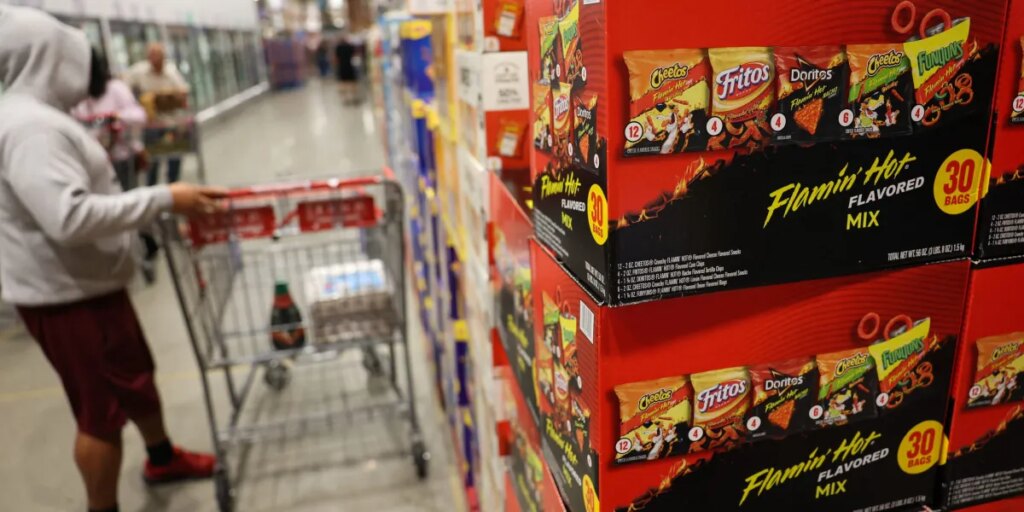
After accepting the reality that its inflation-weary customers had had enough of price increases in recent years, PepsiCo slashed U.S. prices on Lay’s, Doritos, Cheetos, and Tostitos chips by up to 15% in February. It seems to have worked: The move is helping bring back some of the food and beverage maker’s customers who had gone AWOL, according to the company’s latest results.
The company said on Thursday that revenue had jumped 8.5% to $19.4 billion in the first quarter of 2026 compared to the same period a year earlier, noting a strong performance in its North American snacks business. “The consumer is coming back multiple times to our brands,” PepsiCo CEO Ramon Laguarta said Thursday during a conference call with investors.
PepsiCo’s price cuts echoed those of other food companies and restaurant chains in the last year as customers have struggled with food inflation—in some cases reversing the price hikes of the three years after the pandemic. Late last year, General Mills cut prices on nearly two-thirds of its grocery products in North America, helping sales by volume recover. Conagra, Kraft Heinz, and J.M. Smucker also have had to cut prices on some of their products to win back consumers. Restaurant chains too have had to woo back customers weary of all the inflation of recent years. Earlier this month, McDonald’s announced a budget-focused McValue menu with ten items that each cost under $3, beginning next week. “We absolutely are going to make sure that we are protecting our leadership position in value,” Chief Executive Chris Kempczinski told Wall Street analysts earlier this year. Rivals including Wendy’s and Burger King have also been ramping up the deals.
Though these cuts provide some relief, they won’t get consumers back to the prices of just a few years ago. In the wake of the Covid-19 pandemic that sent ingredient costs way up, food companies have steadily increased prices on a range of items. The U.S. Department of Agriculture found that food prices rose a total of 23.6% between 2020 and 2024. Restaurant prices have risen nearly 30% since 2020, and that restaurant inflation, while much lower now than in 2022, remains above historical averages.
The recent price cuts on food and deals at restaurants suggest a shift in attitude among the CEOs and CFO’s of many companies in these sectors, who were insisting only two or three years ago that customers wouldn’t be deterred by rising prices. It was only in 2024 that many companies started to concede on investor calls that maybe, just maybe, they had overdone the price hikes.
Companies were under enormous pressure from Wall Street to protect profit margins during the inflation run up. But it’s risky to pass along those higher costs: Once you lose a customer who feels gouged or ripped off, it’s very hard to win them back, no matter how much you spend on marketing. That kind of pain can be avoided by companies listening to customers more, and to Wall Street less.
The post Food companies are finally cutting prices. PepsiCo shows it’s worth it appeared first on Fortune.