In today’s edition … Tax Day could show the One Big Beautiful Bill Act’s benefits or limits … but first …
The surprising rise of discharge petitions
You know the Schoolhouse Rock version of how a bill becomes a law. A member introduces a bill. It goes to committee. It gets a vote on the floor. Same thing in the other chamber. The president signs it into law. Bada bing, bada boom.
What if we could skip a few steps and force it right onto the floor?
It’s a maneuver that is increasingly popular this Congress, and we’ll be seeing it happen today.
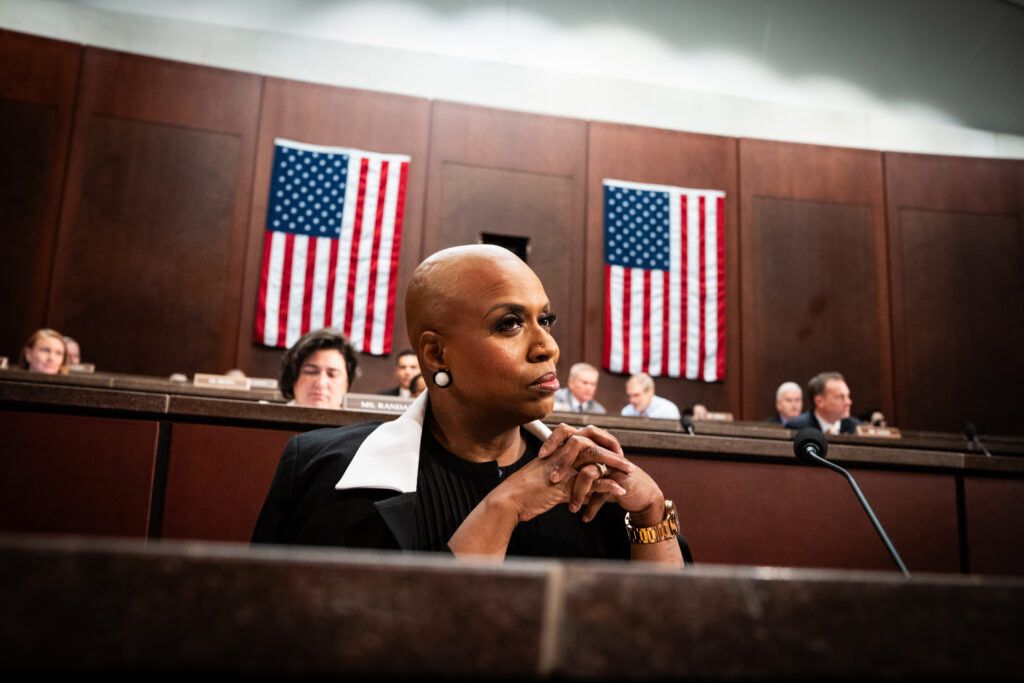
Rep. Ayanna Pressley (D-Massachusetts) plans to use a discharge petition today to force the House to vote on a bill that would extend legal protections for Haitian immigrants in the country, her office told us. She expects procedural votes on the bill to start today and final passage possibly tomorrow. If all goes according to plan, she’ll set the terms on how the bill is considered, not the speaker or the Rules Committee.
“Our Haitian neighbors contribute greatly to our communities, are essential to our economy, and are shamefully at risk of being deported to an island grappling with a devastating humanitarian crisis,” Pressley said. “With the Trump White House terrorizing Haitian immigrants and Republicans obstructing lifesaving legislation in Congress time and time again, we’ve had to be nimble in how we organize, build consensus, and break through the logjam to bring this bill to the floor.”
She can do this because she secured 218 signatures on a discharge petition, which allows a member to force a bill out of committee and to a vote on the floor if a simple majority of members sign on. Hers reached the magic number just before recess.
Historically, discharge petitions haven’t really been necessary. If a bill has the support of the majority party, it should be able to make it through committee and onto the floor no problem. If a priority from the minority party has support from a handful of members from the majority party, the speaker usually whips their members to stop it from going anywhere.
“In the Pelosi era, I think everybody had a story of somebody who had played that role and all of a sudden just found their life much harder around here,” Rep. Sean Casten (D-Illinois) recalled of then-House Speaker Nancy Pelosi stopping her caucus members from defecting on votes.
But discharge petitions have sprung up this Congress with a surprising success rate. At least five this Congress have reached the requisite 218 signatures. For comparison, only two received enough signatures in the last Congress between 2023 and 2025.
The petitions have illustrated Republicans’ willingness to break with their party leadership in recent years and the challenge for House Speaker Mike Johnson in maintaining control of a raucous Republican conference.
He has 218 Republicans to 213 Democrats and one independent. Only five Republicans need to break from his party to reach 218 signatures. Meanwhile, the House Republican Conference is firmly divided on issues including health care and immigration, which were highlighted in some of the petitions.
Perhaps the most famous discharge petition was the one advanced by Reps. Thomas Massie (R-Kentucky) and Ro Khanna (D-California) to release the FBI’s records on Jeffrey Epstein last fall. President Donald Trump repeatedly tried to get his party to drop the issue but couldn’t contain the fervor among his base demanding answers about the convicted sex offender. Four Republicans signed onto the petition with all Democrats — enough to reach 218 with the party breakdown at the time.
Massie heralded discharge petitions as a beauty of the House — it’s largely unavailable to senators — that allow members to have greater control over the chamber’s priorities. He noted that Republican leadership and the White House lobbied hard to prevent his petition’s success following Trump’s protestations.
“Why are we seeing so many now? I think because the speaker of the House has a strategy of doing as little as possible,” Massie told us. “And some things are bottled up.”
Johnson eventually came around to Massie’s position after Trump acquiesced and supported releasing the full Epstein files. When the final bill came to a vote, all but one member voted to release the files.
Other successful discharge petitions this Congress have been filed by both Republicans and Democrats. They have advanced legislation to allow proxy voting for new parents in Congress, extend Affordable Care Act subsidies set to expire last year and reinforce federal workers’ unionization rights.
The petitions have allowed moderate Republicans to still fight for priorities they view as crucial for their districts, even if the MAGA base denounces them.
Four Republicans in vulnerable seats — Reps. Brian Fitzpatrick (Pennsylvania), Rob Bresnahan (Pennsylvania), Ryan Mackenzie (Pennsylvania) and Mike Lawler (New York) — signed onto the discharge petition to extend ACA subsidies after hard-line conservatives nixed any chance of doing so last year. But adding their names to the petition was a last-ditch move. All four Republicans had fervently advocated for their party to extend the subsidies through the normal legislative process.
“Doing nothing was not an option, and although this is not a bill I ever intended to support, it is the only option remaining,” Bresnahan said in a statement at the time. The bill ended up passing the House but stalling in the Senate.
Today’s discharge petition on Haitian immigrants has also allowed some Republicans to fight for an issue that breaks from the Republican base. The bill would extend protections from deportation until 2029 and directly reverse a Trump administration action that sought to end the legal protections for Haitian immigrants this year (though the termination was blocked by a court and is being appealed).
One of Pressley’s Republican partners in the effort is Rep. María Elvira Salazar (R-Florida), who has worked with Democrats in the past on bipartisan immigration legislation. Salazar’s support for the bipartisan Dignity Act with Rep. Veronica Escobar (D-Texas) prompted vicious backlash from the MAGA base who claimed she was supporting amnesty for undocumented immigrants.
“For Haitians right now, returning home is simply not an option. Gangs currently control nearly all of the capital city, and families are living in constant fear and under grave threat to their lives,” Salazar told us. “When people cannot safely return, Congress should step in.”
Pressley’s discharge petition also got support from Republicans Fitzpatrick, Lawler and Don Bacon. Her office said several other Republicans representing large Haitian communities have come to them expressing support for the bill once it’s on the floor.
Discharge petitions have long been used as a symbolic maneuver to voice dissent with how the speaker runs the show. Well over 600 have been filed since the House adopted the procedure.
Casten filed a petition early last year to push a bill that would limit then-special government employee Elon Musk’s access to Treasury Department data. The bill was in response to U.S. DOGE Service staffers accessing sensitive payment systems, and Democrats had little faith in Republican leadership bucking the White House by bringing the bill to the floor.
Casten thought of it at the time as largely for show, knowing discharge petitions historically have slim odds. His petition is still short of 218 signatures. But he was impressed with the number of Republicans willing to cross over to vote with Democrats on other petitions after the Epstein vote.
“When we were putting it out, it was like, let’s just do this. But this never really works. We’ve all seen tons of discharge petitions,” Casten said. “I think the story of the 119th Congress is that the discharge petitions actually have worked.”
Get ready with The Post
- Trump adviser Sebastian Gorka seeks top counterterrorism job, from Noah Robertson, John Hudson and Dan Lamothe.
- Spanberger counters false GOP claims of tax hikes: ‘A desperate tactic’, from Gregory S. Schneider.
- Trump’s reversal on day care upends a bipartisan push to lower costs, from Isaac Arnsdorf.
- DOJ moves to undo Jan. 6 rioters’ convictions for seditious conspiracy, from Salvador Rizzo, Jeremy Roebuck and Perry Stein.
- Woman accuses Eric Swalwell of rape in 2018, reports it to authorities, from Liz Goodwin.
- What Swalwell’s exit means for Democrats in California’s governor race, from Praveena Somasundaram.
- Trump’s pick for Fed chair could be the richest in modern times, from Andrew Ackerman.
What we’re watching
Oh boy, it’s Tax Day! Could it be a political boon for Republicans this year?
Let’s rewind. Republicans’ marquee bill this Congress, the One Big Beautiful Bill Act, considerably reshaped the tax code. It extended the 2017 tax cuts included in the Tax Cuts and Jobs Act, increased the deduction cap for state and local taxes, increased the estate tax exemption and child tax credits, created tax deductions for overtime pay and tips and effectively cleared many seniors’ Social Security tax burdens.
Several of those provisions were fairly popular among voters. Some measures, such as increasing the child tax credit, received more than 70 percent support among voters, according to Washington Post polling last year.
But the bill as a whole was much more polarizing. Provisions that created new barriers for low-income food assistance and funded migrant detention centers were widely panned, with more than 60 percent of voters disapproving of them. Democrats repeatedly went after the bill for cutting spending on Medicaid and other health care programs, which the Congressional Budget Office predicted could lead to more than 17 million more uninsured Americans in the next decade.
Republicans have tried to wrest the narrative away from Democrats but often admitted it would be a challenge pointing to tax benefits that may not be evident until Tax Day. Meanwhile, Democrats had a head start of several months to attack the bill as taking away health care.
But Tax Day is here, and the benefits can now come to the fore. Several of the tax provisions in the bill apply to the 2025 tax year, meaning Americans can see higher returns this Tax Day. The Tax Foundation estimated the bill reduced individual income taxes by $129 billion for 2025, and, since many employers withheld taxes based on the previous year’s tax policy, workers could receive their cuts in one hefty check when they file their returns.
“We delivered bigger refunds, bigger paychecks, and more breathing room for the people who work hard every day and deserve to keep more of what they earn,” House Republican Conference Chair Lisa McClain said at a round table with small business owners, tax professionals, and manufacturing and agriculture advocates yesterday.
Democrats aren’t as keen. Most Americans still think their tax bills are too high — 70 percent, according to a Fox News poll — even with the Republican bill. That’s up 11 points from last March. A plurality of respondents were most bothered by the idea that the richest weren’t paying enough. The Congressional Budget Office predicted last year that the benefits of the bill would be skewed toward richer Americans, with the lowest earners actually seeing their cost burden increase due to cuts to social services such as Medicaid and SNAP.
The Democratic Congressional Campaign Committee will be blasting local media in competitive House districts with messages accusing Republican candidates of “lying” if they claim the bill “is a win for anyone other” than billionaire supporters.
For a related read, Cat Zakrzewski dug into how the White House is shaping its message around tax season as Americans feel taxes remain high.
The Post abroad
- Lebanese, Israeli diplomats hold rare face-to-face meeting in Washington, from Victoria Craw, Lior Soroka, Suzan Haidamous and Adam Taylor.
- Iranian sea trade blocked as six ships forced to turn back, U.S. military says, from Tara Copp.
- U.S. sends thousands more forces to Middle East as Trump seeks to squeeze Iran, from Dan Lamothe.
In your local paper
Austin Current (Texas): Tesla’s massive Giga Texas plant surged its annual water use by more than 200 million gallons in two years — a 60 percent increase. The high water usage is alarming policymakers as the company hopes to build a new semiconductor plant that could increase water consumption even more.
CalMatters (California): Progressive lawmakers want to increase taxes on billionaires and corporations to help pay for federal funding cuts to the state’s health care system. But it won’t be enough to address California’s growing budget deficit.
Bangor Daily News (Maine): Democratic Senate candidate Graham Platner is under fire again for using the word “retarded” in a recent interview, prompting outrage from disability rights advocates.
Send us a reply
Thank you all for the kind messages celebrating our first year helming the newsletter!
We’d love to hear from you about how your tax season went. Did you see a noticeable difference this year? Do you credit the OBBBA? Let us and your fellow Early Brief readers know at [email protected].
Thanks for reading. You can follow Matthew and Dan on X: @matthewichoi and @merica.
The post How to force the House to do what you want appeared first on Washington Post.