Times Insider explains who we are and what we do, and delivers behind-the-scenes insights into how our journalism comes together.
When Frances Robles began covering Latin America and the Caribbean more than 25 years ago, she quickly discovered it was the little things that could trip her up while reporting.
After getting food poisoning while covering an earthquake in Colombia in 1998, she learned what not to eat on the road. And she got a lesson in planning ahead when she rented a car in Cuba and discovered all the cars were stick shifts — which she couldn’t drive.
“I was struck by how most of the differences between foreign and local reporting were in basic logistics,” said Ms. Robles, who is based in South Florida.
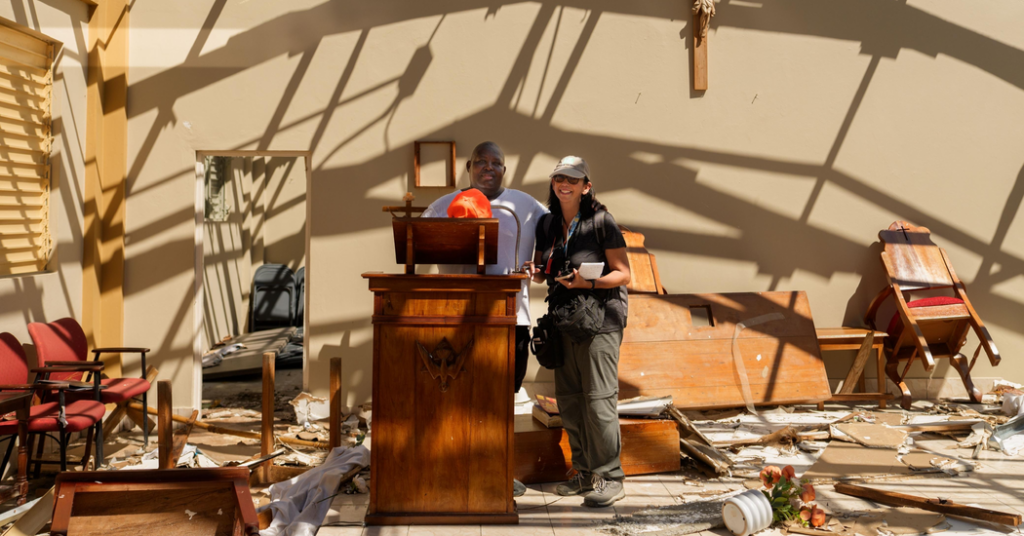
Since she joined The New York Times in 2013, Ms. Robles has reported on the deterioration of democracy in Nicaragua, the assassination of the Haitian president in 2021, the devastation left by Hurricane Melissa and the fallout from the U.S. capture of Venezuela’s leader earlier this year.
In an interview, she shared her experiences from her years covering Latin America. These are edited excerpts from the conversation.
How did you get started covering Latin America?
In the late ’90s, I started going to Latin America for big stories for The Miami Herald. My first one was covering an earthquake in 1998 in Colombia. In 1999, I covered a big custody battle between the Miami cousins of Elián González, a boy who was found at sea, and his father in Cuba. I was going to the region more and more often, and then Marty Baron, later of “Spotlight” fame, became the editor of The Herald in 2000. He tapped me on the shoulder one day and said, “Hey, I want you to go to Managua, to live.”
So you moved to the capital of Nicaragua. How long were you there?
I was only in Nicaragua for a little over a year. When 9/11 happened, any extra space in the paper went to looking at what was happening in New York or Afghanistan. In 2002, I moved to Bogotá, Colombia’s capital, and lived there for almost three years. That was a really intense time. In my first week as bureau chief for The Herald in Colombia, on Saturday, a priest was murdered during Mass; on Sunday, a car bomb killed a dozen people in a town a few hours south of the capital; on Tuesday, a pair of car bombs went off in Bogotá; and on Thursday, rebels kidnapped the entire state legislature of Cali, the same day as an attempt to overthrow Hugo Chávez in Venezuela.
Was there a big learning curve?
Definitely. I thought I spoke Spanish, but I learned very quickly that asking what time you’re having dinner is not the same as listening to a speech from a head of state. I heard all these unfamiliar words, like “ametralladora” — machine gun — and “alcaldía,” which means city hall. It took the immersion of being surrounded by Spanish speakers and being forced to do it, but I learned a lot. I had to.
You’ve been in some dicey situations. What precautions do you take?
For most of my career, I just kind of winged it. At The New York Times, that is not how we do it. Especially if I go to a very dangerous place, like Haiti, I have to present a security plan. Who am I meeting with? Where am I staying? Who’s the driver? What does he look like? What’s his license plate number? Sometimes, depending on the country, I’ll also have a security person — essentially, a bodyguard — who will go with me.
I always say that it takes a lot of courage to be a coward, because a lot of journalists would rather take the risk than tell their editor, “Hey, that’s a crazy risk, and we shouldn’t do it.” But I’ve never been one of those people. I’ve always had a motto: I’m not going to die for a story.
What changes have you seen in your time covering the region?
You’re definitely seeing more countries slide into authoritarianism. There are countries that I used to travel to freely that are no longer available to us. For example, Nicaragua: I went back in 2019 after a big uprising, and I think I was a little overly confident, thinking, “I lived in Nicaragua. I know this place.” And I ended up getting attacked by supporters of the president, Daniel Ortega, in the presence of police, who did nothing to intervene. Now, we can’t go there at all. Nicaragua doesn’t allow journalists to enter.
What story lines will you be watching this year?
The big story for me is going to be Cuba. We had the attack on Venezuela, and there’s a broad sense that President Trump has his eye on Cuba next. They’re just coming off a migration crisis, where more than a million people have left. For months, the Trump administration cut off oil shipments to the country. The lights are usually not on. Pharmacy shelves are often empty. There’s a sense of a crisis in the making, of a place that could implode.
What’s something you wish you had the chance to do more reporting on?
I wish I could go back to Nicaragua. It breaks my heart that I can’t. I love the people.
Sarah Bahr writes about culture and style for The Times.
The post How a Times Reporter Has Covered a Turbulent Period in Latin America appeared first on New York Times.