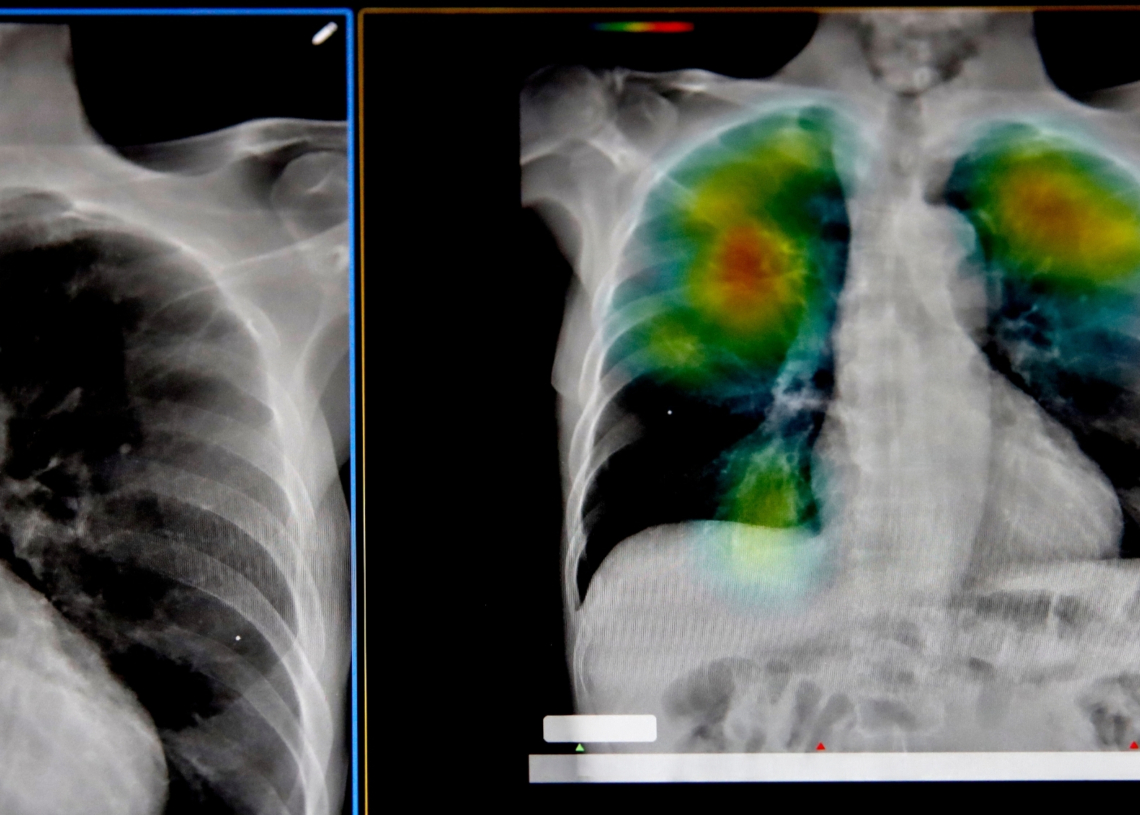
As some sectors of the AI industry seem dead set on replacing the hard, creative work put in by actual humans deserving of jobs, others are putting the technology to a more societally enriching use: using AI to predict diseases before symptoms even start.
The approach, presented as an editorial in the journal Intelligent Medicine by a team of researchers from China, is not just a technological shift but a fundamental rethinking of how doctors diagnose patients. Diagnosing a disease today can take several visits to different doctors and numerous tests, with a lot of time in between as a patient waits for results. The researchers want to use AI to monitor how networks of genes, proteins, and chemical signals change over time, looking for instability in the body that signals something is about to go wrong. The keyword here is about.
It’s an approach aligned with something called the dynamic network biomarker theory. It suggests that as the body approaches disease, certain molecular networks begin to fluctuate and become more interconnected than usual. In studies of influenza, for instance, these patterns begin to emerge in the days before symptoms appear. In cancer research, they identified similar signals emerging around the point where cells start to turn malignant. The prediction accuracy of these patterns is somewhere above 80 percent.
This AI Could Help Predict Disease Before Symptoms Appear
One drawback of modern diagnosis is that it relies on population averages to determine when symptoms may arise. Newer AI methods would shift the focus to the patterns specific to a single person. It’s mostly theoretical right now, but in practice, it would mean we could use AI to tailor health monitoring to each person.
These tools will be especially handy for tracking the body’s small molecular networks as they change in response to, say, type I diabetes, where these AI models can’t predict blood sugar levels a lot more accurately than older predictive tools by creating digital simulations of an individual. This same idea can be applied to a variety of health issues, including heart failure.
There are still plenty of hurdles to overcome before we reach the point of AI predicting a tumor long before symptoms crop up. The system is heavily dependent on a constant stream of clean data. Without it, or even just with big gaps, the system can trigger all sorts of false alarms, detecting correlations that don’t actually have real causation. And there’s also the pesky matter of AI hallucinations, which in the medical world is known as a black box, which is when an AI model spits out a prediction that even its own designers can’t explain.
None of this is to say that AI will replace doctors anytime soon, or even ever. At best, it’ll just be an early warning system that flags risks before symptoms appear. It would still be up to a medical professional specializing in that field to interpret the results and determine whether the AI was correct or making connections where none existed.
The post Doctors May Soon Be Able to Diagnose Illnesses Before You Ever Feel Sick appeared first on VICE.