This is an edition of The Atlantic Daily, a newsletter that guides you through the biggest stories of the day, helps you discover new ideas, and recommends the best in culture. Sign up for it here.
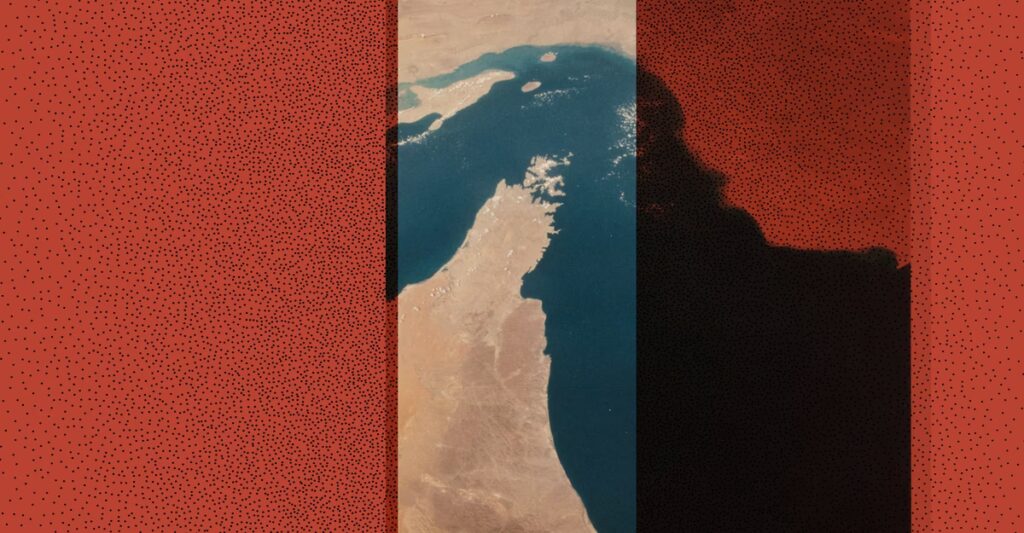
Over the past seven days, Donald Trump has adopted two contradictory positions on the Strait of Hormuz. A week ago, he wrote that a “whole civilization” would “die” if Iran didn’t make certain concessions—among them, allowing ships to resume their normal courses in and out of the Persian Gulf. This weekend, though, after marathon peace talks between the United States and Iran ended without an agreement, Trump announced a blockade of Iranian ports, essentially doubling down on restrictions in the waterway.
Why blockade the blockaders? The tactic is all but guaranteed to aggravate the ongoing energy crisis, which has been a pain point for Trump since the start of the war. But it also inflicts a new level of punishment on Iran: a trade-off that, for the president, appears to be worth making.
Since late February, Iran has been threatening to attack most ships passing through the strait, and the resulting drop-off in traffic has created the worst threat to global energy security in history, per the International Energy Agency. American gas is averaging $4.12 a gallon, and prices for commodities such as fertilizer and helium are way up. But Iran’s threat to the Strait of Hormuz has always had a few carve-outs. Its own ships can pass safely, as can foreign ships that comply with the country’s terms for passage, which include the payment of tolls (reportedly in cryptocurrency or Chinese yuan) and the use of new shipping lanes closer to Iran’s coast. The U.S. blockade, which went into effect yesterday morning, is intended to prevent Iran from exporting its oil, choking the country economically.
So far, the precise scope of the U.S. blockade has been somewhat unclear. According to international law, a full blockade must be applied impartially. Total enforcement would mean that all vessels intending to travel to and from Iranian ports in the region would be prevented from doing so. The Navy has indicated that non-Iranian ships will be allowed to transit the strait; U.S. forces have the right to visit and search any ship, and the right to seize ships that they deem to be carrying contraband in support of the Iranian war effort. How the U.S. will determine which ships meet that criterion is uncertain, and Atlantic reporting suggests that even military officials have been struggling to understand how the blockade is being implemented.
In his social-media post on Sunday morning announcing the blockade, Trump wrote that the Navy will “seek and interdict every vessel in International Waters that has paid a toll to Iran.” But the official notice from U.S. Central Command later that day didn’t mention any plan to halt ships that had paid the toll—in fact, it explicitly stated that U.S. forces would uphold freedom of navigation, allowing neutral ships to pass. The blockade will likely be tested in the coming days. Centcom said this morning that U.S. forces have already successfully directed six merchant vessels “to turn around to re-enter an Iranian port.”
The lingering question of the war’s legality could further complicate the situation. “If the war is not legal, then the blockade also isn’t legal,” Jennifer Kavanagh, the director of military analysis at the think tank Defense Priorities, told me. Our allies are hesitant too. Despite Trump’s claims that other countries would be “involved,” the United Kingdom has refused to lend its support, and Spain’s defense minister said that the blockade “makes no sense.”
Up until this week, the Trump administration had been focused on easing restrictions on some Iranian oil as a way of lowering energy prices. Now, with U.S. intelligence reportedly indicating that Iran’s economy could be more fragile than it appears, Trump has decided that attacking the country’s exports is more important: The plan is to force Iran back to the negotiating table, in a weaker position than before. In the lead-up to America’s blockade, Iran had been making an estimated $139 million (not necessarily paid out in U.S. dollars) each day through its oil exports. Inhibiting its ability to ship oil from its ports amounts to a direct hit on the country’s war chest. Plus, the chaos in the strait has the potential side effect of boosting U.S. energy exports.
But Iran has also displayed extreme resilience in past weeks, both in its ability to withstand the U.S. and Israel’s relentless bombing campaign and in its determination to assert control over the strait. Claire O’Neill McCleskey, who previously led the compliance division at the U.S. Office of Foreign Assets Control, explained that Iran has a sophisticated capacity for so-called dark maritime activity, which could subvert the blockade: Its “shadow fleet” is able to switch off its tracking devices and broadcast false tracking information to authorities.
If the U.S. Navy does manage to stop Iranian ships from leaving the Gulf, the disruption will have a real impact on China, which buys roughly 90 percent of Iran’s exported oil (the Chinese foreign ministry has called the blockade “dangerous and irresponsible”). China has in recent years maintained close relationships with nations throughout the Gulf, and reportedly played a role in Iran’s recent decision to accept a two-week cease-fire. Chinese officials “don’t want to have a war with the United States in the Middle East,” Kavanagh said, but they also “don’t want to be seen as bowing to the United States.” How China might continue to respond over the coming days (and whether it might be more inclined to pressure Iran to reach an agreement with the U.S. and Israel) is an open question. “It’s what everyone’s watching,” Kavanagh said.
The White House’s latest move comes at an important cost. Already, the blockade is pushing up oil prices. In clamping down on Iranian exports, the administration is intentionally tightening the global supply of oil and worsening the energy crisis that it had until recently been looking to end. Iran and China aren’t the only nations that will bear these costs; in imposing this blockade, Trump is effectively toying with the global economy. The United States isn’t immune—on Sunday, the president told Fox News that oil and gas prices might stay the same or even go “a little bit higher” by the time of the midterm elections, in November. Iran has shown that it can withstand enormous punishment, including the assassination of top government officials. Meanwhile, America may be punishing itself.
Related:
Here are three new stories from The Atlantic:
- Cover story: Caity Weaver found the best free restaurant bread in America.
- A blasphemous president
- Hegseth’s unholy war
Today’s News
- Israeli and Lebanese officials met in Washington, D.C., today for rare direct talks, led by Secretary of State Marco Rubio; their focus was on reaching a cease-fire in Israel’s campaign against Hezbollah.
- Representative Eric Swalwell of California said yesterday that he plans to resign from Congress after sexual-assault and misconduct allegations prompted a House Ethics Committee investigation and bipartisan calls for him to step down.
- Representative Tony Gonzales said yesterday that he will step down from Congress following a House Ethics Committee investigation into a relationship with a former aide and ahead of a possible expulsion vote.
Evening Read
Don’t Just Replace Chavez—Rethink Monuments
By Carolina A. Miranda
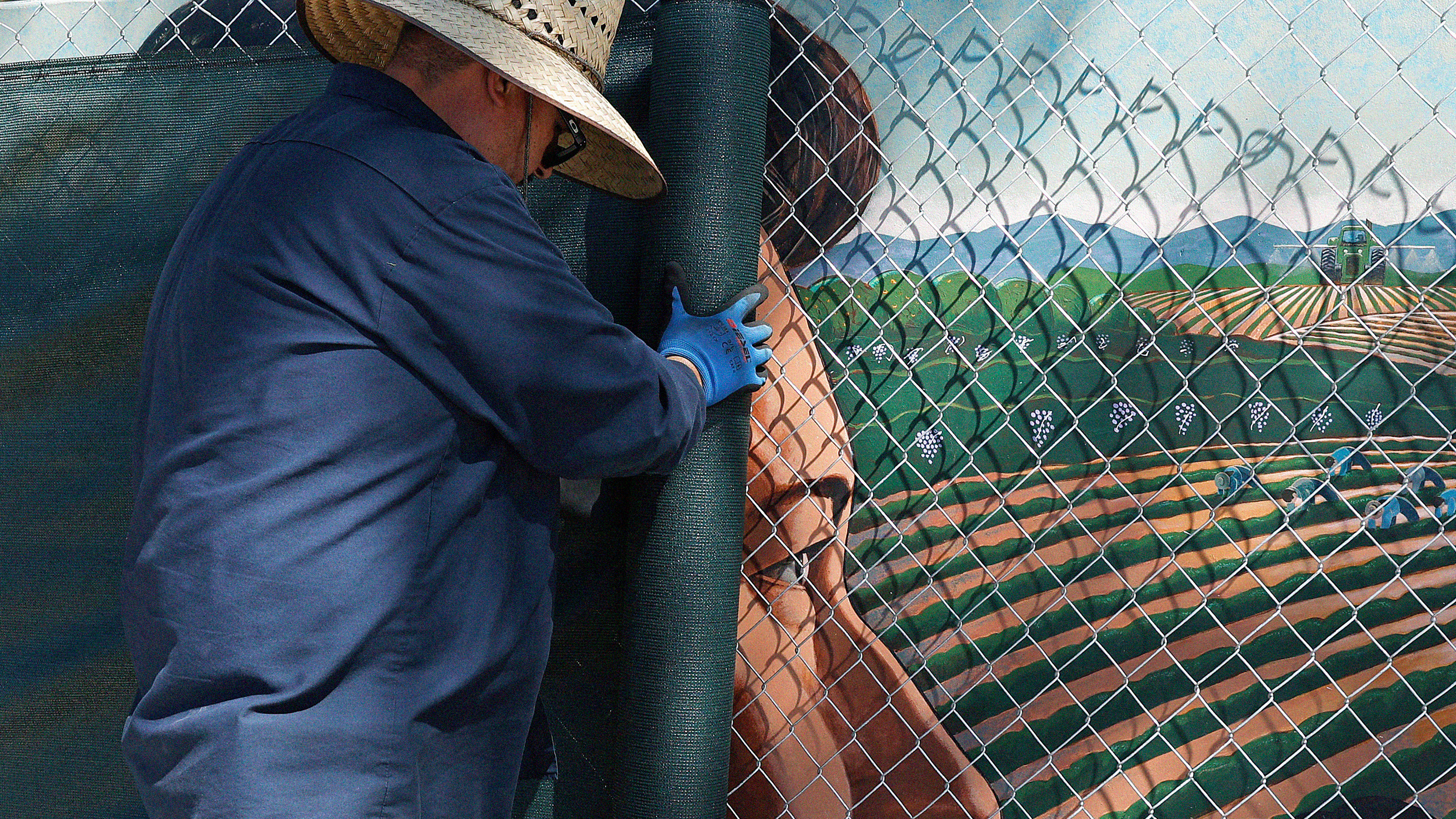
Almost every day, I drive along a street named after Cesar Chavez, past a mural of Cesar Chavez that shows the labor leader, who died in 1993, clutching the billowing flag of the United Farm Workers with one arm and a group of anonymous laborers with the other. For years, I’ve been struck by the work’s ardent theatricality: Chavez appears sturdy and powerful, whereas the figures look like they’ve fainted. In Los Angeles, where I live, Chavez is everywhere. Within a mile of that mural are two others. A multitude of municipal sites, both grandiose and mundane, bear his name. The transfer station downtown where I wait for the bus is named for Chavez. So is a city park in San Fernando, on the northern fringes of L.A., where a naturalistic bronze statue always looked as if it was about to break into a rally speech.
I now look on those tributes with horror and dismay.
More From The Atlantic
- Tom Nichols: Trump’s dark night on Truth Social
- The 10 things the Bezoses are almost certainly grateful for each morning
- The challenge the Artemis II crew gave the rest of us
- Elon Musk is banking on fanboys.
- The strange origin of AI’s “reasoning” abilities
- Trump ditched hearts and minds in the Iran war.
Culture Break

Read. What does Lena Dunham want to tell us? Her new memoir captures the cost of being an impossibly popular target, Sophie Gilbert writes.
Explore. Today’s obsession with personal improvement can be traced back to the seven deadly sins—which still offer a useful guide to life, James Parker reports.
Explore all of our newsletters here.
Rafaela Jinich contributed to this newsletter.
When you buy a book using a link in this newsletter, we receive a commission. Thank you for supporting The Atlantic.
The post Trump’s Blockade of the Blockaders appeared first on The Atlantic.