Gary M. Stern is a former general counsel for the National Archives and Records Administration.
I was the general counsel of the National Archives for 26 years. My main job, until I retired last year, was to implement and enforce the Presidential Records Act. The act requires that the president maintain records of his administration and, at the end of his term, turn them over to the National Archives. Since it went into effect in 1981, the law has ensured the preservation of presidential history — and safeguarded against corruption.
I was thus astounded when, on April 1, the Justice Department’s Office of Legal Counsel alleged in an opinion that the law is unconstitutional. I worked with the White House and Justice Department lawyers in the Bill Clinton, George W. Bush, Barack Obama, Donald Trump and Joe Biden administrations, as well as the records representatives of every former president back to Ronald Reagan. Not one of them ever suggested that the Presidential Records Act was unconstitutional or that presidents need not “comply with its dictates,” as the Office of Legal Counsel has now written.
Last week, two organizations — the American Historical Association and American Oversight, a government watchdog group — filed a lawsuit in Washington challenging the Office of Legal Counsel’s opinion. The groups aim to “preserve the historical record that belongs to the American people, before it is forever lost,” the suit states.
The overwhelmingly bipartisan support for the Presidential Records Act since it was enacted, in Congress and by presidents, makes the faulty reasoning and distorted history emanating from the Office of Legal Counsel all the more surprising. The office is wrong to conclude that Congress has no authority to pass a law to preserve the nation’s most important government records — those of each presidency — and the American Historical Association and American Oversight are right to jump to the act’s defense.
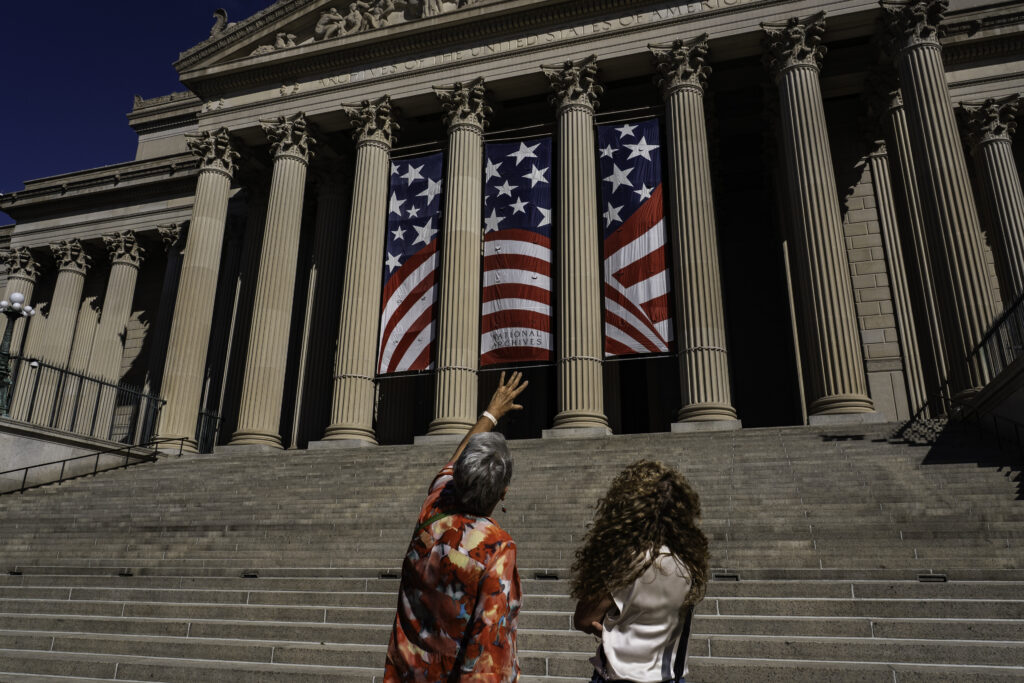
Admittedly, the nation was slow to recognize the value of maintaining a historical record: Congress did not create the National Archives until 1934. Before then, recordkeeping by presidents and agencies was haphazard at best. But once the National Archives came into being, presidential records became an integral component of the institution as the core holding of its presidential libraries.
For the National Archives’ first 40 years, presidents voluntarily donated all of their papers when they left office. However, after learning that President Richard M. Nixon wanted to destroy the Watergate tapes, Congress stepped in — to ensure that the Nixon White House tapes would be preserved and then, with the 1978 enactment of the Presidential Records Act, that no future president could undermine the historical record.
The Office of Legal Counsel incorrectly argues that the prior tradition of presidents treating their papers as their personal property precludes Congress from making “needful Rules and Regulations respecting the … Property belonging to the United States,” as Article IV of the Constitution states.
In fact, the Office of Legal Counsel’s opinion seems to ignore that Congress crafted the law so that it would not violate the separation of powers. The opinion misleadingly suggests that the records act has interfered with the long-established “accommodation process”: the interbranch negotiation that takes place when Congress requests information from a sitting president.
But the Presidential Records Act leaves that process — and so the powers’ separation — intact, since the statute gives Congress, the courts, subsequent presidents and, eventually, the public a right to access the records only of former presidents. Indeed, the American Historical Association and American Oversight argue that the Justice Department’s opinion is what contravenes the separation of powers.
The act doesn’t ask much of sitting presidents: just that they preserve the records created or received in the White House and then turn them over to the National Archives upon leaving office. The lawsuit seeks to ensure that the president upholds his responsibility.
Congress established the National Archives to be a nonpartisan agency composed of career archival professionals, myself included, who would impartially steward the permanent records of the government. While the archivist of the United States is a presidentially appointed official, the law requires that she or he be “appointed without regard to political affiliations and solely on the basis of the professional qualifications.” Moreover, unlike almost all political appointees, the archivist does not leave office at the end of an administration.
By giving President Trump the go-ahead to ignore this vital law, the Office of Legal Counsel has opened the door to uncertainty and potential chaos. The White House no longer sees itself as obligated to preserve all records, paper and electronic, and transfer them to the archives when the president leaves office. The National Archives may no longer be allowed to respond to special access requests from Congress, or Freedom of Information Act requests from the public, for the records of former presidents at presidential libraries.
Congress and the National Archives should insist that the Justice Department rescind this opinion and honor the Presidential Records Act. If not, then the American Historical Association and American Oversight’s lawsuit will give the courts a chance to halt the Justice Department’s assault on the nation’s history.
The post The Justice Department’s position on presidential papers is astounding appeared first on Washington Post.