A new confrontation between the Trump administration and the Federal Reserve may be taking shape over a simple question: Who runs the Federal Reserve after May 15?
That’s the date Jerome H. Powell’s term as Fed chair expires.
If Kevin Warsh, President Donald Trump’s nominee to replace him, hasn’t been confirmed by the Senate by then, Powell has said he plans to stay on as the acting chief of the Fed board.
“That is what the law calls for, that’s what we’ve done on several occasions — including involving me — and that’s what we’re going to do in this situation,” he told reporters last month. Powell’s term as one of seven Fed governors runs through early 2028, allowing him to remain on the Fed’s board of governors after his chairmanship ends.
A number of economists and Fed watchers aren’t so sure the White House will accept Powell continuing to serve as the acting Fed chief. They expect the administration to argue that the president, not the Fed, has the legal authority to elevate an acting chairman — a view that clashes directly with the Fed’s reading of the law.
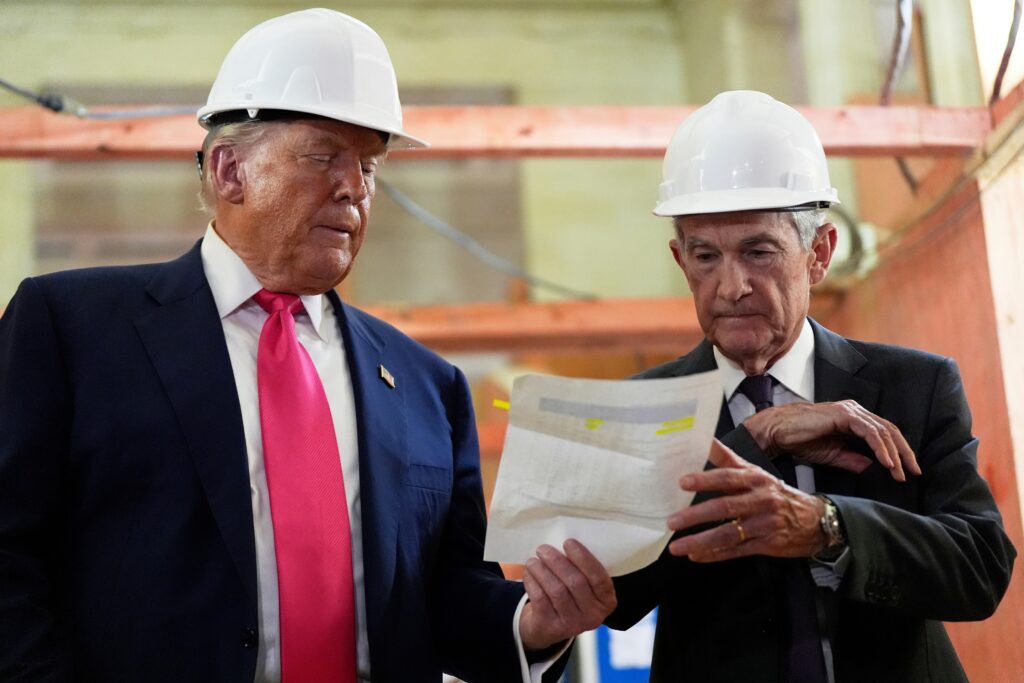
While any prolonged dispute over who runs the institution could add to market volatility at an already unsettled moment for the economy, it would be just the latest in the White House’s series of attacks on the Fed. Those broadsides include an effort to fire a sitting Fed governor, Lisa Cook, as well as a criminal probe into Powell related to testimony concerning a $2.5 billion office renovation. Cook and Powell deny wrongdoing.
A White House official declined to address the question directly, saying only that “we continue to have productive conversations with the Senate about Kevin Warsh, and we remain confident in his timely confirmation.”
That confidence is being tested. Warsh’s confirmation process has been complicated by the Justice Department’s criminal inquiry into Powell led by U.S. Attorney Jeanine Pirro.
Pirro reaffirmed to reporters last week that she has no intention of abandoning the probe and that she plans to appeal a judge’s decision to kill a pair of her subpoenas in the case. Chief U.S. District Judge James E. Boasberg ruled in March that the subpoenas were invalid, describing them as an illegal effort by the Trump administration to pressure Powell to lower interest rates or resign from the independent central bank.
North Carolina Sen. Thom Tillis, a key Republican, has said he will not consider any Fed nominees until the probe is resolved. The Senate Banking Committee has yet to schedule a hearing on Warsh.
If the confirmation delay pushes past May 15, Powell and Trump may tussle over who chairs the Fed board of governors.
The Fed’s position rests on longstanding internal practice: When a chairman’s term expires and a successor hasn’t been confirmed, the sitting chairman continues in that role. Powell invoked that framework explicitly last month when he said he intended to remain in the top Fed role.
But several Fed watchers say they expect the White House to push back, pointing to a pair of untested, decades-old legal opinions concluding that only the president — not the Fed — can select an acting chairman when a successor has been nominated but not yet confirmed by the Senate. They are anticipating Trump tries to temporarily elevate one of his preferred picks serving on the Fed board, such as economist Stephen Miran, who recently stepped down from his role as a top economic adviser at the White House. (Miran had been on unpaid leavesince joining the Fed last year.)
One opinion dates back to the Carter administration; it was effectively reaffirmed early in the Reagan administration by a then-Justice Department lawyer named John G. Roberts Jr., now chief justice of the Supreme Court.
“I would expect that would be part of the administration’s argument,” said Michael Green, chief market strategist and portfolio manager at Simplify Asset Management. While Green said he doubted the White House would prevail in a legal fight over the question, he reserved some skepticism for Powell, as well.
Green characterized Powell’s stated intention to stay on as at least partly political. “People are very happy to interpret Powell’s statements as a dedicated public servant charitably saying he would stay on for the good of the institution,” he said. “A more fulsome review suggests this is a political signal to opponents of Trump that there is no rush to confirm his successor.”
Mark Spindel, an investment manager who co-wrote a history of Fed independence, said he wouldn’t be surprised if the courts were eventually asked to resolve the dispute.
“Season 2 of the Trump administration is littered with these kinds of personnel-related lawsuits,” he said.
Even if Trump stakes and wins a claim to appoint an interim head of the Federal Reserve’s board, he is unlikely to get to control the committee that determines the central bank’s interest rate decision-making.
The Federal Open Market Committee — the committee of policymakers that actually sets interest rates — chooses its own chairman separately and appeared united behind Powell and willing to defend that position publicly and in court, said Julia Coronado, president of MacroPolicy Perspectives.
That distinction matters because the FOMC has already designated Powell as its chair for the year. Even if a dispute erupted over who chairs the Fed’s board of governors, Powell could continue to run monetary policy through the FOMC — limiting the practical impact of any White House challenge on interest rates, at least in the near term.
The post Who’s in charge at the Fed after May 15? A new fight may be brewing. appeared first on Washington Post.