Israel’s continued bombardment of Lebanon and widened ground invasion have left the cease-fire with Iran on shaky ground, and Israeli and Lebanese officials were expected to hold rare talks on Tuesday in Washington to try to find a way forward.
The meeting would be the first direct, in-person talks between Israel and Lebanon — which do not have diplomatic relations — in decades.
But the talks will be largely preparatory, according to a Lebanese official and another person briefed on them, who requested anonymity to discuss sensitive diplomacy. They are not expected to immediately produce a deal that would end the war between Hezbollah and Israel, and the two sides remain sharply opposed in their aims for the talks.
President Joseph Aoun of Lebanon told Italy’s foreign minister, Antonio Tajani, that Lebanon was hoping that a cease-fire would be reached, after which direct negotiations could begin, according to a statement shared by the Lebanese presidency on Monday. Mr. Aoun said that any long-term solution must entail Israel’s heeding the growing international calls for it to stop attacking Lebanon.
But Prime Minister Benjamin Netanyahu of Israel has ruled out a cease-fire and said that Israel would not stop its attacks on Lebanon. The aim of the discussions in Washington would be disarming Hezbollah, the Iran-backed militant group, and establishing a lasting peace deal with Lebanon, he has said.
Mr. Netanyahu agreed last week to engage in the talks as Iran warned that it could withdraw from the cease-fire unless Israel stopped attacking Lebanon.
The meeting will include Israel’s ambassador to the United States, Yechiel Leiter; his Lebanese counterpart, Nada Hamadeh Moawad; and the U.S. ambassador to Lebanon, Michel Issa.
Secretary of State Marco Rubio will also take part in the talks, according to the State Department.
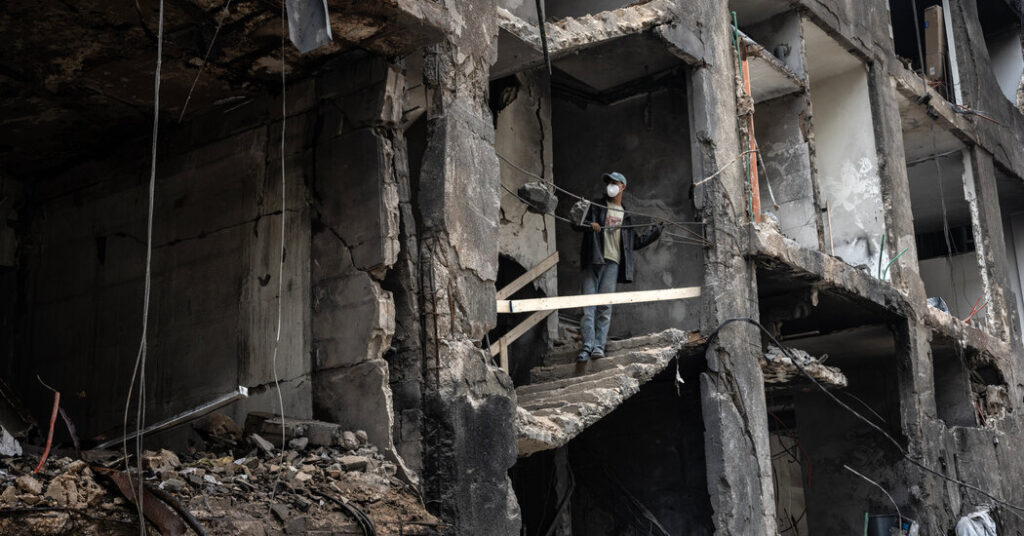
Lebanon is reeling from weeks of Israeli bombardment that has displaced more than one million residents and, according to the Lebanese health ministry, killed 2,089 people and injured 6,762 others as of Monday. The war between Hezbollah and Israel reignited last month after Hezbollah fired on Israel in solidarity with Iran.
Israeli attacks on Lebanon have become a flashpoint in the fragile cease-fire between Iran and the United States. Iran insists that Lebanon is covered by the agreement. Iran and the United States say it isn’t.
Israel sharply escalated its attacks in the hours after the cease-fire was reached last week, killing at least 357 people in Lebanon on Wednesday, according to the Lebanese authorities.
Hezbollah’s leader, Naim Qassem, said in a televised speech on Monday that Hezbollah categorically rejected Lebanon’s planned talks with Israel. He called on Lebanese authorities to cancel the talks, urging them not to become “a tool of Israel.”
Proceeding with the talks would represent “capitulation and surrender” to a country intent on occupying Lebanon, Mr. Qassem said.
Hwaida Saad contributed reporting.
Anushka Patil is a Times reporter covering breaking and developing news around the world.
The post In Rare Talks, Israeli and Lebanese Officials Look for Way Forward appeared first on New York Times.