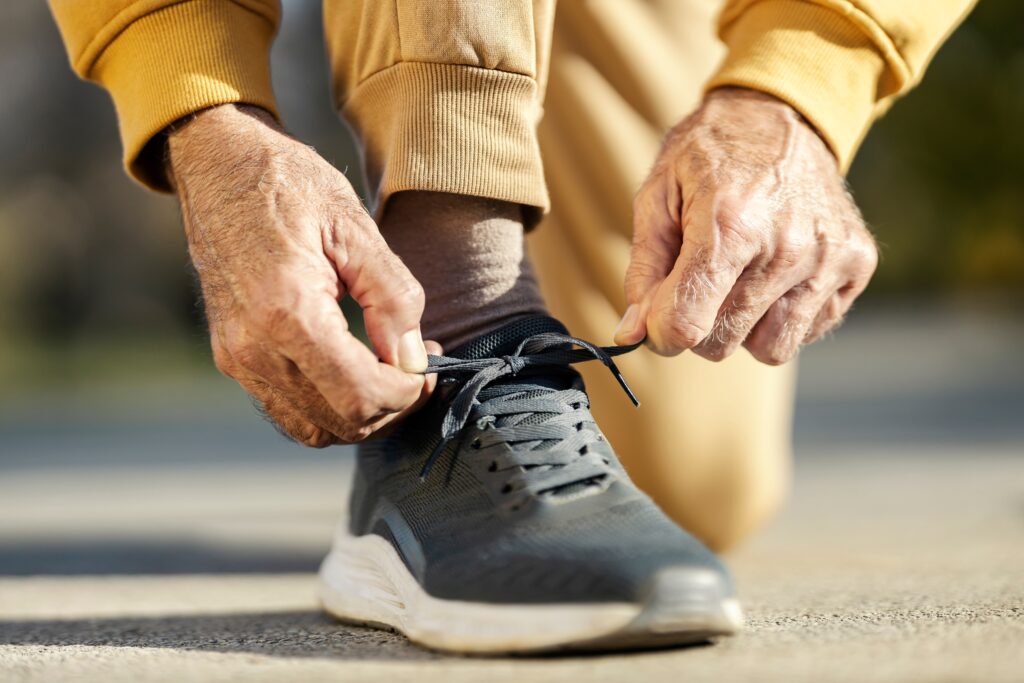
Decades of standing and walking reshape your feet in ways you may not expect. As you get older, changes to bone structure, muscle tone and even nail health are common.
This can cause pain and discomfort. But there are steps you can take to help prevent and treat problems.
We asked experts about some of the most common age-related foot changes and what you can do about them, including how to pick better shoes. Here’s what they said.
Dry skin and cracked heels
As you get older, it’s normal for your skin to lose moisture and your heels to crack.
Thinner, drier skin and years of pressure on your feet can cause rough and scaly skin, often with cracks, called fissures, on the heels. Urea, an ingredient in many over-the-counter moisturizers, has been shown in studies to improve hydration and exfoliate the skin. Creams and lotions with salicylic or alpha hydroxy acids can help, too, said Shari Lipner, a professor of clinical dermatology and director of the Nail Division at the New York-Presbyterian Hospital and Weill Cornell Medical Center.
Dermatologists recommend applying the cream or lotion daily, preferably after a shower to help lock in moisture. Wearing socks can also help keep the product from rubbing off.
Thicker, weaker nails
Thickened, discolored and brittle or crumbly toenails are also more common with age. Toenail changes are most often caused by fungus. Fungal infections can happen at any age, but the risk goes up as you get older because of reduced blood flow in the feet; skin and nail damage; and slowed nail growth, Lipner said.
Years of accumulated trauma to the nails — from friction and pressure caused by shoes, sports and other daily activities — can also cause these changes, she said.
You should consult a physician for a proper diagnosis and treatment plan. Fungal infections may require oral or topical antifungal medications. But other causes of toenail thickening and discoloration may be helped by using moisturizers such as urea, as well as carefully filing them at home in mild cases or, in more severe cases, having a podiatrist sand them down.
Calluses and corns
The protective cushioning, or fat pads, on the balls and heels of your feet wears away over time, leaving your feet susceptible to pressure points and friction, said Elizabeth Reilly, a podiatrist and assistant professor at Stanford University. This can be compounded by arthritis and other age-related conditions.
This increased friction and pressure can be painful. It can also cause the skin to toughen up, forming calluses and corns. Calluses are hard, thick, sometimes large patches of skin, while corns are small, round, often painful bumps that can appear even on the tops of toes.
Again, urea can help soften and exfoliate that tough skin at higher concentrations (20 to 40 percent). Also, there are over-the-counter cushioned patches for calluses and corns that contain salicylic acid. Then, a pumice stone once a week can help slough off the shedding dead skin.
Decreasing the pressure on the foot will ultimately decrease calluses and corns, Reilly said. She recommends lamb’s wool to provide cushion — wrapping a small amount around a corn on the toe, for instance, to keep it from rubbing on the inside of your shoe.
Additionally, insoles can also provide extra cushioning, and arch supports can add stability. Custom orthotics, medical devices molded to your feet that fit inside your shoes, can provide specific support that you may need and relieve symptoms.
Bunions and hammertoes
As you get older, you lose muscle, your joints stiffen and your ligaments loosen. Years of squeezing your feet into shoes with a narrow toe box can seal the deal when it comes to issues such as bunions and hammertoes.
Bunions can be painful. The bony bumps form on the outside of the big toe, pushing it inward toward the smaller toes. You can reduce your risk of getting one or making a preexisting one worse by choosing shoes with a wide toe box, said Priya Parthasarathy, a podiatrist and spokeswoman for the American Podiatric Medical Association in D.C.
Orthotics or bunion pads, which are protective cushions or sleeves that you wear over a bunion, can provide relief, too, she said.
Another bone structure problem, hammertoes make the toes — most often the second toe — curl. With a flexible hammertoe, you can still move the toe, but sometimes the toe becomes completely fixed in this position. This is known as a rigid hammertoe, which can be painful and is more likely to require surgery to correct.
That’s why the earlier you address the pressure and muscle imbalances with good shoes and supportive inserts, the better, Parthasarathy said.
Parthasarathy said hammertoes can worsen as you age, particularly when you wear shoes that don’t accommodate the width of your foot.
Bunions and hammertoes often can be managed with proper footwear, shoe inserts and over-the-counter cushions and pads designed to protect and support your toes. If at-home treatments don’t relieve your symptoms, a podiatrist may recommend surgery.
How to shop for shoes that are good for your feet
Wearing proper-fitting shoes can prevent foot issues, or stop them from getting worse. When shopping for shoes, Parthasarathy said, keep four things in mind:
- The shoe should have a supportive midsole. To check this, make sure you can’t fold the shoe in half like a sandwich.
- The shoe should have adequate cushioning to help with fat loss in your feet — with the caveat that too much cushion may cause you to lose balance, especially as you age.
- The shoe should have a stable heel counter, the firm piece of the back of the shoe that wraps around your heel. You should be able to squeeze it without it collapsing.
- The shoe should have a wide toe box that lets you wiggle your toes inside.
Parthasarathy suggested shopping for new shoes near the end of the day when your feet are the most swollen. And when trying them on, they should be immediately comfortable; there shouldn’t be a breaking-in period, she said.
Older adults with underlying health issues that can affect the feet, such as diabetes, peripheral neuropathy, peripheral arterial disease, should be assessed by a podiatrist annually to help prevent more serious foot problems.
“Our feet carry us through life and, eventually, they start to show signs of wear and tear,” Parthasarathy said. “While some changes are a natural part of aging, foot pain shouldn’t be. Taking care of our feet as we age is essential to staying active, maintaining our independence and continuing to do the things we love.”
The post How your feet change as you age — and what you can do about it appeared first on Washington Post.