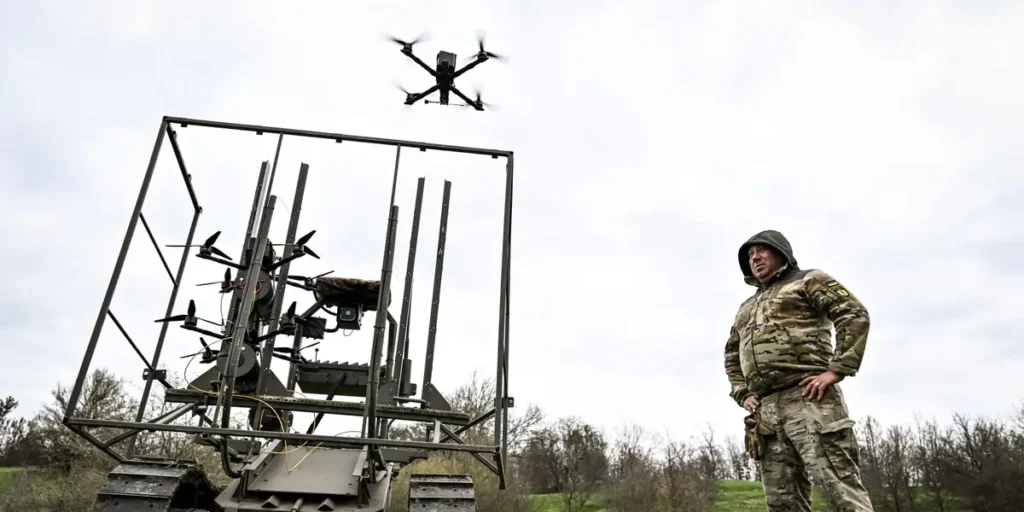
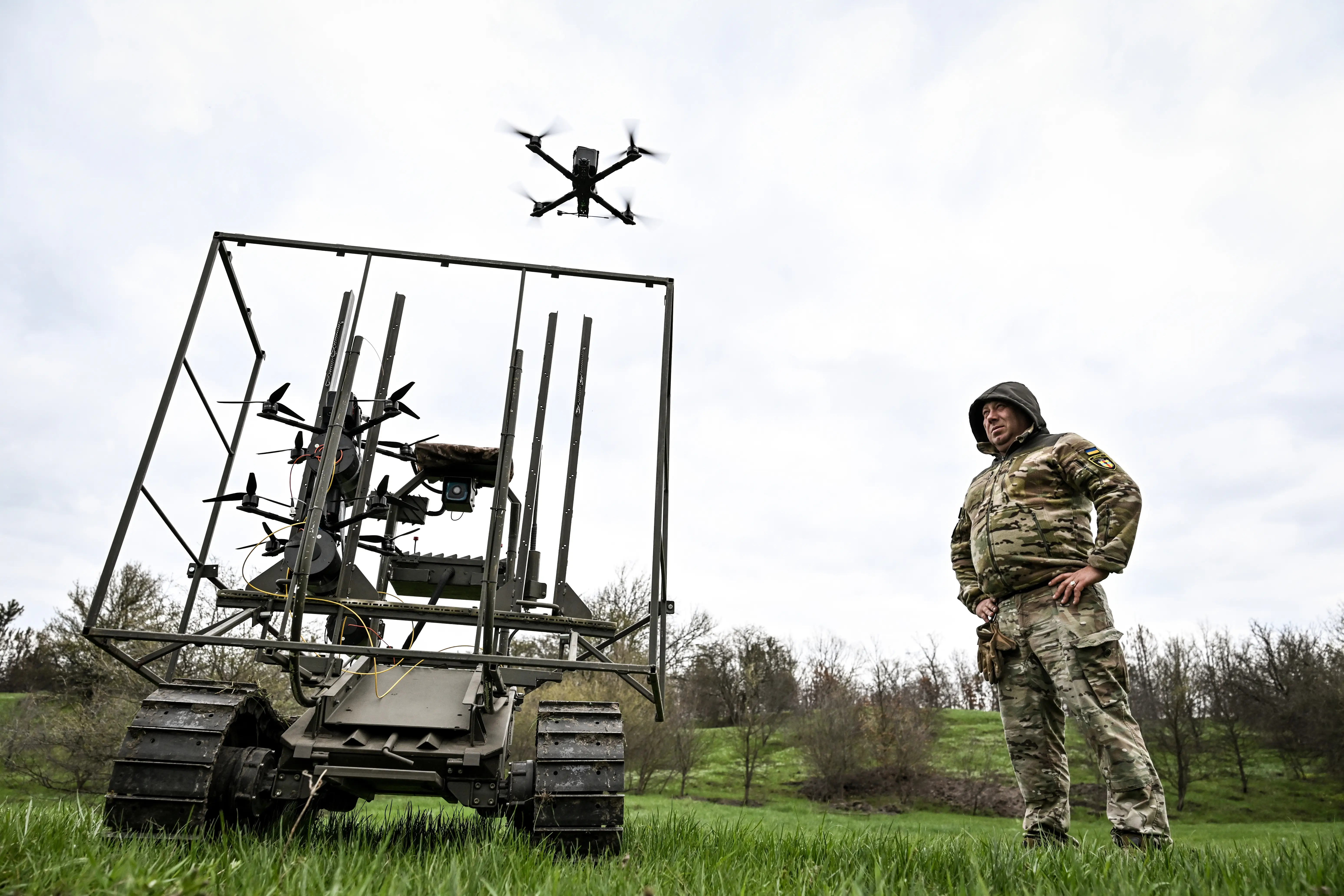
The Ukrainian armed forces are using the growing arsenal of drones and robots in battlefield relay chains with soldiers and crewed vehicles, passing supplies and wounded troops from one to another.
Oleksandr Yabchanka, the head of robotic systems for Ukraine’s Da Vinci Wolves Battalion, told Business Insider that over the past year, units have increasingly adopted what he called a “multi-stage logistics and evacuation system” using uncrewed systems.
Instead of relying on one vehicle or drone to complete a mission, he said that “different means may be employed at various stages, for instance, a ground-based robotic system followed by an aerial drone.”
Ukrainian units have described some of these platform-to-platform handoffs.
For instance, the 91st Separate Anti-Tank Battalion said this month that a robot delivered ammunition to troops who then put it on heavy attack drones for attacks on Russian targets.
Another more complex example came from the 93rd Separate Mechanized Brigade in October.
To get food and water to front-line troops, robots delivered the supplies to Vampire drone operators, who then divided everything up into smaller packages, loaded them onto the heavy drones, and flew them to another location. There, operators split up the supplies further and delivered them the last few hundred meters using smaller drones that are harder for the enemy to spot.
Though missions have gotten more complicated, every part of these efforts is intended to decrease the risk to human soldiers by preventing a large supply vehicle or medical evacuation team from becoming a target.
For casualty evacuations, these relay chains might look a little different from the supply runs. Ground robots are increasingly used to evacuate injured troops from dangerous positions that medical crews can’t access, but those robots often have limited ranges, Yabchanka said, and “cannot reach every location along the front line.”
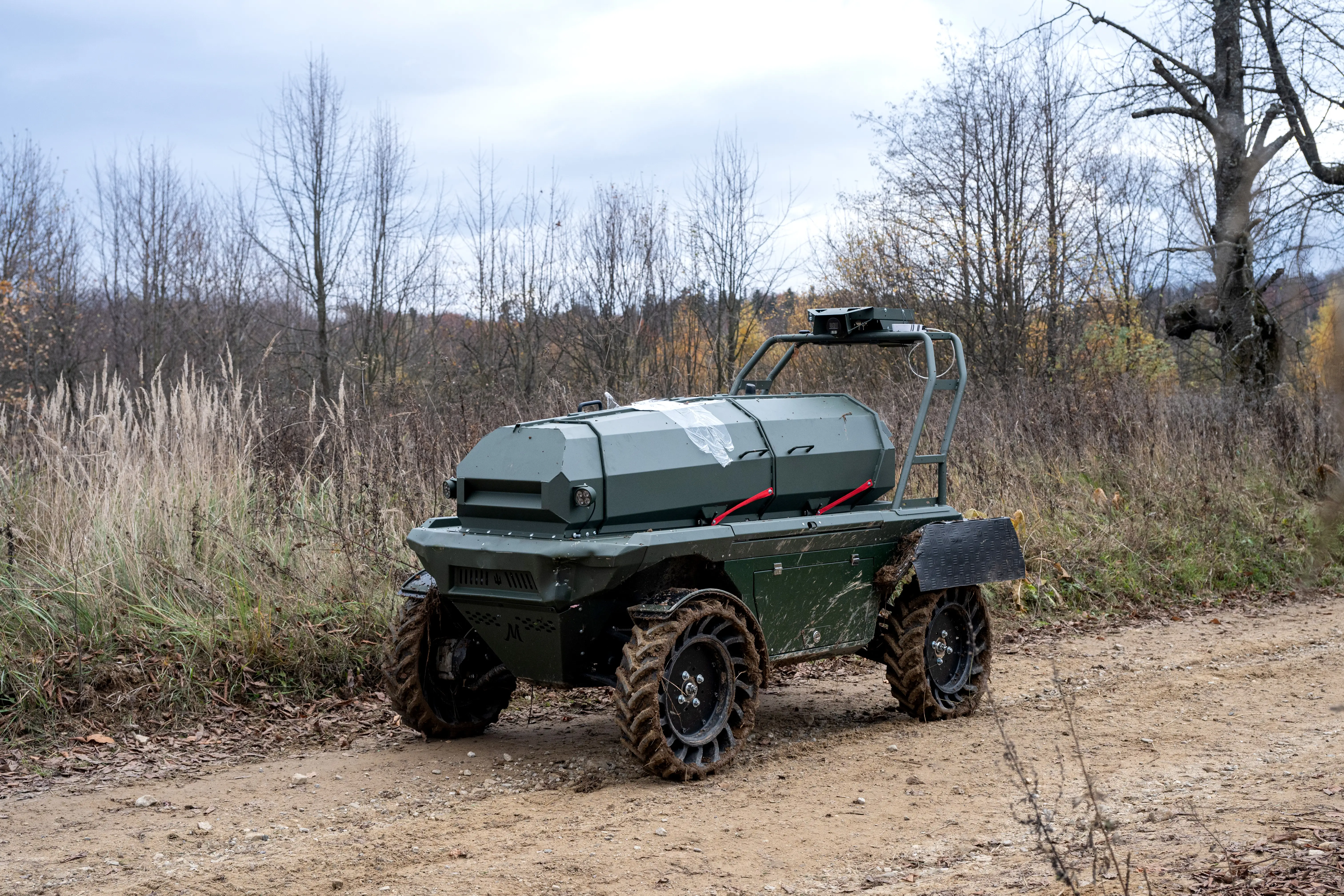
Instead, troops may need to first carry a wounded soldier to a spot the robot can reach, or, if the soldier is ambulatory, the soldier may make their own way there.
“From there, the wounded individual is placed onto a ground-based robotic system and transported to a point where an armored vehicle can take over,” Yabchanka said.
The chains can involve a mix of different technologies used by Ukraine, sometimes without any humans in the field. Naval drones have carried ground drones that have gone on to attack Russian targets, and aerial drones have dropped ground drones behind Russian lines.
Ground robots and aerial drones are increasingly supporting each other on missions, gathering intelligence and protecting one another from Russian attacks.
But what Yabchanka described is different. The relays are a tactic where different systems are used in a sequence and take over parts of the missions for each other, in some cases helping to keep operators farther from the line of contact.
“For instance, if an operator previously worked five kilometers away, we aim to enable them to work from ten kilometers away,” he said, describing that as a rough example. “The goal is to reduce the risk to personnel.”
Ukraine is relying more and more on robotic and uncrewed systems to complete battlefield tasks previously done by human soldiers, from assaults to logistics to casualty evacuations. These systems are attritable and can operate in the most dangerous areas of the front, places from which a human being is far less likely to return.
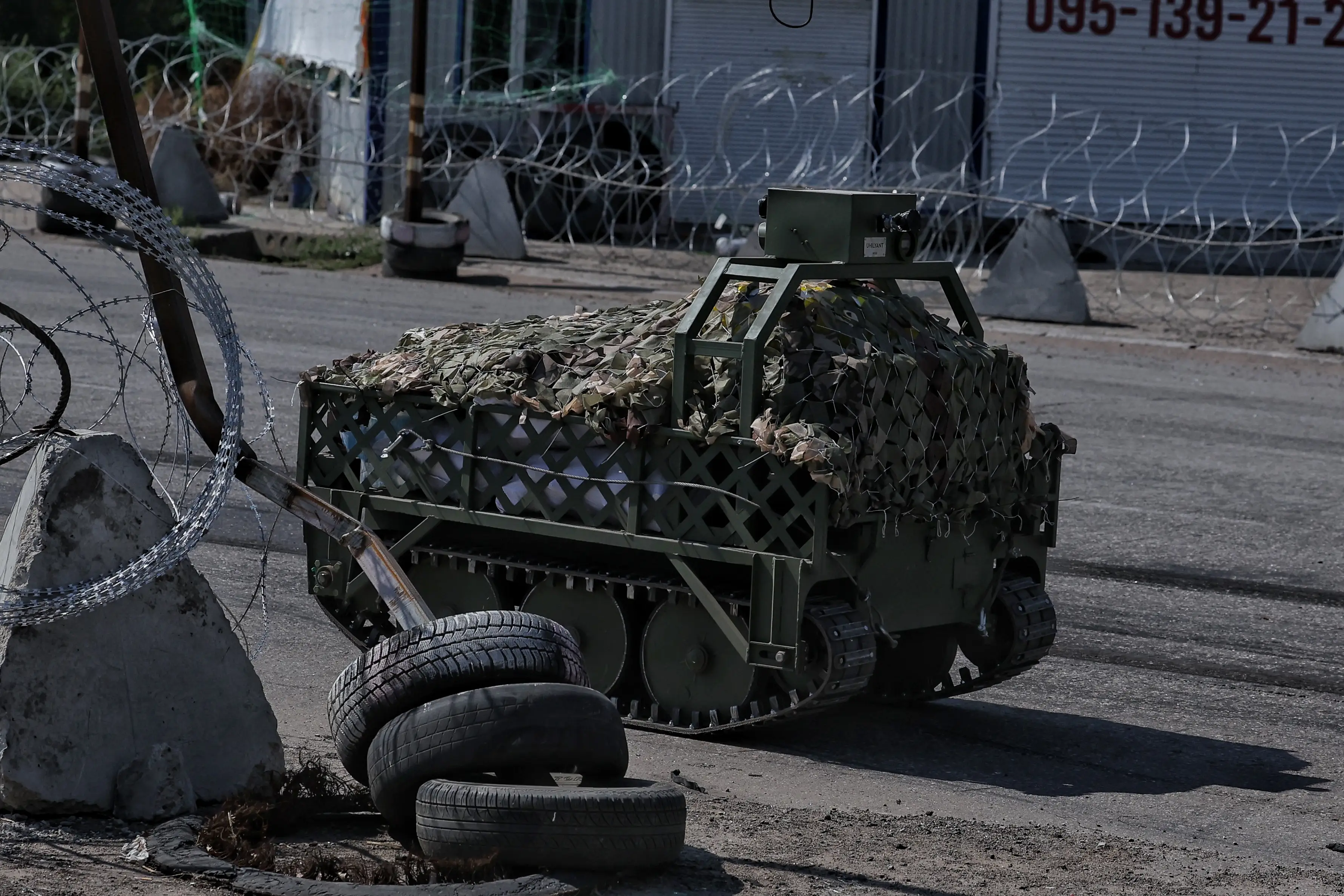
“Our philosophy is, above all, to preserve our personnel,” Yabchanka explained.
“We strive to position our fighters as far as possible from the line of contact and the areas of highest risk—the so-called “kill zone,” he added. That zone is the most dangerous part of the front lines, where movement can easily draw a drone’s attention.
The use of uncrewed systems doesn’t eliminate the need for soldiers on the front lines, but it does help to reduce the demand for personnel in these areas.
Making these relays work requires different systems operating across varying distances and conditions, with troops sometimes needed to transfer supplies or wounded soldiers between platforms.
Yabchanka said that Ukrainian units and manufacturers are continually upgrading their systems, including communications equipment and batteries, as they adapt to the changing battlefield conditions.
“We are constantly adapting our tactics” with robots to reflect battlefield changes, Yabchanka said.
“In my observation, conditions shift noticeably about every six months. For instance, the adversary may introduce new attack drones, or their existing drones may gain greater range and power. Consequently, the way we employ our ground-based systems changes as well.”
Read the original article on Business Insider
The post Ukraine is using robots, drones, and soldiers in battlefield relay chains to carry out complex missions appeared first on Business Insider.