

It seems clear that the people working on building tools and devices for AI believe that voice — not typing — is the future. Me, I’m not so sure. Are we really looking at a future where everyone is walking around talking into some wearable device?
My family hates when I use voice for AI. If I talk into my phone in front of them, they (including the small children) look at me with a glare of judgement. If they overhear me in another room, I get bombarded with “huh?” and “are you talking to me?”
In the office, I feel confident that talking to AI on my phone or computer while sitting in our open office plan would not make me very popular among colleagues.
And talking to AI in public places — walking down the street, in a store or the gym, on the train — is the kind thing that feels so socially aberrant I couldn’t even bring myself to try and do it for the sake of this article, and I’m willing to do pretty humiliating things for the sake of content.
Am I out of step with where we’re headed? Is this going to be like how back in 2007, I didn’t think I’d need an iPhone (boy, was I wrong on that one).
I wanted to understand better from the people who are working on voice AI products just what I’m missing. Who is using these without feeling weird?
Younger people and older people are voice adopters

Tanay Kothari, founder and CEO of Wispr, a popular voice AI tool told me that I might just be the wrong demographic.
“There are three groups of people that inherently are very drawn towards voice AI,” said Kothari. “The first one is the tech-savvy folks, and they generally adopt new technology quickly, of course. The second is kids. Everybody who is under the age of, say, 14, they actually are a good group of Wispr users.”
The final group, Kothari said, is older adults who perhaps never got comfortable at typing on a phone and are happy to use voice instead. This makes sense to me, since in my experience, older people are the most enthusiastic users of Siri on their phones.
People who work in tech — engineers and coders who are now using AI very closely for their work — have been quick adopters to Wispr Flow, using gooseneck microphones to speak to their AI agents on their computer. (The microphone allows them to whisper more softly, so as not to disturb others around them in the office. It’s less embarrassing if everyone is doing it, apparently.)
I tested out Wispr on my computer a few months ago, and it didn’t go so well. I didn’t have a microphone, was just using my laptop, and kept accidentally turning it on. At one point, it transcribed the entire dialogue of a clip I saw on social media for trailer for the “Summer House” reunion show, and entered the full text into my work Slack chat (oops!). Another time, it overheard and transcribed a conversation I had in another room with my husband, and entered that into our website CMS (oops oops!).
These were 100% user error on my part, and not necessarily what most competent people would experience — but the risk of accidentally transcribing and sending something truly life-ruining was high enough that I uninstalled it.
Saying ‘Hey, Meta’ in public is painful
The embarrassment factor is real.
In a conference paper from the 2017 International Conference on Human-Computer Interaction with Mobile Devices and Services, researchers looked into attitudes about using voice assistants like Siri in public. One of their respondents said, “Why I don’t use it? Because I’m Irish, I think, I’m not going to be sitting on a bus saying ya know… I feel I would just be conscious about that.”
I’m not sure if feeling embarrassed talking to Siri on the bus is particularly an Irish trait, but if so, well, I relate.
I have been testing out the audio-only Meta Ray-Ban glasses, and I’ve started to really enjoy them for listening to music or podcasts instead of my regular AirPods when I go out for a walk outside. I’ve been dabbling with the “Hey Meta” AI (Muse isn’t ready yet; I’ll let you know when it is) to ask it questions or start playing music. But it is something I’m keenly aware of looking like a raving lunatic talking to myself while walking down the street, and something I try to only do if there’s no one else around.
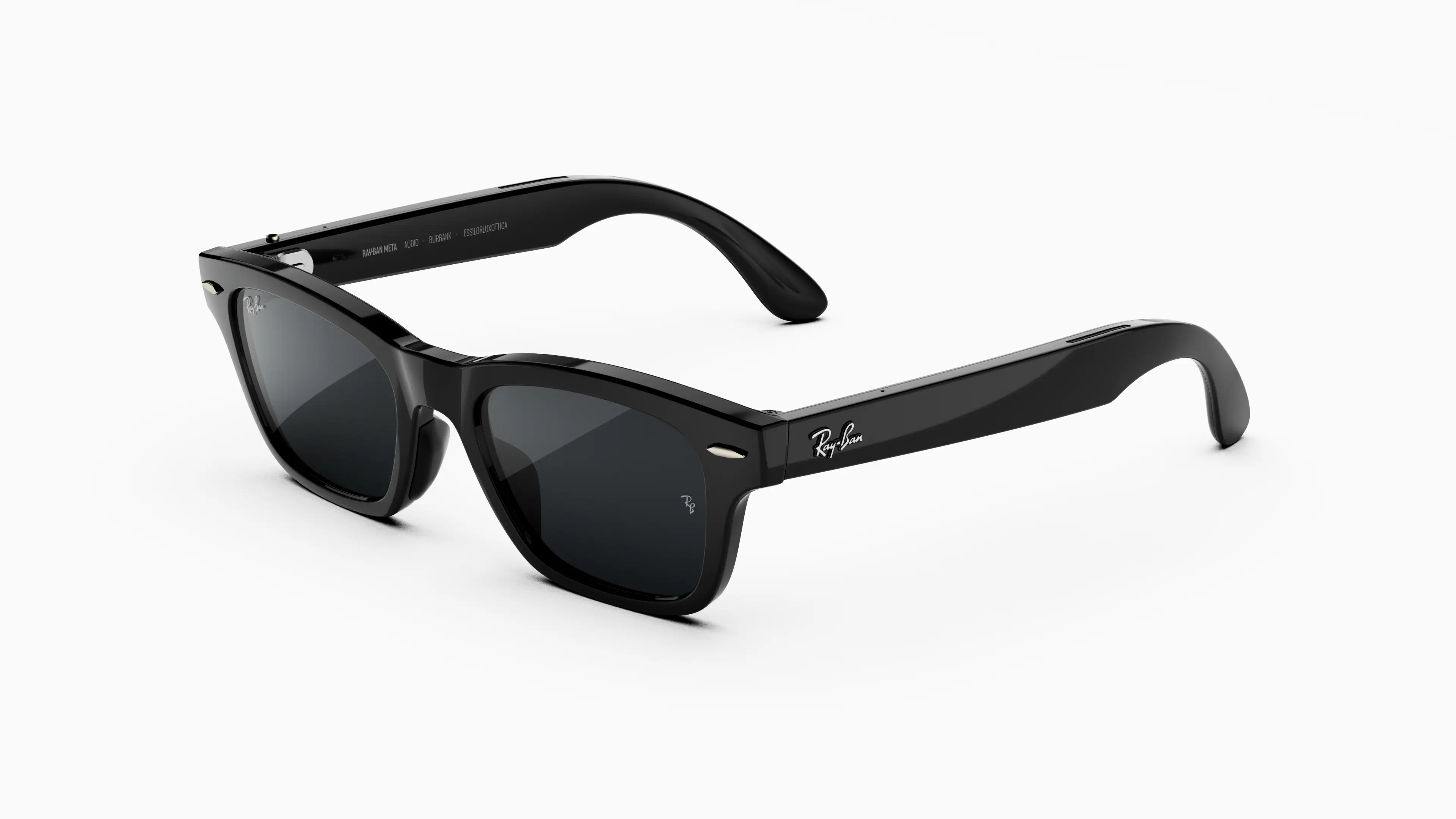
Mark Zuckerberg, a man whose ability to feel embarrassment in public is somewhat unclear to me, doesn’t seem to think that the stigma of talking to your glasses will last. “I think in the future, if you don’t have glasses that have AI — or some way to interact with AI — I think you’re … probably [going to] be at a pretty significant cognitive disadvantage compared to other people,” he said in an 2025 earnings call.
“One of the core things that is going to happen, and I think is a net positive for society, is you’re going to move from display-first devices, like a phone, to voice-first devices,” Kothari said. “Imagine one day, you go downstairs, and you don’t see everybody doing this [stares down] on their phones anymore. This boils my blood when I see it. But instead, they’re looking up. There may be something that they’re talking to, but for the most part, tech fades into the background, so you as a person can be a lot more present.”
Mina Fahmi is the founder of Sandbar, the startup behind the Stream ring, a tiny microphone ring you can talk or whisper into that’s connected to a chatbot. Fahmi, who previously worked at Meta, believes that voice is the most natural way humans will interact with devices once AGI hits.
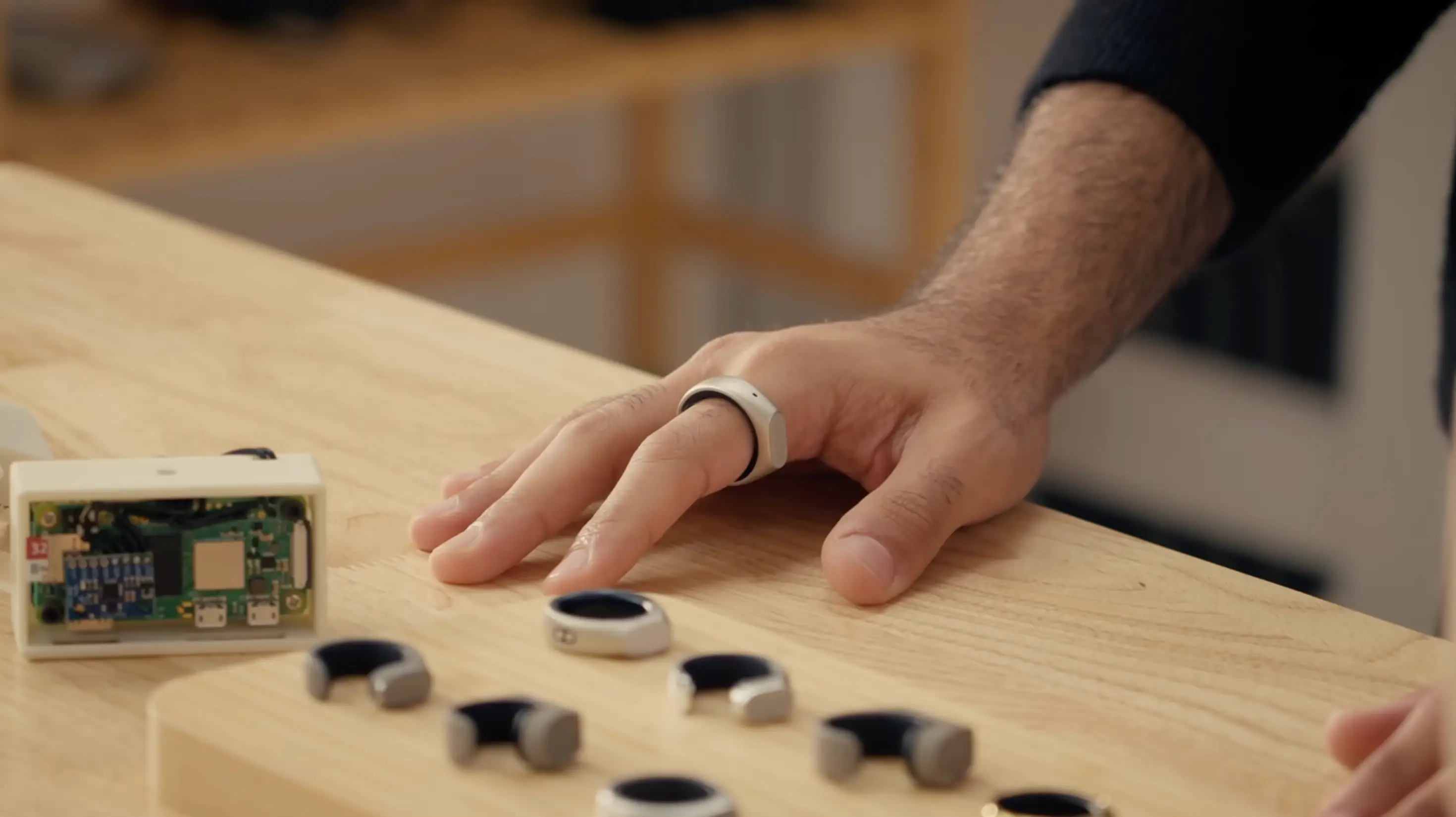
“When we look at who is using voice the most, it’s not cutting-edge technologists,” Fahmi told me when I met at his office recently. “It’s often people in countries that have most recently adopted digital technology, for example, because voice is a way more intuitive entry point to digital technology than typing. That, I think, is a more clear sign to me that we’re basically tapping into natural human ergonomics with a natural human expression that I think is a lot more familiar to people than whatever contortionist act we perform at a desk every day.”
Ultimately, Fahmi is trying (like the rest of us, I suppose) to predict what humans are going to do or need once AGI hits.
“I know people are going to continue thinking, and continue taking walks, and continue having things they’re trying to create and trying to remember for their personal life,” he said. For all that, he thinks people will need a wearable to talk to.
Even Sam Altman, who definitely believes that voice is the future for using AI, has moments of embarrassment doing it in front of others. In a July CNBC interview, he said, “Voice is increasingly how I interact with A.I., and I didn’t think that was going to be the case. I’ve always been like a typer or a texter. But the voice model is now so good that I’d kind of rather talk to it as long as I’m, you know, not in a room with other people.”
Sam, I hear you loud and clear.
Read the original article on Business Insider
The post So, are we all just supposed to walk around talking to AI now? appeared first on Business Insider.