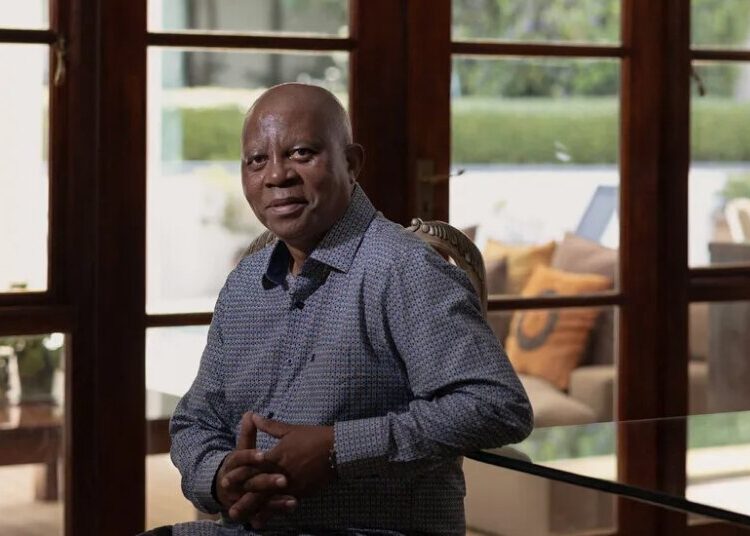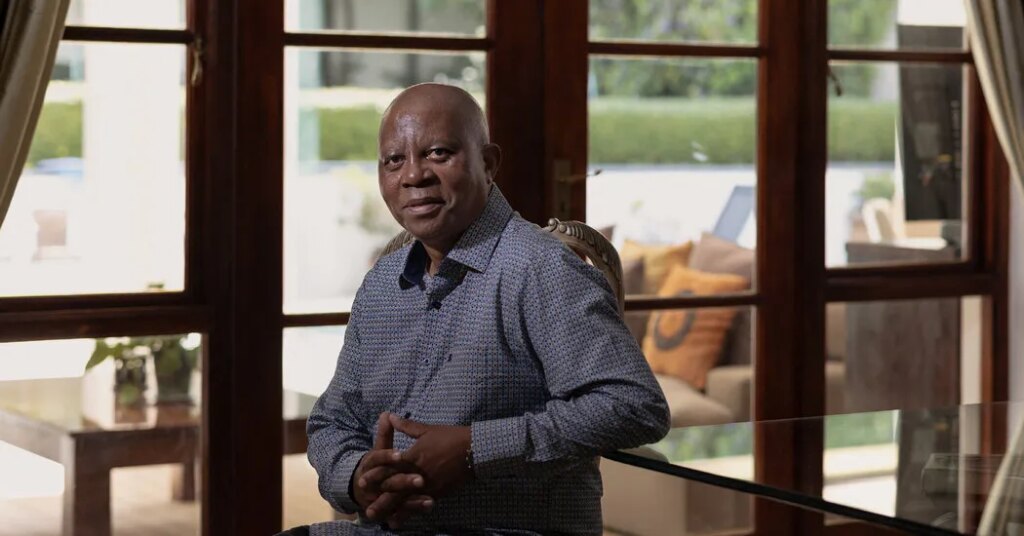
After weeks of tense political negotiations, Herman Mashaba was selected as the next mayor of Johannesburg on Friday, winning support from the majority of the city’s 270 lawmakers.
Mr. Mashaba was mayor of the city from 2016 to 2019. His return to power was made possible by a new coalition of rival parties that snubbed Helen Zille, the candidate whose party won the most votes and who garnered a lot of attention for her colorful social media posts during the campaign.
Ms. Zille is known for making controversial statements about race over the years, but asked voters to focus on her track record instead of whether they liked her.
Ultimately, the city’s lawmakers appeared not to do that.
The new mayor’s victory reflects South Africa’s increasingly fractured political landscape. Mr. Mashaba will lead the country’s economic capital as the nation faces serious fiscal and political headwinds, and a quality-of-life crisis. South Africa has one of the highest murder rates in the world, has been a regular punching bag for President Trump and is in the midst of a violent anti-immigration crisis while the government struggles to deliver basic services.
Mr. Mashaba returns to power as residents in Johannesburg desperately seek relief from water cuts, power outages and crumbling housing. He had claimed the moniker “Mr. Fix It” during his first stint as mayor, but ended his tenure with a mixed record.
Now he is tasked with managing a sprawling new coalition in an arrangement that some analysts worry could produce immense political instability in the city. At one point, Johannesburg cycled through six mayors in 22 months because the city’s multiparty government was unable to maintain a stable coalition.
Mr. Mashaba’s party has called for mass deportations and a crackdown on illegal immigration. One of his coalition partners, the Economic Freedom Fighters, supports the rights of immigrants, particularly those from other African nations.
Many of the city’s roughly 5 million residents have said that political bickering among rival parties that form coalitions has often shifted the focus away from providing essential services, such as timely trash collection.
“What South Africans at large have been asking for and what they want is to be governed,” said Mmabatho Mongae, a researcher at Democracy Works Foundation in Johannesburg. “Political parties appear to be prioritizing party preservation over the needs of citizens.”
Mr. Mashaba’s return to power was a bitter pill for his former ally turned nemesis, Ms. Zille, an outsized political veteran whose campaign became the talk of the town.
In South Africa’s proportional representation system, voters select a party and that determines how many seats each party will get in the City Council. Council members then choose the mayor.
Ms. Zille’s party, the Democratic Alliance, won the most seats in Johannesburg because it won the largest share of the vote, at 35 percent. But without an outright majority, the party needed to form a coalition government.
Mr. Mashaba, who belonged to the Democratic Alliance when he was mayor previously, refused to work with Ms. Zille, accusing her of racism and failing to sufficiently support him during his first term. Ms. Zille, who has said that there were benefits to colonialism, has denied those allegations.
Instead of collaborating with her again, Mr. Mashaba turned to his longtime rival, the African National Congress, or A.N.C., the party that spearheaded South Africa’s liberation from apartheid.
The A.N.C.’s support has been cratering nationally for a decade. In Johannesburg, it won just 20 percent of the vote this year, a 13 percentage point decrease from the previous election. It, too, shunned Ms. Zille and backed Mr. Mashaba, who launched his own party, ActionSA, several years ago.
“He’s only motivated by personal vendettas,” Ms. Zille said of Mr. Mashaba on Friday in an interview with a South African television news station. “The next five years will be very fractious for residents. I’m sorry about that.”
During Mr. Mashaba’s previous term as mayor, Johannesburg made strides in infrastructure spending, health care access and public housing.
He increased the size of the police force and private companies invested more in the city. His government directly hired cleaners and security guards for city-owned facilities, rather than going through a contractor, a decision workers praised for increasing the pay and benefits for thousands.
But he failed to improve the city’s overall fiscal health. His decision to hire workers directly meant spending well over the city’s budget. The national auditor found that irregular expenditures had nearly doubled during Mr. Mashaba’s tenure.
Mr. Mashaba’s flagship program to clean up the city’s dilapidated, illegally occupied buildings made little progress. And city services, like trash collection and a stable water supply, deteriorated while he was in office.
In a post on X after his election Friday, Mr. Mashaba vowed to improve the city.
“Now, it’s time to roll up our sleeves and hit the ground running,” he wrote. “The hard work of delivering for the residents of Johannesburg begins immediately!”
Zimasa Matiwane contributed reporting from Johannesburg.
The post Johannesburg Lawmakers Snub Top Vote-Getter in Mayoral Election appeared first on New York Times.