When the House Jan. 6 committee in 2022 encountered roadblocks from Donald J. Trump’s inner circle, investigators sought answers from his outer circle, sending interview and records requests to businesses and individuals outside government.
Many complied, including telecommunications companies, social media sites and government contractors, turning over documents and phone records that helped supply material for televised hearings that painted a damning portrait of Mr. Trump’s role in the mob attack on the Capitol.
The Trump administration is hoping to cancel a sequel before it can be made.
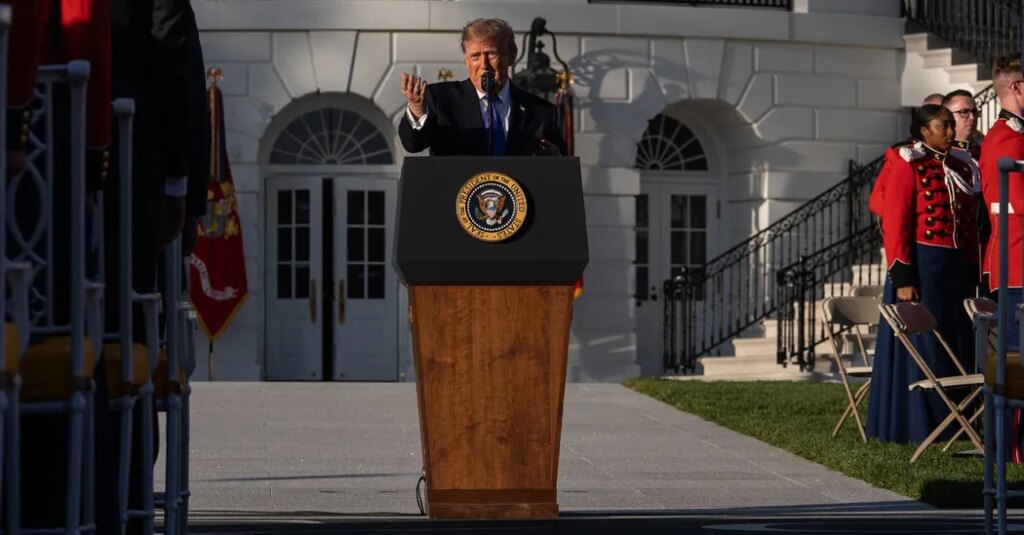
Faced with incoming Democratic majorities gearing up for an array of investigations, the White House plans to vigorously fight any congressional oversight it views as illegitimate. And Mr. Trump has warned contractors in an executive order that they must seek permission from the White House before complying with a congressional oversight demand or risk being fired.
Businesses and other outsiders will soon find themselves stuck in the middle.
On one side, Congress has a constitutional duty to conduct oversight of the administration and can vote to hold in contempt those who refuse to comply with its subpoenas. Such a vote can result in jail time, as two Trump allies, Stephen K. Bannon and Peter Navarro, experienced after refusing to testify in the Jan. 6 committee investigation.
A vote to hold someone in contempt is referred for prosecution to the Justice Department, which is controlled by Mr. Trump and would be unlikely to follow through. Still, a contempt of Congress finding carries significant reputational damage, and the statute of limitations for the offense is five years, well past Mr. Trump’s term. Congress also has the constitutional power of the purse and could punish recalcitrant contractors financially.
On the other side is Mr. Trump. Famously vengeful, the president has made no secret of his plans to go after those who cross him. His second term has been defined, in some ways, by his revenge tour and his administration’s investigations, funding cuts and executive orders against a variety of institutions, including law firms and universities.
“I feel bad for contractors,” said Jim Secreto, the former chief investigative counsel to Senator Chuck Schumer, Democrat of New York. “They’re going to get squeezed by both sides of Pennsylvania Avenue, and it’s not going to be a pleasant experience.”
Mr. Secreto, who worked in the White House Counsel’s Office under President Barack Obama, said presidents had used a number of strategies to stonewall congressional investigations. Often, in response, Congress will try to find a different way to get the information.
“Congress can just keep going and going until it finds a willing party,” Mr. Secreto said. “OK, the agency won’t provide information, go to the private sector. The contractor won’t provide it, go to the contractor’s bank. Then go to the contractor’s I.T. provider. Eventually you’ll get to someone that says: ‘Look, I don’t want to get crosswise with Congress. I’m just going to give them the information.’”
Poised to take control of both chambers of Congress in January, Democrats believe they have a mandate to thoroughly investigate the Trump administration after their lopsided wins in midterm elections in which polls showed government corruption was a top voter concern.
Democrats plan to cast a wide net. If there are potentially corrupt dealings between the Trump administration and private business, both sides should be investigated, they argue.
Last week, Representative Robert Garcia of California, the top Democrat on the Oversight Committee, sent a dozen notices to members of Mr. Trump’s family, Vice President JD Vance and other current and former administration officials asking them to preserve documents on a host of issues.
And Senators Richard Blumenthal, Democrat of Connecticut, and Adam B. Schiff, Democrat of California, demanded answers from lobbyists who they said had played an instrumental role in funneling corporate donations into Mr. Trump’s White House ballroom project.
This week, Representative Jamie Raskin of Maryland, the top Democrat on the Judiciary Committee, signaled that investigations were likely to involve many private-sector companies that have done business with Mr. Trump or his family.
Mr. Raskin announced that he was expanding his investigation into Donald Trump Jr.’s venture capital firm, 1789 Capital, demanding records from Hadrian Automation, Juul Labs, Polymarket and GrabAGun Digital Holdings. Mr. Raskin said he was investigating whether the president’s son and his business partners had helped steer federal contracts or regulatory decisions to companies in which they had a financial interest or had used advance knowledge of decisions to profit.
Bill Burck, a lawyer for 1789 Capital, said he had reached out to Mr. Raskin to point out what he called “the many flaws in his understanding of how 1789 has operated and a number of basic factual errors.”
“These are personal attacks untethered to actual evidence,” he said in a statement.
Whether they decide to cooperate or fight, companies will often have to spend significant resources on lawyers to navigate a congressional inquiry.
Machalagh Carr, the former top lawyer in the House under Speaker Kevin McCarthy, a Republican, said the greatest pain to companies would be from having to deal with the investigation itself.
But the Supreme Court has said congressional inquiries must have “a valid legislative purpose,” and Ms. Carr warned Democrats against trying to expand them beyond that.
“The process is the punishment,” she said. “But the expansion of oversight into nonlegislative questions has led the courts to continually limit congressional subpoena authority and enforcement power. If Congress continues to overreach, especially into private companies and private individuals, the courts are likely to continue this pattern.”
Susanne Sachsman Grooms, who served as chief counsel to the House Oversight Committee under three Democratic leaders, said each company that received a letter from Congress would face tough decisions about how to comply, especially if Mr. Trump takes a clear action such as asserting executive privilege over the material sought.
“A subpoena is a very clear law, but then, if you have a formal assertion of executive privilege, that’s also pretty clear,” she said. “The pain points and the pressure points in these battles all point toward the entity in the middle.”
The post In Congress vs. Trump, the Loser May Be Federal Contractors appeared first on New York Times.