Less than two weeks before rehearsals were to begin for a new production of Janacek’s “Jenufa” at the Metropolitan Opera, Allan Clayton, the tenor singing the central role of Laca withdrew from the show.
His announcement that he could not appear “for personal reasons” was considerably more challenging for the Met than, say, losing a Rodolfo in “La Bohème.”
Among other things, Laca is sung in Czech, a language not familiar to many singers.
“This was literally 10 or 12 days before rehearsal,” said Michael Heaston, the chief artistic officer of the Metropolitan Opera. “And there are not a lot of people in the United States who can readily sing this role.”
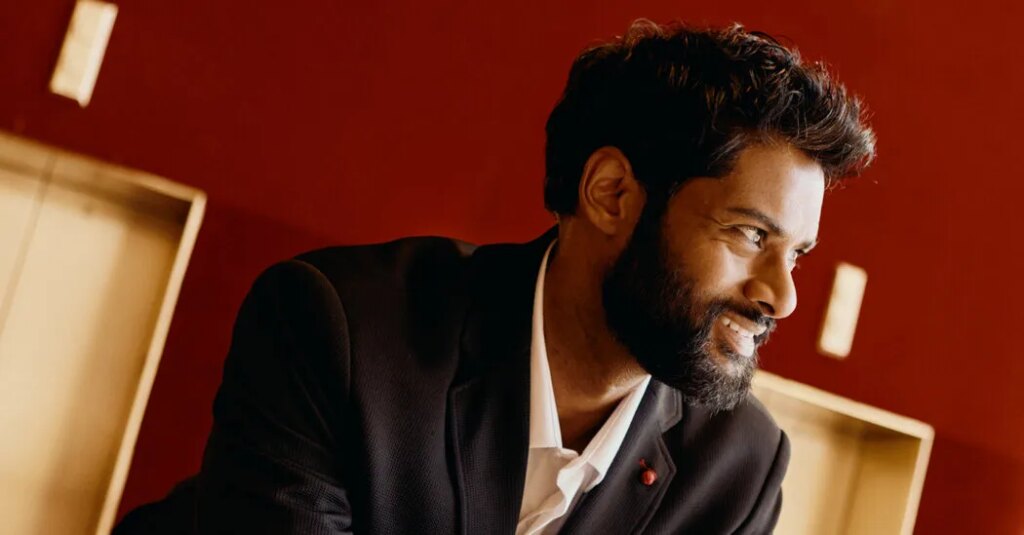
Heaston realized a solution to the Met’s problem might be waiting in the wings: the American tenor Sean Panikkar, who was cast as Laca’s half brother, Steva, the fiancé of Jenufa, a role sung by the star soprano Asmik Grigorian.
While Panikkar, 45, counts Czech among the languages he sings, the role was unfamiliar to him. Critically, his understudy, Ryan Capozzo, a tenor, was ready to step in as Steva.
“It struck me as the best choice for the production,” Heaston said. “And having seen Sean and Asmik together in Salzburg in ‘The Gambler,’ I knew there was incredible stage possibility.”
Panikkar has spent much of his career in Europe, especially since the pandemic. (His 2018 debut at the Salzburg Festival in “The Bassarids” helped to raise his profile.) Until now, he has appeared in regional opera houses and sung secondary roles at the Met, though with Jenufa that is clearly changing. “I’m playing Loge,” he said, referring to his coming role in “Das Rheingold,” in the Met’s new Ring Cycle, beginning in spring 2028. “I’m also here next season for Gandhi in ‘Satyagraha.’”
In Jenufa, he has proved a standout. “In his new role as Laca, Panikkar is a marvel,” Joshua Barone wrote in The New York Times.
In an interview last week, as he prepared for a Saturday matinee, Panikkar spoke of his dash to learn this role, growing up with Sri Lankan parents in Pennsylvania and his brush with fame — reality television. The interview has been edited and condensed for clarity.
What was it like having less than two weeks to prepare for this role? It sounds harrowing.
I had Steva fully memorized, ready to go. I’d been asked to sing Laca in future seasons, but I’d never sung a note of it. And I’m like, “This sounds crazy to me, to expect somebody to learn a full Czech role in less than two weeks.”
But I do like to be stressed. It’s a weird quality I have.
Was learning a role in Czech particularly challenging?
From the time I was an undergrad at the University of Michigan, I had been doing Czech music. So, the language is familiar to me. And I had done Janacek’s “The Makropulos Case” at the Royal Opera House in the previous season. I downloaded a score of “Jenufa” because I was on the road, and started looking at Laca. I’m like, “Oh, this is not so bad rhythmically.” What really got to me was the final scene of the opera. I just fell in love with it.
Why was it so striking for you?
It’s just the beauty of that scene. It took me back almost to the time when I was 17 and 18 and just hearing some of the great moments of opera for the first time, when I used to play things on repeat in my car, and be like “Wow, this is so incredible.”
How hard was it to learn this part of you?
What’s tricky with the Czech language is you can’t just pick up a score and read it, because Czech composers, and Janacek in particular, didn’t notate it the way it’s meant to be sung. First of all, he writes in a lot of 16th and 32nd notes, so when you’re looking at a score, it looks very daunting. You just see those notes and you’re like, “What am I going to do with this?” Janacek assumed that a native Czech speaker would just automatically change the rhythms to fit the way that a Czech person would say the words.
With Czech music, you need the help of some people that are really experts in it. And they prepped me. I had the first two acts fully memorized before we started rehearsal. I was genuinely surprised at how easily it stuck in my head.
When you got back home to Michigan, did you study it and rehearse it morning to night?
There are a lot of singers that love using an iPad. I cannot learn off of a screen. I have to have a physical book. As soon as I got home, I got my score. The Jenufa score is like a monster.
At the premiere, did you need to rely on the prompter?
No, no. From the very beginning actually, I told them, “I don’t need text prompting.” I find it very distracting.
How many languages can you sing?
I can get around in French, German and Italian just fine, but I also sing in Czech, I sing in Russian, I’ve sung in Polish, Sanskrit. I’m sure I’m missing something. But well, obviously English too.
Tell me about growing up and finding your way into opera.
My parents and my brother are Sri Lankan. My brother was born there. I was born in Bloomsburg, Pennsylvania. My parents, just like any Asian parents, stuck us in music from an early age. At the age of 3, they had me playing Suzuki violin. By 6, I was playing piano. As soon as I got into elementary school, I was in choirs.
Did you listen to opera as a boy?
Nope. Just pop music.
After you entered the world of opera, you had a stint with a trio of tenors, Forte, on “America’s Got Talent” …
I just finished a run of “La Bohème” in Fort Worth, and I got a call from my manager and he said, “Sean, I don’t want you to be offended by this, but I just got a call asking if you would be interested in joining a crossover tenor group on ‘America’s Got Talent.” I thought this was a joke. ‘But America’s Got Talent’ was getting millions and millions of viewers. I’m like, “Well, this could be fun.’
The first round was in Las Vegas. They either want you to be amazing, or they want you to just be horrifically bad, because that’s also good TV. The first time that we sang together was in front of the judges: Howie Mandel, Heidi Klum, Mel B from the Spice Girls and Howard Stern. We got all the way to the finals.
We did not win the show, but in the wings of Radio City Music Hall, as soon as we got eliminated, an executive from Sony/Columbia Records signed us to a recording contract.
That sounds life changing.
We started performing and doing all these events. We did a Las Vegas residency over New Year’s. We sang at the National Tree Lighting when Obama was there. We met so many celebrities. It was a different world.
The post Help Wanted at the Met: Tenor for Show, ASAP. Must Sing in Czech. appeared first on New York Times.