It’s long been considered the crown jewel of visas — a ticket to a green card and legal permanent residence in the United States, designated for people of “extraordinary ability,” including winners of Olympic medals, Oscars and Pulitzer Prizes.
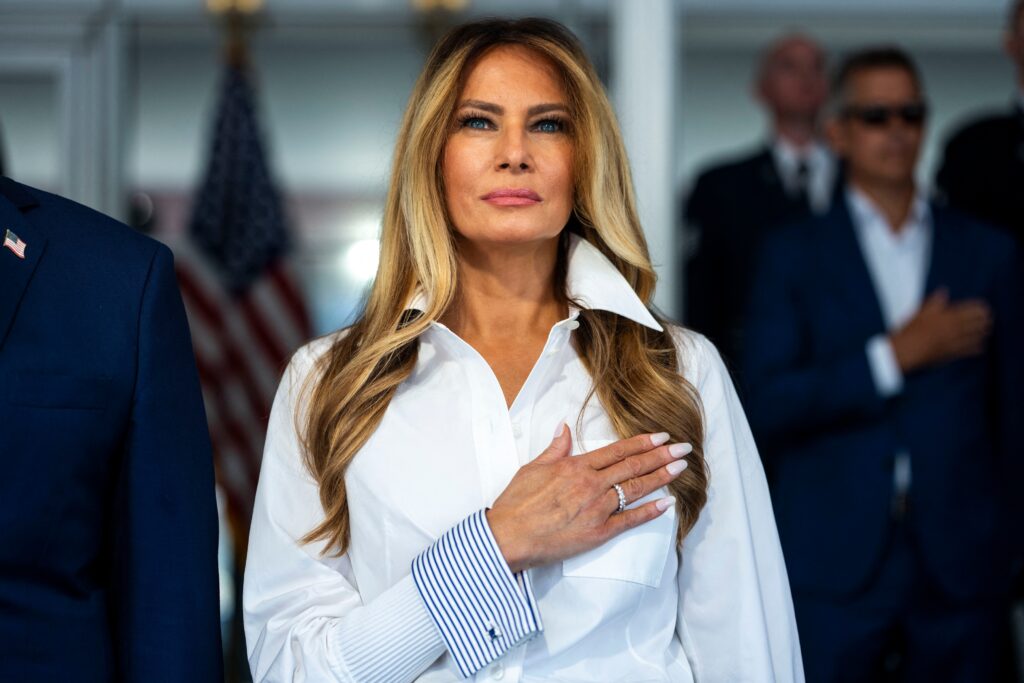
But since President Donald Trump retook the White House, approvals for the EB-1A visa — distributed under the EB-1 program that helped first lady Melania Trump receive permanent residence in the United States — have plummeted.
The share of petitions approved for the EB-1A visa, designated for individuals in the sciences, arts, education, business and athletics who have shown “sustained national or international acclaim,” dipped from 75 percent during the final months of President Joe Biden’s term to 32 percent in mid-2026, according to federal immigration data. The sharp decline has prompted concern from immigration advocates about the United States losing its competitive edge everywhere from Hollywood to the country’s top laboratories.
The American Immigration Council, a nonprofit advocacy organization for immigrants, said in an August report that rising denial rates for EB-1As and other restrictions on employment-related green cards have “significant implications for workforce planning and the United States’ ability to attract and retain global talent.”
“It’s a huge, huge drop,” said Kate Angustia, a former immigration officer and supervisory policy and practice counsel at the American Immigration Lawyers Association, the national immigration law bar. “It’s strange because the Trump administration has repeatedly said they want the best and the brightest.”
Major league athletes, circus performers, tech entrepreneurs, science researchers and journalists who have been denied EB-1A visas this year would have breezed through the process with their achievements in the past, several attorneys and business leaders said. And some law firms have stopped processing the visa altogether because of the high denial rate. About 5,200 individuals received approvals for the visa in the first three quarters of fiscal 2026, compared with nearly 8,900 over the same period in fiscal 2024.
The Department of Homeland Security, the White House and the first lady’s office did not respond to requests for comment.
While there is no evidence that the Trump administration has directed its immigration officers to clamp down on the elite visa category, the president has overseen a widespread effort to limit legal immigration and immigrant visa issuances, which have fallen sharply this year.
Immigration attorneys who represent clients petitioning for the EB-1A said that it appears, based on their dealings with immigration officers, that many are rejecting applications because the applicants are not, in their personal view, “extraordinary.” Immigration officers have long had a great deal of latitude in deciding who has enough “acclaim” to be eligible for the visa. But in the past, they typically looked for reasons to approve the visa, not deny it, because they are already very difficult to obtain, attorneys said.
“It’s become so much more subjective,” said Rachel Baskin, a Long Island-based immigration attorney who represents clients in arts and entertainment and has had clients denied EB-1A petitions this year.
For years, the visa has sparked debate over who qualifies as “extraordinary,” including the president’s wife. The Washington Post reported during the first Trump administration that Melania Trump obtained a visa under the EB-1 program in 2001 as a working model — someone who was not considered a supermodel like Kate Moss, Gisele Bündchen or Naomi Campbell. The visa set her on the path to U.S. citizenship and put her in the position to sponsor her Slovenian parents for legal residency.
When Trump’s critics called into question her qualifications during her husband’s first administration, many legal experts argued that she probably was qualified for the visa based on legal standards that have been in place for decades given her credentials, which included a photograph of her in a bikini embracing a blow-up killer whale in the 2000 swimsuit edition of Sports Illustrated.
“Part of the problem is that over the years, people used to call it the Einstein visa,” said Angustia, “which is a misnomer because you don’t have to be Einstein.”
Immigration officers are required to use a two-part legal test to review applications for the visa. First officers must determine whether applicants meet three out of 10 criteria, or can show evidence of a one-time achievement such as an Olympic medal or Oscar. If they pass that test, the immigration officer then must issue a “final merits determination” — a subjective assessment based on the complete evidence. Many applicants have been denied on that final determination this year, attorneys said, despite meeting the other requirements.
“Before the first Trump administration, it was very letter-of-the-law. If you met the requirements and you met the standard, then you pretty much are going to have this petition approved,” Baskin said.
That has changed, according to Finn Reynolds, head of insights and strategy at Lawfully, an immigration data analytics firm that tracks millions of U.S. immigration cases, because the EB-1A program, given its designation for “extraordinary” individuals, is “the easiest place for there to be a lot more scrutiny applied.” That makes it a relatively simple way for the Trump administration to reduce immigration.
“There should be a higher focus on bringing in the best and the brightest from around the world,” said George Fishman, senior legal fellow at the Center for Immigration Studies, which advocates reduced immigration. “It’s entirely conceivable that the Trump administration decided that the adjudicators have been getting too lax in approving these things.”
Some immigration experts noted that denials may be on the rise in part because of the quality of applications and a dearth of immigration officers.
Reynolds said there has been explosive growth in a lucrative legal subindustry that profits off immigrants from countries with long wait times, such as China and India.
Organizations serving these immigrants in some cases charge exorbitant amounts to help desperate individuals submit weak, self-filed petitions; some companies sell templates or use AI to write the applications, Reynolds said.
An influx of these poor-quality applications, coupled with the Trump administration’s demands for higher scrutiny on applications and the inexperience of newer officers stretched increasingly thin by a wave of buyouts and firings coordinated by the U.S. DOGE Service, could be increasing rejection rates, as well. Reynolds’s data shows that applicants are increasingly receiving requests for additional evidence to back up their claims of “extraordinary ability” — which are usually a precursor to getting denied.
“The scrutiny is probably roughly half of the equation here,” Reynolds said of the increased denials. “And then the other half is probably the fact that there are both more unqualified and underqualified petitions being submitted.”
But he said many applicants who would have been qualified in the past are getting rejected. And the approval rate probably has dipped even further, to about 27 percent in the final quarter of fiscal 2026, according to projections by Lawfully.
Even the tech sector — in which the president has called for growth — has seen reductions in approvals, attorneys say.
“They’re killing AI entrepreneurs,” said James Hollis, an immigration attorney in Memphis who processes “extraordinary ability” visas for athletes, entrepreneurs and entertainers. “They’re absolutely annihilating them.”
Hollis said he filed a petition for a tech entrepreneur in June that would have been a “slam dunk” a year and a half ago. The applicant had raised over $60 million in venture capital funding over his career, sold companies and had 20 news articles published about him, said Hollis.
The candidate was denied, with the officer determining that he met zero criteria, Hollis said.
Achievements like those of Hollis’s client are no longer enough, many attorneys said.
“You have to be very, very legitimate in AI, software engineering, software development, or somebody who’s very extraordinary in arts and performance, sports, things like that,” Reynolds said. “Those are definitely getting approved at higher rates.”
The post Denials soar for ‘extraordinary ability’ visa in program once used by Melania Trump appeared first on Washington Post.