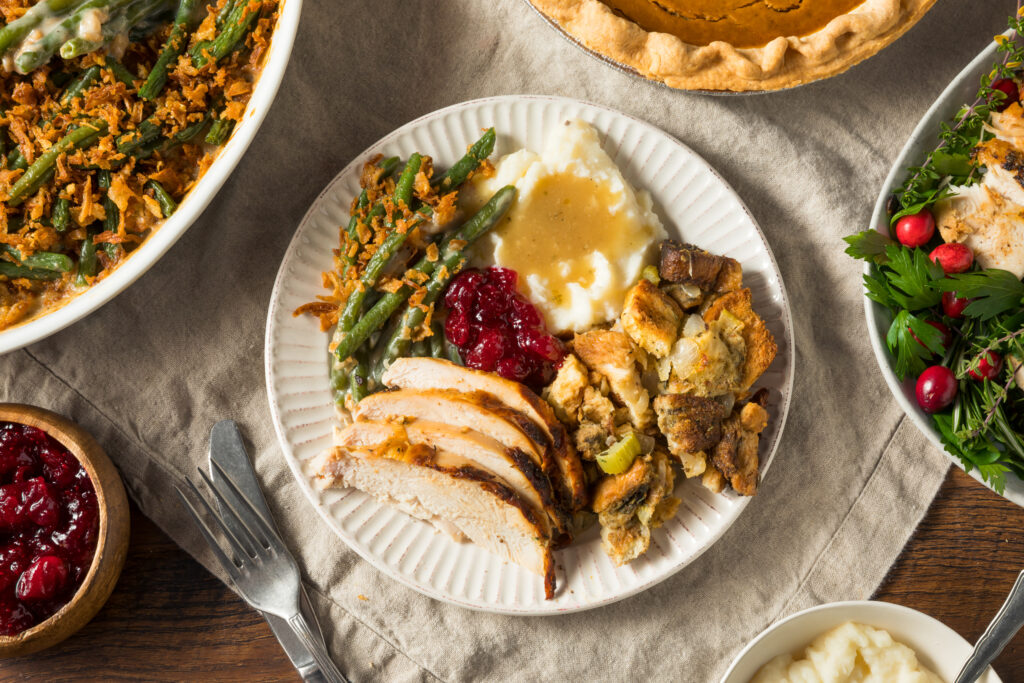
It’s Thanksgiving Day, and you’ve just finished your second helping of turkey, stuffing, mashed potatoes and a dinner roll, and you’re going in for a big slice of pumpkin pie. Not even an hour later, you can barely keep your eyes open.
“It’s all that tryptophan in the turkey,” you think. But as it turns out, that’s not the real culprit behind the dreaded food coma — that sleepy, sluggish feeling you get after eating a big, heavy meal.
Yes, turkey contains tryptophan, an amino acid that our body uses to make the sleep hormone melatonin, explained Nate Wood, an internal medicine physician specializing in culinary medicine and an assistant professor at Yale School of Medicine. But the amount of tryptophan that a serving of the meat contains is unlikely to be enough to cause all that post-meal drowsiness, he said.
Here’s what actually contributes to a food coma — known medically as postprandial somnolence — and what you can do to avoid it.
Why large meals make you tired
In general, a “food coma” usually occurs 30 to 90 minutes after eating a heavy meal and can last up to four hours, according to Harmony Allison, associate chief of gastroenterology at Tufts Medical Center. And the types of foods you load your plate with can play a role in whether you experience it.
High-carb and high-fat meals are more likely to make you tired than those packed with fruits and vegetables, Wood said. Alcohol can also contribute, he added.
Refined carbs, specifically, can cause sharp increases in blood sugar and insulin followed by a dip that results in low energy, said Hamza Shah, a gastroenterologist and associate professor at the Ohio State University Wexner Medical Center. Additionally, when you eat high-fat foods, your body releases a mix of hormones to break them down, which consequently, can promote sleepiness.
Meal size matters, too. “After we eat, the gut and brain coordinate a series of hormones to be released and nerves to be activated to focus the body on slowing down and taking time to digest the food that we just ate,” Wood said. “The more food we have to digest, the more our brain wants to slow us down to give the body time to do that digesting.”
Another factor (though a more minor contributor than the others) is that as part of the digestion process, the body directs blood to the abdomen, Wood added. “When we run, our body shunts blood to our muscles. When we complete a complex cognitive task, blood to the brain is prioritized. But after we eat, blood is shunted toward our intestines and internal organs to digest our food and absorb its nutrients,” he explained. “This leaves proportionally less blood for our brain and muscles, so we may get sleepy and feel unmotivated.”
Finally, most people eat their Thanksgiving meals in the early afternoon, which is when you have a natural decrease in alertness already, Shah added. So a large, heavy meal at that time can make your energy level dip even more, he said.
How to reduce post-meal sleepiness
If you want to avoid the post-meal malaise completely, Allison recommends eating a balanced meal with carbohydrates, fiber and protein — and go easy on the fats and alcohol.
“We don’t have to give up our favorite foods. Instead, we can start with a smaller portion, eat at a comfortable pace, drink water throughout the meal and give ourselves a chance to notice whether we’re satisfied before going back for more,” Wood said. He suggested filling a quarter of your plate with protein and loading up the other three-quarters with fiber-rich sides such as fruits, vegetables, whole grains and beans. “The goal is to leave the table comfortably satisfied.”
Additionally, not getting enough sleep can make the post-meal slump even worse, so you should aim to get a good night’s rest the night before, according to Allison.
If you’ve already overdone it, mustering up the energy to go on a walk is a good idea. A 10-to-15-minute stroll can help your muscles pull sugar out of your bloodstream and use it for energy, reducing blood sugar spikes and making you feel more alert, according to Shah. (It can also help relieve bloating and gas.)
A cup of coffee or a quick 20-minute power nap can also give you a little boost, Wood said, if you need some extra help powering through the rest of the day’s festivities.
The post Why you get sleepy after a big meal — and no, it’s probably not the turkey appeared first on Washington Post.