Before Sajah Taylor started working at the Northern Virginia Juvenile Detention Center, she was sent there as a teenager.
Taylor’s home life led to trouble, she said. The Lorton, Virginia, native wound up at local group homes and the center, which allowed her to earn visits home and connect with a therapist.
At the time, what Taylor said she needed most was “to see that somebody was waiting for me to come home, somebody was actually cheering me on.”
She got that one Thanksgiving during a visit from her mother on family day, an hours-long, monthly reunification event for families and their incarcerated loved ones, all between the ages of 10 and 21.
“It took a lot for them to get my mom to come see me,” said Taylor, now 23. But when Taylor saw her walk through the doors, “That was very special for me.”
On a recent Saturday afternoon, she stood in all black, watching as just over two dozen residents gathered for a Thanksgiving feast with their loved ones.
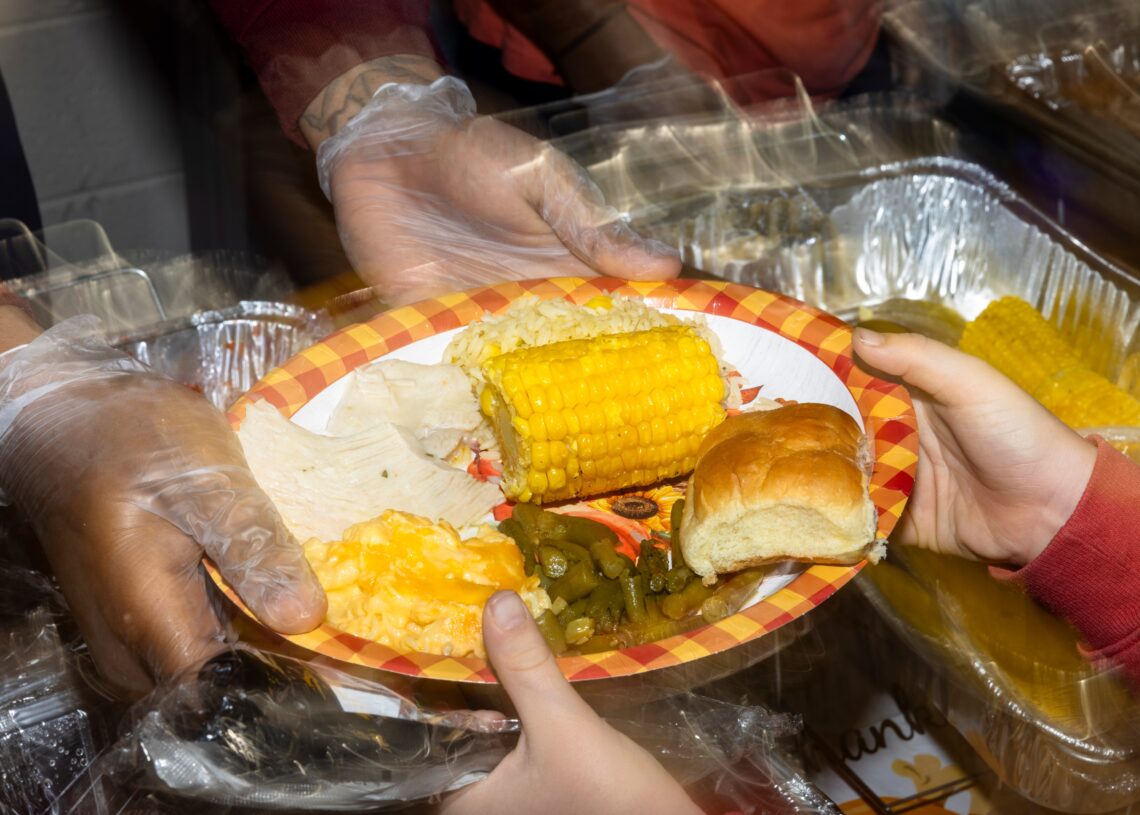
Inside the gym, kids and teenagers munched on classics — turkey, mac and cheese, apple pie — seated with their families around three long tables decorated with colorful fall foliage. A young man sat across a table from his mother, holding her hands. A group served food and drinks, while others filled in coloring sheets with their younger siblings.
Executive Director Johnitha McNair greeted relatives as they trickled in. She had arranged a Visa gift card for the family that drove hours from West Virginia, a hotel stay for the family from Portsmouth.
At the detention center, McNair said staff work to strengthen the bonds between families and their incarcerated loved ones. They pay for phone calls and Uber rides, offer virtual and special visits outside regular visitation hours and arrange Christmas gifts to be sent home for residents with children of their own.
“How can we say we’re committed to family reunification and engagement if we don’t do everything we can to facilitate it?” McNair said.
There’s always a reason a young person ends up at the facility, but McNair said her work is about teaching them their lives are worth more than their darkest moments.
“We got to rip all of that out and show up,” she said. “When they let us down, we can’t bail. When they fall, we can’t bail.”
Families said they recognize the effort.
Before coming to the Alexandria facility, Bonnie Brooks’s grandson spent time at a juvenile detention center in their hometown of Lynchburg. “There’s no comparison,” she said, of the two centers’ work on maintaining familial connections.
“Look around,” said Gregg Looney, 63, his two young granddaughters running between his legs. He looked over to his grandson, who had recently turned 19 and spent a year in an adult jail with no in-person visits with family.
“It’s huge for him, and all of us, to be as a family unit together,” Looney said.
When young folks are brought to the center, the first person their families’ hear from is usually Karen Hernandez, the center’s parent and stakeholder relations specialist.
On any given day, she hears from family members seeking guidance on navigating the criminal justice system or simply needing to vent, a position she knows too well.
“I have been that parent before,” said Hernandez, who was a mother with a child being held at the center before she began working there.
McNair said she noticed Hernandez talk with other parents in both English and Spanish, and she knew how to put them “at ease.”
“She knew that I was one of those parents who wanted everything and anything that I could possibly do to be there to support my own child,” Hernandez said.
Now, “I’m literally a phone call away for our parents,” she said. “I’m a text message away from our parents.”
On Saturday, Hernandez walked by the tables and stopped to talk to each family. She led a giveaway of grocery and Amazon gift cards, and reminded a young man to “put a smile on your face.”
A table set up by the entrance was topped with black tote bags filled with packaged and canned goods for families to take home for a Thanksgiving meal of their own: cranberry sauce and cornbread stuffing, turkey gravy and green beans. Large frozen turkeys donated by an area church were also up for grabs.
Visits from family are important not only for the child but for their relatives, Hernandez said, because they offer a glimpse into the center’s investment in a child’s outcome.
On their way out, families “leave feeling reassured that we know how important it is for them to be a part of their child’s growth and progress, so we want … to create these moments,” she said.
Christmas is around the corner, and the gym will be decked out in holiday spirit, Hernandez said. The kids are already asking about it.
The post Inside a juvenile detention center, families reunite over a Thanksgiving meal appeared first on Washington Post.