The first thing I ever posted to the “information superhighway,” back in 1994 when I was a college student and had just discovered that the University of Illinois had given me an email address, was on alt.fan.tarantino. This was a Usenet group discussing the work of 31-year-old cinematic wunderkind Quentin Tarantino. There I found a winding discussion about how many bullet holes could be seen in the background of a shot in “Pulp Fiction,” which led to a debate about whether John Travolta’s character in that film was related to Michael Madsen’s character in “Reservoir Dogs,” which led to a breakdown of the Extended Tarantino Cinematic Universe and how it may, or may not, connect with our own. These arguments and explorations went on for pages and pages and days and days, and I, like many others, found myself lost in the minutia.
At the time, Tarantino had made exactly two movies.
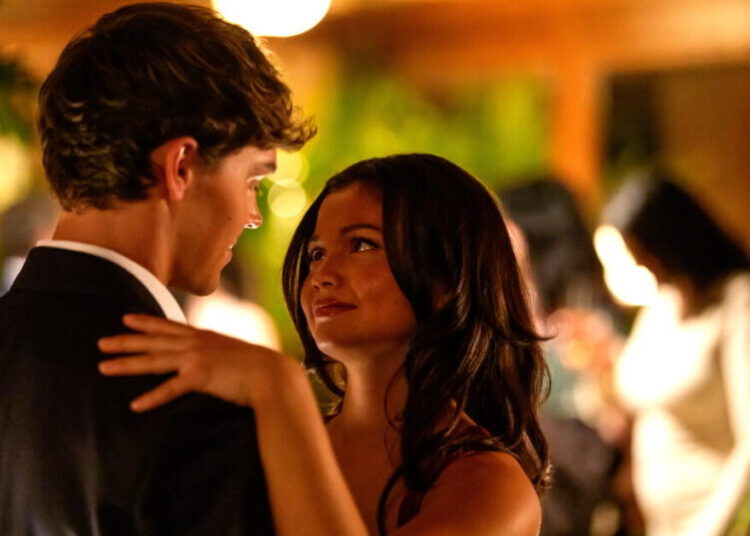
Thirty-two years later, the internet is rather more complicated. But it’s still fundamentally a place to get lost in your obsessions. And seven movies later, that continues to feel like a culture Tarantino had a hand in building. Look, and you can find a corner where any niche interest becomes universal, where there is always someone willing to go down the next rabbit hole with you. As a new film written by Tarantino, “The Further Mis-Adventures of Cliff Booth,” a sequel/spin-off of his Oscar-winning 2019 film “Once Upon a Time … in Hollywood,” hits theaters this week, it is rewarding — and even comforting — to find more rabbit holes to go down.
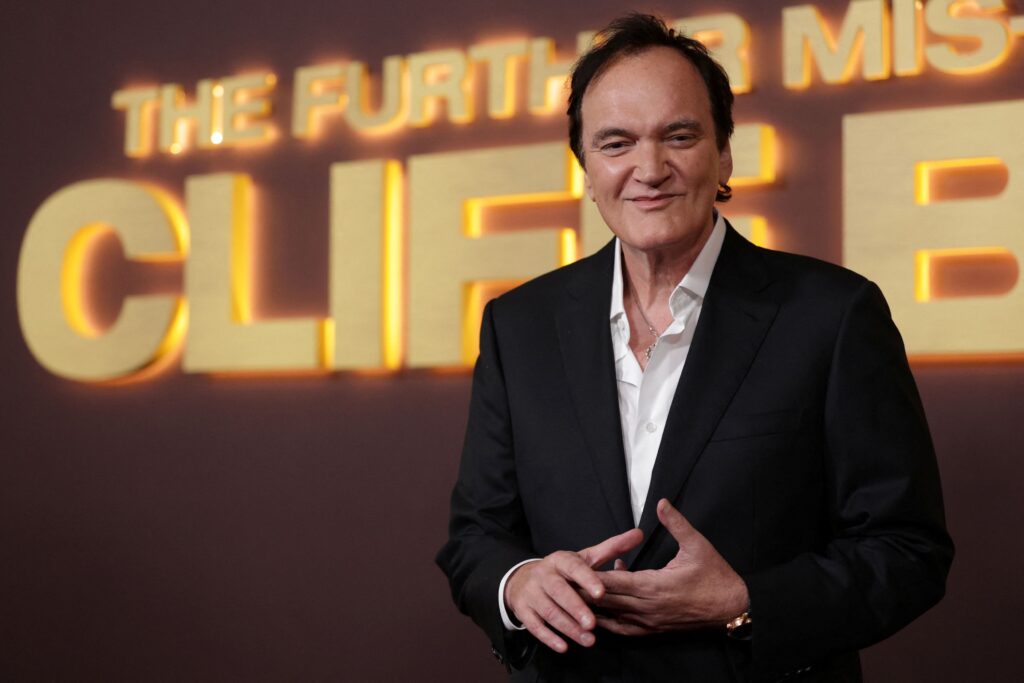
Tarantino did not direct “Booth.” It was directed by fellow Gen X enfant terrible David Fincher. But Tarantino wrote not only the screenplay but also its novelization, which will be out Dec. 8. He originally planned to direct, too, but changed his mind, holding off making his 10th film behind the camera. That No. 10 is an important one: Tarantino has long said that he plans to retire after his 10th film, whatever it may be, arguing (incorrectly, I think) that “directors don’t get better as they get older. Usually the worst films in their filmography are those last four at the end.” Which means there is just one left.
All told, it’s probably best that “The Further Mis-Adventures of Cliff Booth” isn’t that last one. The movie is fun and lively and undeniably entertaining, but it lacks the scope and grandeur of “Once Upon a Time … in Hollywood” — a further exploration of that movie’s world (and of Tarantino’s clear eagerness to live in it forever) rather than a new invention. Tarantino, it seems, wasn’t ready to let go of Brad Pitt’s Cliff Booth but couldn’t quite bring himself to make this his last statement either. The movie is more an ellipsis than a final punctuation point.
Tarantino seems to be finding ways to put off that 10th film. He has now written two novelizations of his screenplays in addition to the excellent “Cinema Speculation,” a book of film criticism. He has written a play called “The Popinjay Cavalier” that is scheduled to debut in London’s West End in February, starring Sacha Baron Cohen. He acts in multiple upcoming films, including a lead role alongside Kylie Minogue, Allison Williams and Jason Isaacs in Jamie Adams’s “Tangled Up in Blue.” And he also owns and manages several movie theaters in Los Angeles, including the New Beverly Cinema and the Vista Theatre.
Both gorgeous theaters were clearly labors of love, with throwback concessions (the Vista is the only place I’ve gotten an RC Cola in 30 years) and lobbies packed with vintage film memorabilia (including from Tarantino’s films). What’s remarkable about visiting these cinemas — I can’t recommend either enough — is how they spring from Tarantino’s mind but also seem universal, like I’ve been going to them my entire life. Tarantino has always been able to make his own obsessions ours. After three decades, it’s tough to tell where he stops and the rest of American movie culture begins.
Tarantino is, to put it mildly, an eccentric, and one who tends to be considerably more outspoken than your average superstar director. (He’s the only auteur I can remember who isn’t afraid to insult actors he doesn’t like, as we saw when he totally unfairly but also very entertainingly criticized Paul Dano last year, leading to widespread backlash.) To a fan, his constant courting of controversy can be exhausting. He’s the guy you don’t want to get cornered by at a party.
He also makes movies that, at their best, make you feel like he made them specifically for you, with an enthusiasm that he can’t wait for you to share. That has always been the source of Tarantino’s considerable filmmaking power: The guy loves what he loves so much that you end up wanting to love it too. He has now been doing this for so long that his once-niche obsessions are mainstream.
This year, Defense Secretary Pete Hegseth gave a prayer at a Pentagon worship service that included a Bible verse that wasn’t an actual Bible verse; it was the famous Ezekiel 25:17 “verse” from “Pulp Fiction,” which was pure Tarantino. I can think of no better twisted endorsement of Tarantino’s power over culture than that: In a true, sometimes grotesque sense, his words have become downright biblical.
I don’t want Tarantino to retire after his 10th film. I hope he keeps making films, and writing plays and novels, forever. But it is impossible to separate his work over the past 30-plus years from American culture itself. We’re all down the rabbit hole now.
The post How Quentin Tarantino took the whole movie world down the rabbit hole appeared first on Washington Post.