What happens in the middle of the sea in many ways remains a mystery. Scientists and conservationists have long tried to monitor ship traffic with satellites or communication systems to better understand how vessels could be harming animals.
So they enlisted some unlikely eavesdroppers: seabirds fitted with audio recorders.
In a paper published Wednesday in Science Advances, researchers say the birds were able to detect ships that don’t register on existing systems available to conservationists. Researchers say the finding will help them understand where these animals may be vulnerable to accidentally being injured or killed by fishing gear, a fate called bycatch.
“Globally, everyone is looking for ways to fill in missing pieces of this picture and what vessels are doing at sea,” says Heather Welch, a marine ecologist at the University of California at Santa Cruz, who was not involved in the new research. “It’s still sort of the Wild West, where we have an incomplete picture of human activity.”
Birds being used to gather information is not new. During the Cold War, the CIA used pigeons with secret cameras to gather intelligence. But in this modern usage, scientists are trying to collect more information about fishing vessels that threaten seabirds. More than 170 million birds are caught up in or killed by fishing gear each year, one estimate suggests, making it the most significant threat to these animals overall.
In the new research, scientists turned the traditional approach on its head. Rather than juxtaposing separate data on boat traffic and animal movement, they wanted to identify ship activity hidden within data gathered by the birds themselves. A previous experiment that equipped massive albatrosses with radar systems detected large trawlers, but Jonathan Rutter, a marine conservation biologist at Oxford University and a co-author on the new research, wondered whether recording noise instead could catch smaller ships as well.
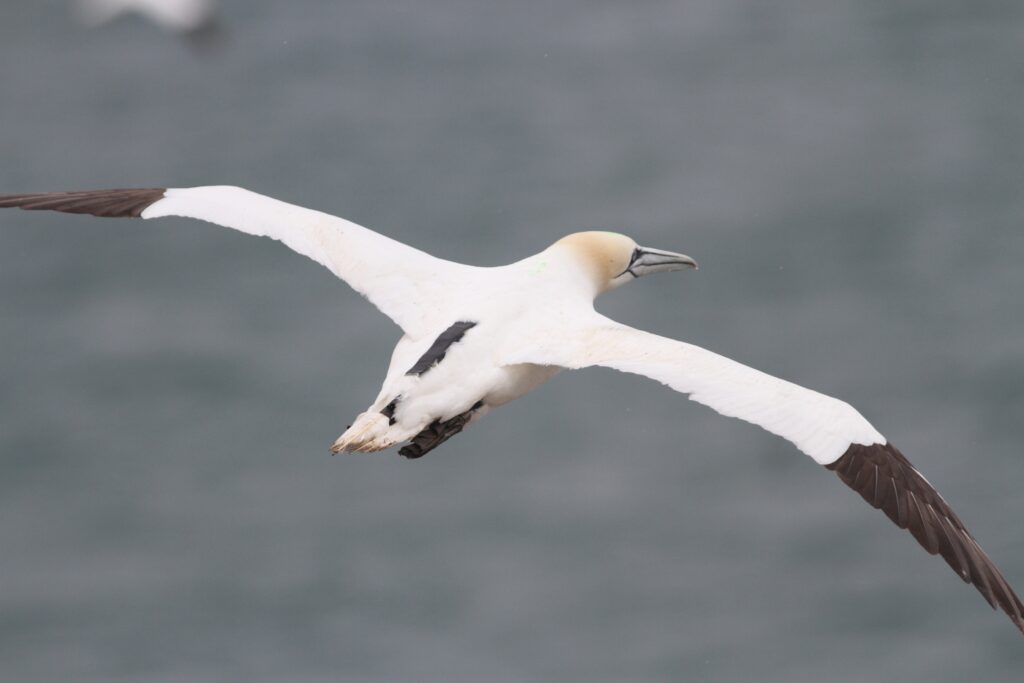
So he and his colleagues tested audio recorders on three types of species: huge white northern gannets in the waters between Ireland and England, smaller gray endangered Balearic shearwaters along the Mediterranean coast of Spain and a large dark endangered Westland petrel, or tāiko, near New Zealand.
When the birds flew, the recorders registered only white noise. But to feed, these animals land on the ocean surface, where it’s quiet enough for these recorders to pick up at least some boat noise, the researchers confirmed. And they found that birds of all three species spent significant time every day near ships, with that time highest for the northern gannets plying British waters, which spent an average of an hour per bird near ships.
The scientists also compared the birds’ audio recordings with data from Automatic Identification System, a vessel-tracking network designed to reduce ship collisions. The AIS is a standard data source for ship traffic. But conservation experts have always known that these reports aren’t comprehensive — not all ships are required to broadcast on AIS, some turn the system off, and some reports may be lost because of technical glitches.
The new research found that the problem is even more substantial than experts imagined. Even though scientists erred on the side of caution and tried to assign anything they could to a known vessel, they found that about one-third of the average time a northern gannet spent around ships involved vessels not represented in the AIS data.
“There’s a lot we’re not seeing when we use traditional methods,” Rutter says.
The data has key limitations: There’s no way to identify what type or size of boat the recording is detecting, for example, or its exact location. But at the core of the research is a much-needed new technique for monitoring where humans and wildlife overlap, Welch says. And the algorithms the researchers used can be applied to existing audio recordings as well, opening up a treasure trove of data.
All by recruiting the very animals that most need this data, Welch notes. “Using the species to gather information that will later inform its preservation and conservation, I think, is a really neat idea.”
The post Eavesdropping seabirds record audio of hidden fishing boats that threaten them appeared first on Washington Post.