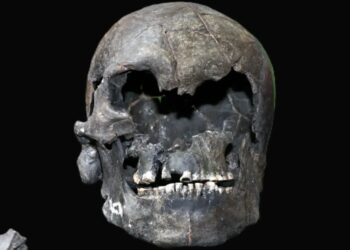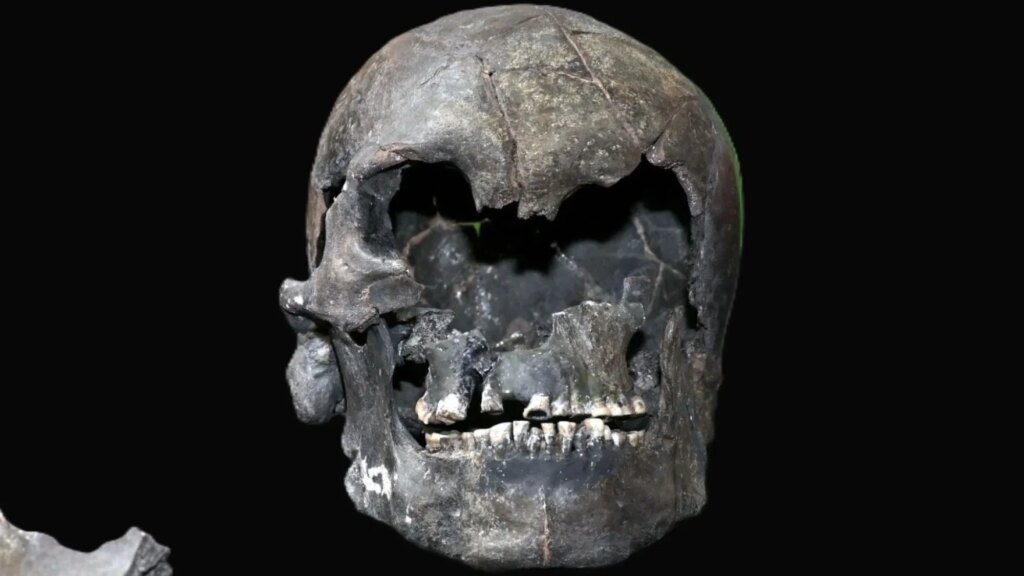
An Ice Age skeleton found beneath a Mexican airport in 2021 might be one of the earliest settlers in the Americas, dating to between 13,087 and 11,700 years ago.
According to Mexico’s National Institute of Anthropology and History (INAH), two separate lab tests placed the remains (dubbed “Yotzin,” meaning “unique” in Nahuatl) right around the late Pleistocene transition. Archaeologist Israel Peña initially thought the dark bones belonged not to a human but to a camel, as the team dug at the site of Felipe Ángeles International Airport.
It sounds absurd to confuse the two, but there’s logic to it: the airport was built over a dried lakebed packed with hundreds of mammoth, camel, and horse fossils. If you found another fossil, you would assume it was one of those three. Instead, the crew had uncovered a roughly 80 percent complete skeleton of a 25-to-30-year-old man standing about 5-foot-9.
Archaeologists Found an Ice Age Human Beneath an Airport, and His DNA Could Reveal Something Fascinating
Using the collagen content of his wisdom teeth as a test of his age, a Belgian lab found that the man lived around 13,087 to 12,987 years ago, while a US lab testing tooth mineral gave a slightly younger window of 12,050 to 11,700 years. Collagen content is one of the most trustworthy ways to date fossils, as minerals can swap carbon with surrounding dirt over thousands of years, giving researchers plenty of datable material to work with.
Yotzin lived thousands of years before pottery showed up. Physical anthropologist Arturo Talavera González spotted that immediately from Yotzin’s cavity-free, heavily worn teeth, the kind you get from chewing bark and animal hides instead of, say, candy bars and sodas.
Yotzin has an elongated skull resembling ancient groups from northern Mexico and Baja California Sur. Skull shape and genetics don’t always match, so researchers are waiting on DNA results from Spain’s University of Burgos (expected as early as the first quarter of 2027) to see where Yotzin fits in the history of early American migration.
The post Why One of the Earliest Known Inhabitants of the Americas Was Found Beneath a Mexican Airport appeared first on VICE.